Ramos Leo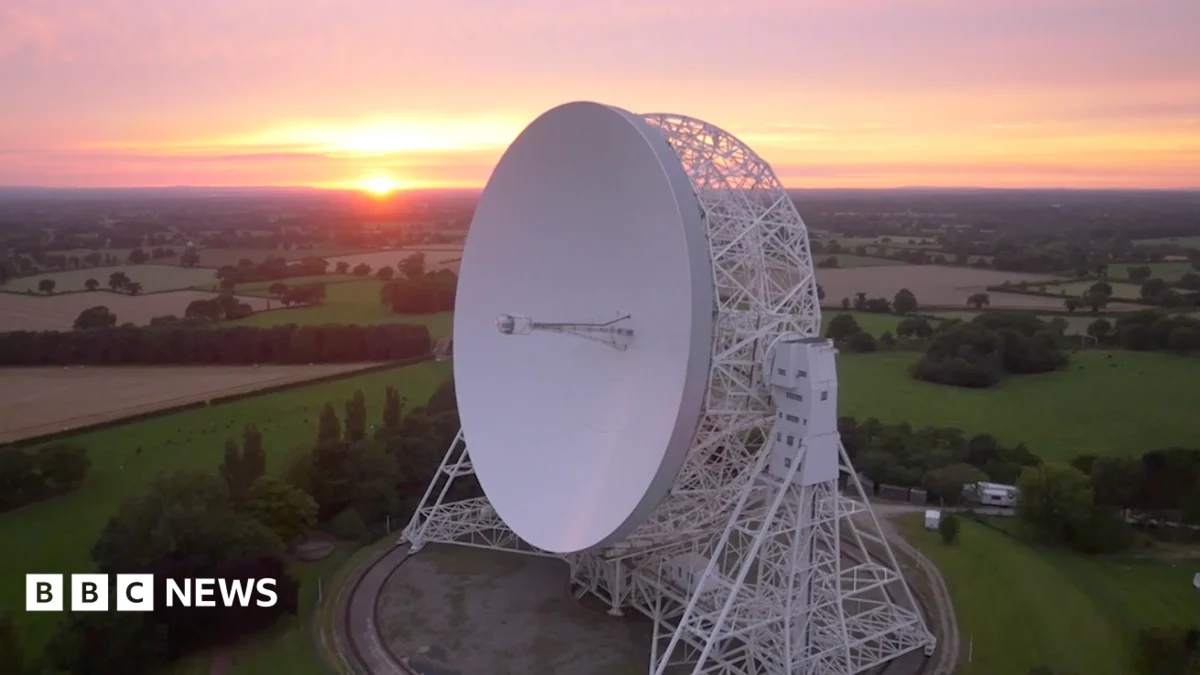
For generations, Jodrell Bank and its advanced network of telescopes have served as a cornerstone of the UK’s deep-space research, playing a pivotal role in unraveling the mysteries of distant galaxies, pulsars, and the very fabric of the cosmos. Beyond its direct scientific output, the observatory has been an invaluable institution for nurturing future generations of astronomers and engineers, drawing countless young minds into STEM fields. Scientists have reacted with a mixture of profound sadness and alarm, branding the decision as "heartbreaking" and "scientifically misguided," warning of devastating long-term consequences for UK astronomy.
All active scientific observations at Jodrell Bank are slated to cease on April 1, 2028, a date that looms large unless a viable alternative funding model can be urgently secured. The funding body responsible for this drastic measure is the UK Research and Innovation (UKRI) agency, which oversees an annual budget of just under £10 billion for scientific endeavors across the nation. UKRI stated that it was compelled to reallocate investment towards projects that are deemed to deliver "the greatest long-term impact," citing escalating research costs within physics and the operational expenses of its various laboratories as primary drivers for the cuts. The observatory’s annual budget of £2.8 million, while seemingly modest in the context of UKRI’s overall spending, was deemed unsustainable under the new strategic priorities.
Established in 1945 by the visionary Sir Bernard Lovell, Jodrell Bank rapidly emerged as a global pioneer in the nascent field of radio astronomy. Its groundbreaking work laid the foundation for understanding celestial objects through the radio waves they emit, opening up an entirely new window to the universe. From its earliest days, the observatory pushed the boundaries of scientific exploration, mapping the cosmos beyond our own galaxy with unprecedented clarity. The site’s historical significance extends beyond pure science; during the tense decades of the Cold War, the Lovell Telescope played an unexpected yet crucial role. Its unparalleled ability to track objects in space made it invaluable for monitoring Soviet missile launches and early satellite missions, including the Sputnik satellite, providing critical intelligence during the height of nuclear tensions between the USSR and NATO powers. This unique blend of scientific achievement and geopolitical importance solidified its place in history, ultimately earning it prestigious UNESCO World Heritage status in 2019, a testament to its "outstanding universal value."
The announcement concerning Jodrell Bank is not an isolated incident but rather a component of a broader, substantial 2.7% reduction in funding for astronomy, nuclear, and particle physics research over the next four years. This sweeping austerity measure is set to impact numerous other critical projects, signaling a significant contraction in the UK’s global scientific footprint. Among the other casualties, the UK will withdraw its participation in research at the James Clerk Maxwell Telescope (JCMT) in Hawaii. The JCMT is a leading submillimetre-wavelength telescope, instrumental in studying the formation of stars and planets, and imaging supermassive black holes at the centers of galaxies. Its withdrawal represents a loss of access to crucial observational data and collaborative research opportunities in this specialized field.
Further compounding the impact, UKRI has also curtailed funding for the UK’s involvement in two key instruments on the Extremely Large Telescope (ELT), currently under construction in Chile. The ELT, set to be the world’s largest optical/infrared telescope, is designed to revolutionize our understanding of the universe, from probing the earliest galaxies to searching for signs of life on exoplanets. The reduction in UK support for its instrumentation will inevitably diminish British scientists’ influence and access to this cutting-edge facility. Moreover, funding for the UK’s participation in the Vera Rubin Observatory, also located in Chile, will be slashed by a significant 20%. Launched only last year, the Vera Rubin Telescope is poised to create the first comprehensive "movie of the Universe," mapping the night sky with unprecedented speed and depth to study dark matter, dark energy, and transient phenomena. The cut threatens to reduce the UK’s contribution and benefit from this groundbreaking project just as it begins its operational life.
Professor Michele Dougherty, executive chair of the Science and Technology Facilities Council (STFC), a branch of UKRI, addressed the difficult choices faced by the agency. "After listening to our community we have protected core discovery research. However, the situation does require some tough, but necessary, decisions," she stated. "These are never easy choices, but we have made what we feel are the right decisions to bring… a sustainable financial position by 2029/30." This statement underscores the profound pressure on public science funding bodies to balance competing priorities and maintain long-term financial stability in a challenging economic climate.
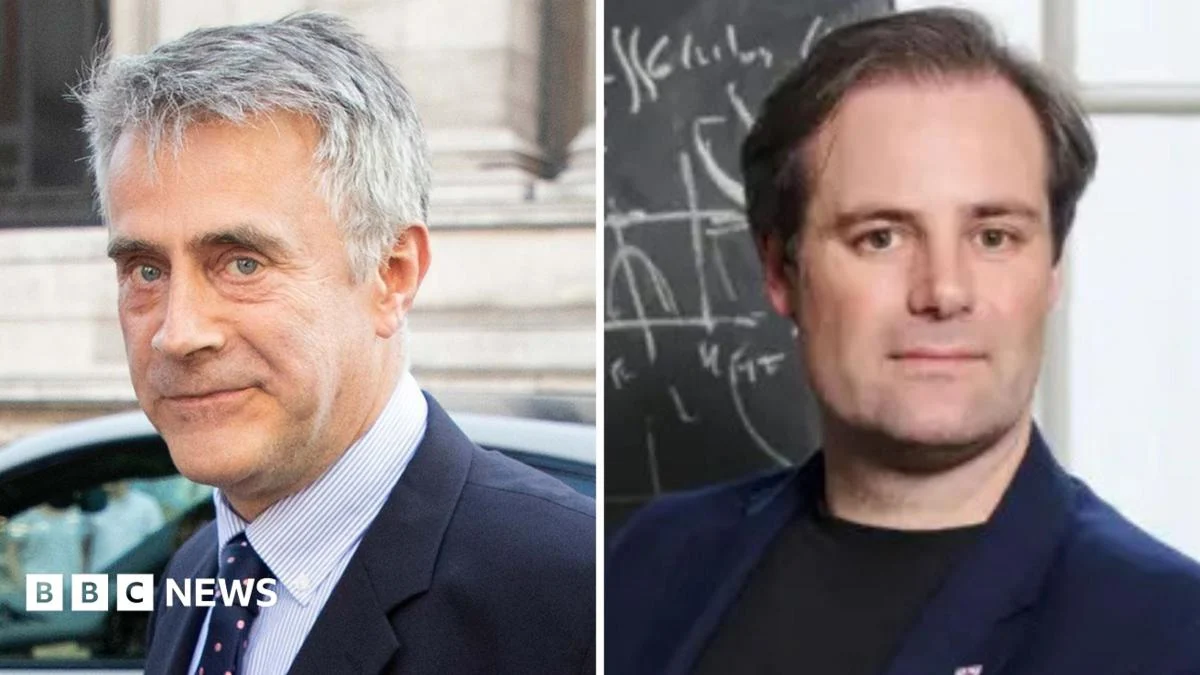
The immediate human cost of Jodrell Bank’s potential closure is substantial, with 28 direct jobs at risk at the Cheshire site. However, the ripple effect extends far beyond this number, potentially affecting the research endeavors of nearly 3,000 scientists globally who rely on the observatory’s data and capabilities. Professor Simon Garrington, associate director of the Jodrell Bank Observatory, conveyed the deep anguish felt by the entire team. "Everyone at Jodrell Bank is devastated by the decision," he told BBC News. "It’s not just because of the fantastic science that we do, but Jodrell Bank and its telescope network [have been] a national capability for nearly 70 years and a beacon for science in the north-west [of England], attracting young people into science and engineering careers." He emphasized the observatory’s role as a vital regional asset, inspiring countless individuals to pursue careers in science and technology, and its cultural significance, having been immortalized in popular science fiction works from Douglas Adams’ The Hitchhiker’s Guide to the Galaxy to the iconic television series Doctor Who.
Prof. Garrington affirmed that the UKRI’s decision would be vigorously challenged. Should these discussions prove unsuccessful, he vowed that the leadership team would exhaust all avenues to secure alternative funding to ensure the continued operation of the iconic Lovell Telescope and the wider network it supports, even in a modified form. "It is a huge hill to climb to try to establish a new way to fund this if UKRI will not fund any of it," he conceded, highlighting the formidable challenge of replacing substantial government funding.
Scotland’s Astronomer Royal, Professor Catherine Heymans, speaking on behalf of the UK’s wider astronomical community, did not mince words, describing UKRI’s decision as "a real act of national self-harm." Her sentiment reflects a widespread belief that the cuts undermine decades of investment and expertise, jeopardizing the UK’s standing as a leader in global astronomy.
Despite its age, the Lovell Telescope has been continuously upgraded and modernized, ensuring its place at the cutting edge of astronomical research. It remains the third-largest steerable radio telescope in the world, a marvel of engineering that has consistently delivered world-class science. Its scientific prowess was dramatically enhanced when it was integrated with six other radio telescopes located across central England to form the e-MERLIN network. This sophisticated network employs a technique called interferometry, combining the signals from multiple dishes to achieve the resolution of a telescope thousands of kilometers wide. Joined together, these UK telescopes can zoom into objects in deep space with incredible precision, achieving angular resolutions comparable to, or even surpassing, that of the Hubble Space Telescope at optical wavelengths.
The e-MERLIN network has been instrumental in a diverse range of research areas, including:
- Probing Active Galactic Nuclei (AGN): Studying the powerful jets and emissions from supermassive black holes at the centers of galaxies.
- Investigating Star Formation: Observing the birth of stars in dense molecular clouds, hidden from optical telescopes.
- Detecting Gravitational Lenses: Using the bending of light by massive objects to study distant galaxies and dark matter.
- Tracking Pulsars: Monitoring the precise timing of these rapidly rotating neutron stars, which act as cosmic clocks, for tests of general relativity and searches for gravitational waves.
- Exploring Exoplanetary Environments: Searching for radio emissions that could indicate the presence of magnetic fields or atmospheric activity on planets beyond our solar system.
- Studying Cosmic Rays and Supernova Remnants: Analyzing the remnants of exploded stars and the high-energy particles they produce.
The e-MERLIN network is also a critical component of a broader pan-European network of radio telescopes. Its potential closure would not only diminish the UK’s independent research capabilities but would also weaken the collective power of these international collaborations, leading to less clear and less detailed images of distant stars and galaxies across the continent.
Professor Michael Kramer, executive director of the Max Planck Institute for Radio Astronomy in Bonn and a highly respected scientist at the University of Manchester, echoed the widespread condemnation. He told BBC News that he believes UKRI’s decision to be "scientifically, technologically as well as economically short-sighted." He further elaborated on the crucial role Jodrell Bank plays in training the next generation of UK astronomers in the highly specialized field of radio astronomy. Astronomers fear that the closure of the Lovell Telescope and the e-MERLIN network will inevitably lead to Britain falling significantly behind in a field that it once pioneered and in which it has maintained a leading edge for decades.
"Internationally, people will look at that and will hardly believe it. You’re cutting off the radio astronomy capability in the country," Prof. Kramer lamented. This cut comes at a particularly critical juncture, as other nations are actively investing in their own national observatories and developing new capabilities. Many astronomers believe that the world is on the cusp of a "golden age" in radio astronomy, largely driven by the ongoing construction of the Square Kilometre Array (SKA), a colossal new super radio telescope being built in South Africa and Australia. The SKA promises to revolutionize our understanding of the universe, and by dismantling its domestic radio astronomy infrastructure, the UK risks being ill-equipped to fully participate in, and benefit from, this unprecedented global endeavor. The potential loss of Jodrell Bank is seen not just as a blow to a single institution, but as a severe detriment to the UK’s scientific sovereignty and its ability to compete on the global stage in a rapidly advancing field.



 Roy Suryo

 Nakalama John
 atisusanti