
 Roy Suryo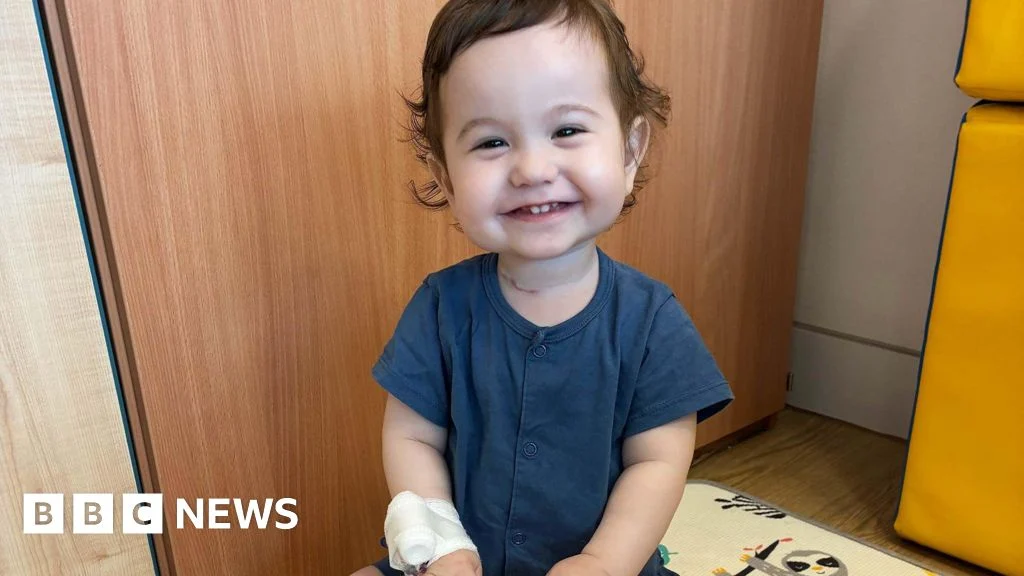
UK scientists have achieved a groundbreaking feat by growing fully functioning food pipes in a laboratory and successfully transplanting them into mini pigs, a development that offers significant hope for young patients born with severe oesophageal defects. This pioneering research, detailed in the prestigious journal Nature Biotechnology, presents a potential life-changing solution for children like two-year-old Casey Mcintyre. Casey was born with a critical 11cm deficit in his oesophagus, a condition that necessitated multiple complex surgeries from birth. His parents, Sean and Silviya, have navigated a challenging journey, becoming intimately familiar with the intricacies of paediatric medical care, including the use of feeding tubes and the constant vigilance required for a child with such a serious congenital anomaly.
Silviya shared the emotional toll of Casey’s condition, explaining the extensive medical interventions he has already undergone. "We were made aware before Casey was born that he would have major issues with his food pipe and need extensive surgeries," she recalled. Currently, doctors have surgically repositioned Casey’s stomach to bridge the gap in his oesophagus, a procedure that, while life-sustaining, has been a long and arduous process. Casey still relies on a feeding tube to ensure adequate nutrition as he works towards developing his swallowing capabilities. The impact of these repeated surgeries has also affected his vocal cords, leading to developmental delays in his speech and the production of sounds. "The repeated surgeries have left him with some damage to his vocal cords so he’s developing his speech and noise-making to catch up," Silviya explained. The ultimate goal is for Casey to be able to consume enough food orally, at which point the feeding tube can be removed.
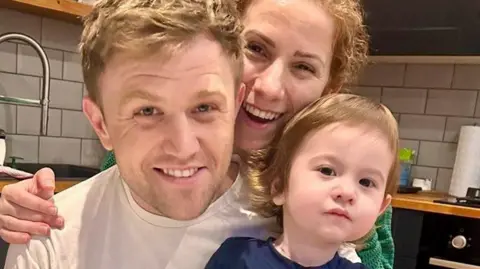
Casey’s father, Sean, spoke candidly about the unexpected challenges of parenthood, stating, "Sean said they had had to learn things as new parents that they never considered would be part of family life – from feeding him through a stomach tube to what to do if the hospital calls with an urgent update in the middle of the night." Despite these difficulties, the couple expresses immense pride in their son’s resilience. "To look at him, he’s just amazing and we are very proud of him. Whatever the team did for him was really a miracle," Sean added. The prospect of a single, early-life surgical intervention to replace a functional segment of the oesophagus, allowing for a normal developmental trajectory, would be transformative for families like theirs. This condition, oesophageal atresia, affects approximately 18 babies born each year in the UK, highlighting the significant unmet need for innovative treatments.
The successful transplantation in pigs demonstrates the feasibility of creating and replacing a complete section of the oesophagus while restoring its normal function, including the crucial ability to swallow. A significant advantage of this lab-grown tissue is that it utilizes the animals’ own cells, thereby eliminating the need for immunosuppressant drugs, which are typically required for organ transplants to prevent rejection. This is a critical factor for future human applications, particularly in young patients whose immune systems are still developing.
The research team strategically chose Göttingen minipigs for their studies. These miniature pigs are the smallest domestic breed and are considered an ideal animal model for oesophageal research due to their anatomical, physiological, and metabolic similarities to human children. This close resemblance is crucial for ensuring that the findings from animal studies are translatable to human patients.
The innovative process of creating the lab-grown oesophageal tissue involved a meticulous, multi-step approach. Scientists began by taking a donor pig’s oesophagus and carefully stripping away all of its cellular components. Crucially, they preserved the underlying extracellular matrix, the intricate structural framework that provides support and guides cell growth. This decellularized scaffold then served as the foundation for regenerating a new oesophageal segment.
Following the preparation of the scaffold, new cells were introduced. These cells were then cultured and nurtured within a specialized bioreactor. A bioreactor is a sophisticated piece of equipment designed to mimic the conditions within a living organism, providing a controlled environment where the cells can receive vital growth factors and nutrients. This controlled environment allowed the cells to proliferate and differentiate, gradually repopulating the scaffold and maturing into functional oesophageal tissue over a period of one week.
The transplantation trials involved eight pigs, all of whom demonstrated positive outcomes and a healthy recovery following the procedure. The implanted tissue successfully integrated, and the pigs developed functional swallowing mechanisms, enabling them to move food down to their stomachs. The study meticulously tracked the pigs’ progress, with five surviving to the six-month endpoint of the trial. At this crucial juncture, their grafts exhibited well-developed muscle tissue, a robust network of nerves, and a healthy vascular supply, all essential components for a fully functioning oesophagus.
Professor Paolo De Coppi, the lead researcher at Great Ormond Street Hospital and University College London, expressed optimism about the future implications of this research. He anticipates that this innovative treatment could be available to children within the next five years. "The oesophagus is a really complex organ, without a blood supply from its own vessels, so it cannot be ‘transplanted’ in the way you might expect," Professor De Coppi explained, highlighting the unique challenges of oesophageal reconstruction. "To develop alternatives, it is essential to work with animal models that closely reflect human anatomy and function."
Professor De Coppi also clarified the specific application of this lab-grown oesophageal graft. He noted that while it is designed to grow and adapt with children, potentially accommodating their increasing size and length requirements, it may not be suitable for adults experiencing oesophageal issues such as cancer. The current focus is on paediatric congenital defects where the graft’s ability to develop alongside the child is a paramount advantage. This breakthrough represents a significant leap forward in regenerative medicine, offering a tangible pathway to improved quality of life for countless young patients who face lifelong challenges due to oesophageal abnormalities.




 Nakalama John
 atisusanti
 Ramos Leo
