Ramos Leo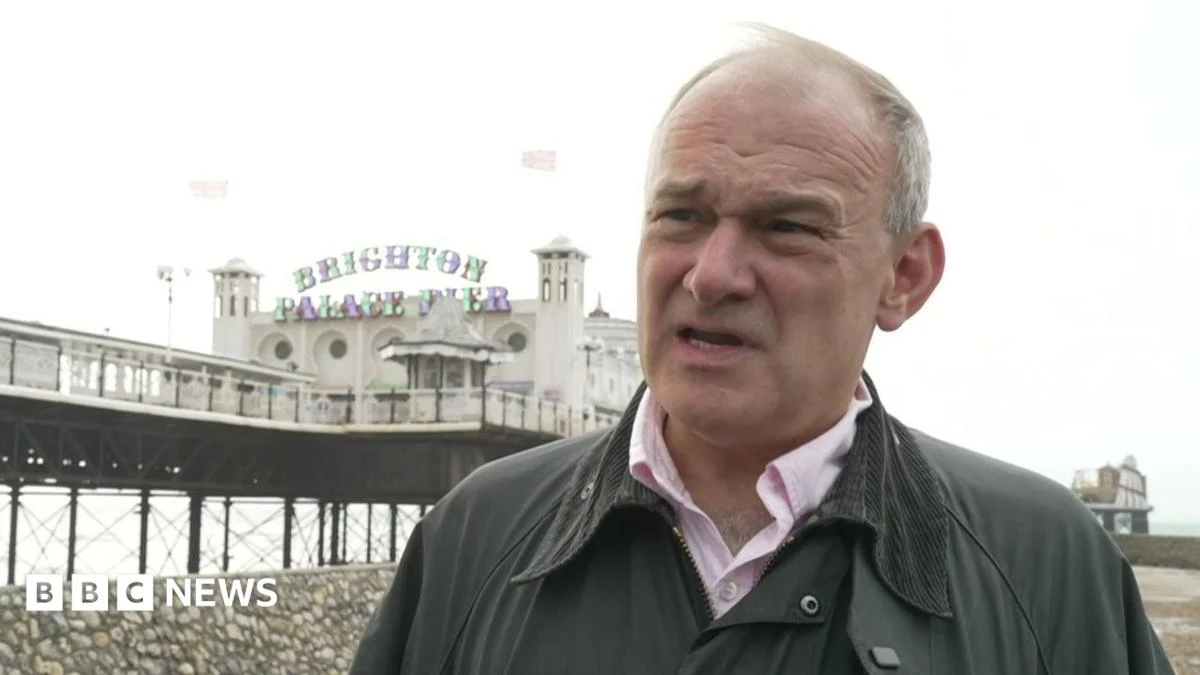
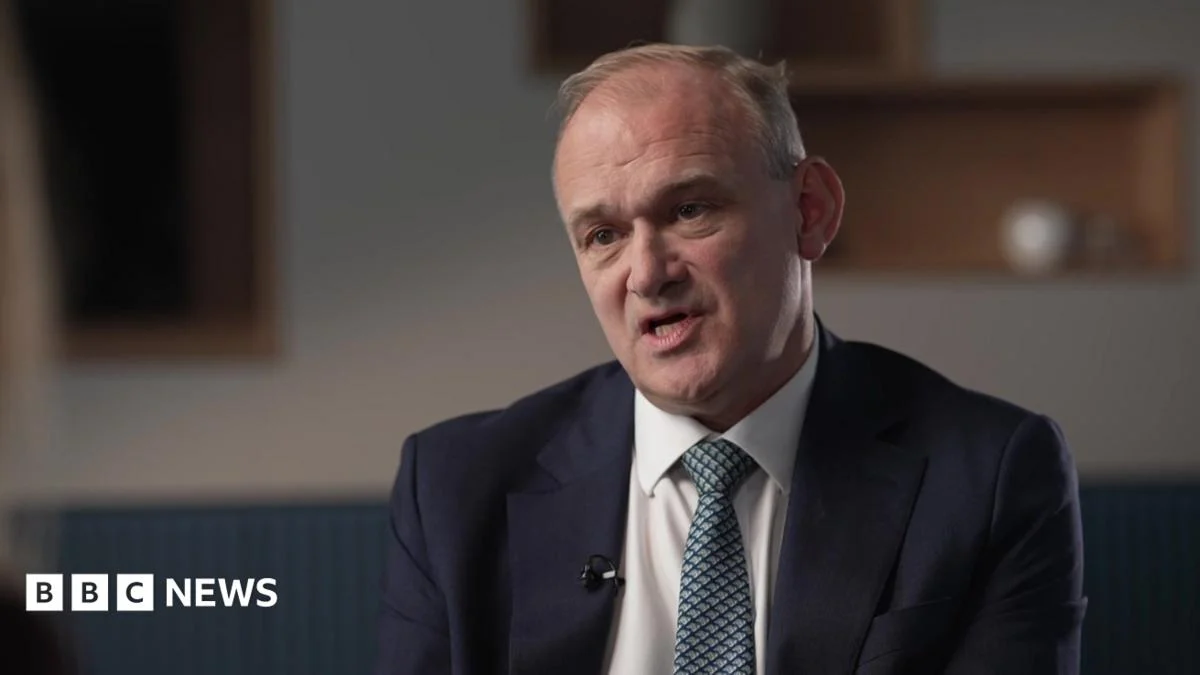
Addressing a press contingent on the pebbled expanse of Brighton Beach, a location often chosen for its symbolic backdrop, Sir Ed laid out his strategic vision. He underscored the Liberal Democrats’ unique positioning, arguing that they are singularly equipped to halt the advancement of Nigel Farage’s Reform party. Davey contended that many of the parliamentary constituencies crucial for Farage’s potential ascent to power are precisely those where the Liberal Democrats possess the strength to either defend their incumbent seats or make significant gains from the Conservatives. This strategy, he explained, is dual-pronged: not only to thwart Reform directly but also to prevent what he termed an "unholy alliance" between Conservative figures like Kemi Badenoch and Farage. Such an alliance, Davey warned, could ultimately hand the keys to No. 10 Downing Street to Farage, thereby jeopardizing Britain’s future and turning it into what he alarmingly described as a "Trump satellite state."
The Liberal Democrat leader did not shy away from painting a stark picture of the potential consequences of such an alignment. He articulated a profound fear that a government influenced or led by this "unholy alliance" would "trash our NHS," foster deep divisions within communities, inflict "untold damage to our environment," and ultimately "trample over traditional British values of fairness, tolerance, and decency." This rhetoric was designed to position the Liberal Democrats as the ultimate guardians of these values, offering a clear ideological counterpoint to the perceived populism and divisive politics of Farage and his allies. The party’s ambition, therefore, extends beyond mere electoral success; it encompasses a "moral responsibility to stop Reform," an imperative that Davey sought to impress upon his party members and the wider electorate.
Central to Davey’s electoral strategy is the concept of building an "Orange Wall" – a metaphorical bulwark of Liberal Democrat constituencies, particularly in the traditional Conservative heartlands, that would serve to block the path of both the Conservatives and Reform. He expressed confidence that the party was ready to significantly expand its parliamentary representation, aiming to win many more seats than their current numbers, with the ambitious goal of exceeding their 2005 record of 62 MPs and perhaps even achieving 72 MPs in the next election. This expansion, he argued, is the "only thing that can stand between Britain and this dangerous experiment" of a Farage-influenced government. To prepare for the possibility of an early election, a manifesto working group had already been established, ensuring the party would be "ready if it comes early," even while acknowledging that the election could still be up to three years away.
However, the conference’s opening day was not solely focused on external threats. Sir Ed also faced the challenge of internal dissent, particularly from South Cotswolds MP Roz Savage. In a pre-conference essay, Savage candidly questioned the party’s struggles for relevance "at precisely the moment when so many people feel powerless." She urged the Liberal Democrats to rediscover their "insurgent spirit," moving beyond being merely "polite custodians of a system that leaves people feeling powerless." This critique highlighted a persistent tension within the party: how to translate significant local electoral successes – such as running more councils than the Conservatives, a point Davey often emphasizes – into a compelling national narrative and broader appeal.
Responding directly to Savage’s comments, Sir Ed acknowledged her contributions but firmly disagreed with her assessment. While valuing her perspective, he asserted, "I think she’s wrong on that." He pointed to the party’s robust local election results as evidence of its tangible impact and relevance, particularly at the grassroots level. Davey also offered a more philosophical take on the frustrations experienced by some MPs, suggesting that the inability to effect immediate, sweeping change is an inherent part of the political system. "Listen, MPs get elected and they get frustrated because they can’t change the world," he remarked, adding, "I’m afraid that’s the political system. I’ve been used to it for a little while and people are learning about that frustration." This response aimed to both validate and contextualize the internal anxieties, while simultaneously reaffirming the party’s strategic direction.
The challenge of national relevance was further underscored by recent polling data, which revealed that a significant 43% of respondents were "unclear what the Liberal Democrats stand for," with just over half describing the party as "weak." This data suggests that despite Sir Ed’s "attention-grabbing stunts" – which have included various lighthearted, viral moments designed to raise his and the party’s profile ahead of the last election – a substantial portion of the electorate remains unconvinced or uninformed about the party’s core identity and policy platform. The Brighton conference, therefore, represented a crucial opportunity to articulate a clearer, more distinctive position in British politics, directly addressing these perceptions of weakness and ambiguity.
Davey outlined the Liberal Democrats’ "distinctive position" as one that not only stands as a bulwark against the far-right but also offers concrete policy solutions. He reiterated the party’s unwavering focus on the National Health Service, promising to detail proposals for its reform and increased funding throughout the conference. Crucially, the party also committed to the ambitious goal of re-joining the EU single market and customs union, a policy that sharply differentiates them from both the Labour and Conservative parties, positioning them as the leading pro-European voice in mainstream British politics. This commitment reflects a belief that such a move would alleviate many of the economic pressures currently facing the country, providing a clear path to growth and stability.
The Liberal Democrats’ alarm over the rightward shift in British politics was amplified by Davey’s observation that six former Conservative cabinet ministers were among 25 Tories who had defected to Reform in the preceding two years. He characterized this exodus as a symptom of a deeper malaise, claiming that these defectors were now "competing with each other to see who can divide the country more, rather than looking to fix the country’s problems." This narrative positioned the Liberal Democrats as the unifying, problem-solving alternative to a Conservative party increasingly fractured and pulled towards the extremes by figures like Farage.
Beyond confronting the Conservative-Reform axis, Davey also turned his rhetorical fire on the Labour government, accusing it of having "no plan for growth," failing to adequately support families grappling with the persistent cost of living crisis, and taxing small businesses "to the brink." This critique aimed to establish the Liberal Democrats as a credible alternative across the political spectrum, not just as a defensive shield against the right, but also as an assertive voice for economic competence and social justice where Labour was perceived to be falling short.
In a stirring call to action ahead of his main speech to party members, Sir Ed Davey urged Liberal Democrats to remain vigilant, "not to look away from injustice or ‘human dignity under attack’ but to fight back." This concluding message encapsulated the party’s renewed sense of purpose and moral imperative, positioning them as an active, principled force ready to challenge the status quo, defend liberal values, and offer a distinct vision for Britain’s future in an increasingly turbulent political landscape.


 Nakalama John
 Nana Banana

 George Anjay