George Anjay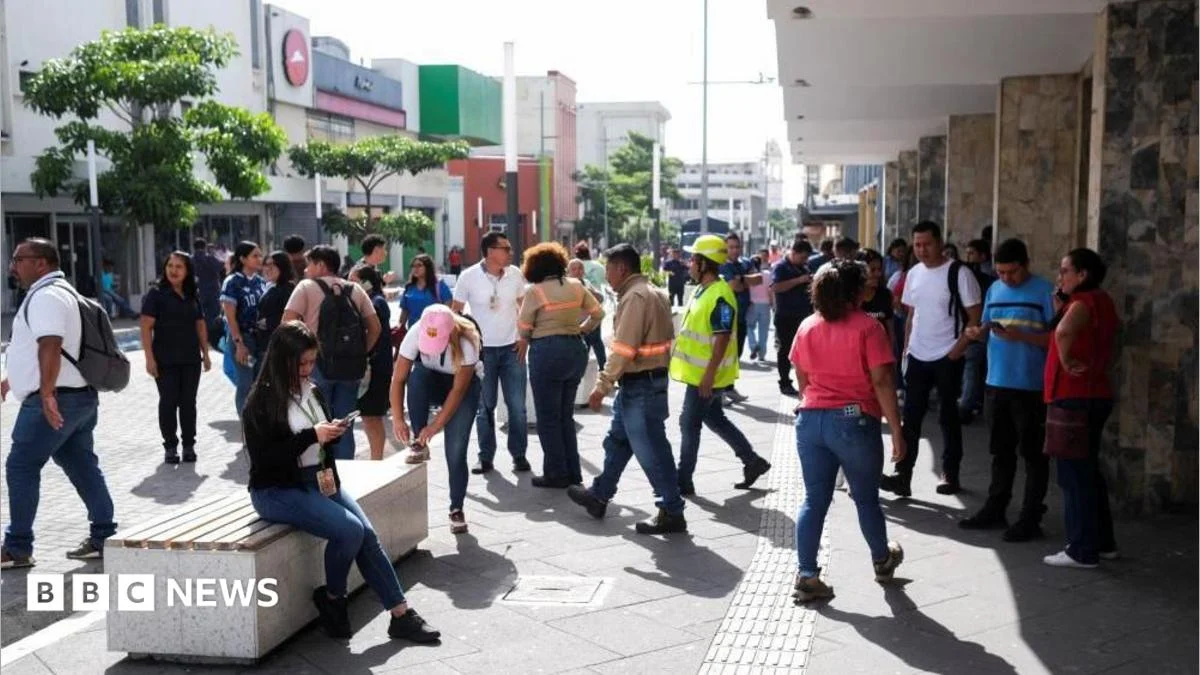
A powerful magnitude 7.3 earthquake struck off the coast of southern Mexico on Friday, triggering a tsunami warning for parts of the Pacific and sending tremors felt across the region, including in Guatemala and El Salvador. Fortunately, no fatalities or significant damage have been reported in Mexico or Guatemala following the seismic event, which occurred at 08:49 local time (14:49 GMT). The earthquake’s epicenter was located near the fishing town of Puerto Madero in Mexico, with a relatively shallow depth of 15.2 kilometers (9 miles), according to the United States Geological Survey (USGS).
Mexico’s navy secretary, Admiral Raymundo Morales, addressed the nation in a press conference, assuring the public that there was "no serious impact." However, he stressed the importance of public safety and advised people to stay away from beaches as a precautionary measure. The US Tsunami Warning System had initially issued warnings of potentially "hazardous tsunami waves" along the nearby coasts of Mexico and Guatemala. These warnings were later updated as the system recorded actual wave heights. In Puerto Madero and Chiapas, Mexico, waves of approximately 0.3 meters (1.1 feet) above tide level were measured. Several hours after the initial alert, the tsunami warning center announced that the immediate threat had passed but continued to advise individuals in affected coastal areas to "remain observant and exercise normal caution near the sea."
The Governor of Oaxaca, Salomón Jara Cruz, reported that the earthquake was felt with "moderate intensity" across the southern Mexican state, but no significant damage was noted. Similarly, Eduardo Ramírez, the governor of Chiapas, the state closest to the epicenter, confirmed that there had been no serious impact. Despite the lack of immediate widespread damage, Governor Ramírez took decisive action, instructing his cabinet to suspend administrative activities and urging the private sector to follow suit, demonstrating a commitment to preparedness and a swift response to any potential emerging issues.
In neighboring Guatemala and El Salvador, the tremor was more acutely felt, shaking buildings and prompting evacuations as concerned residents rushed from their homes. Reuters news agency reported on these immediate reactions. The seismic activity did not cease with the initial earthquake; a series of aftershocks, with magnitudes ranging between 4.7 and 6, were recorded, keeping emergency services and the public on alert.
Guatemala’s President Bernardo Arévalo provided an update on the country’s response, stating that the nation’s emergency management agency had been deployed. He specifically mentioned a magnitude 5.6 earthquake with its epicenter in Quetzaltenango, reassuring the public that no fatalities had been recorded thus far. President Arévalo took to the social media platform X to call on the population to "remain calm and to follow the recommendations," emphasizing the importance of coordinated action and adherence to official guidance.
The U.S. National Oceanic and Atmospheric Administration (NOAA), which oversees the tsunami warning center, had also forecast potential tsunami waves for a wider range of coastal areas. Their projections indicated waves of less than 0.3 meters above tide level along the coasts of El Salvador, Colombia, Costa Rica, Ecuador, Nicaragua, Panama, Peru, and Honduras. NOAA further elaborated on the nature of tsunamis, explaining that they consist of a series of waves with varying intervals between crests, potentially lasting for many hours. In the specific case of this event, the observed tsunami waves were relatively short-lived, lasting for 12 minutes in Puerto Madero and 28 minutes in Chiapas.
NOAA also issued crucial safety information regarding the dangers posed by tsunamis. The agency warned that individuals caught in tsunami waters could drown, be crushed by debris, or be swept out to sea. They reiterated the critical role of government agencies in threatened coastal areas, emphasizing their responsibility to instruct at-risk populations. NOAA strongly advised people located in these areas to "stay alert for information and follow instructions from national and local authorities," underscoring the paramount importance of heeding official directives during and after such seismic events. The swift and coordinated response from Mexican and Guatemalan authorities, coupled with the timely warnings and information provided by international agencies like the USGS and NOAA, contributed significantly to mitigating the potential impact of this powerful earthquake and the associated tsunami threat.




 Nakalama John
 atisusanti
 Ramos Leo