George Anjay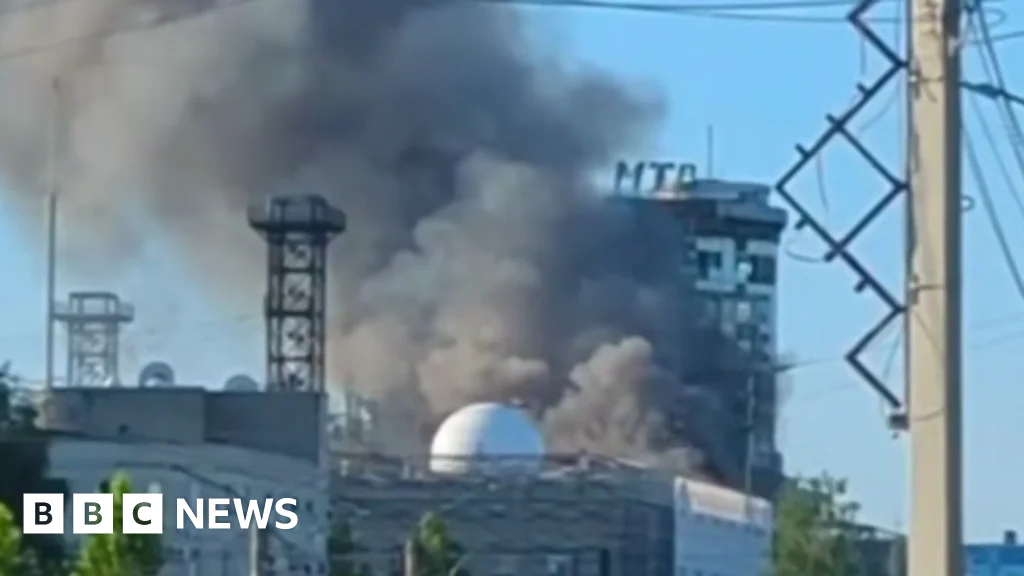
Ukraine has launched a significant missile strike deep into Russian territory, targeting a major military plant in the city of Cheboksary in the Chuvash Republic. President Volodymyr Zelensky announced the operation on Wednesday, stating that Ukrainian FP-5 Flamingo cruise missiles successfully struck the facility, which is responsible for producing components for drones and missiles used by the occupying forces. The strike occurred over 900 kilometers (560 miles) from the current front lines, marking a notable escalation in Ukraine’s ability to project force into Russia. Local officials in Cheboksary confirmed that the city was hit, with reports indicating three people were injured.
The VNIIR-Progress plant, identified as the target, is a crucial hub for Russia’s defense industry. Ukraine’s military confirmed the strike, reporting a fire at the site following the attack. The FP-5 Flamingo missile, reportedly used in the operation, is a formidable weapon with a substantial 1,150kg (2,535lbs) warhead and a stated range of up to 3,000 kilometers. This capability places key Russian cities, including the capital Moscow, well within its reach. The development and deployment of such missiles underscore Ukraine’s ongoing efforts, in collaboration with its Western allies, to increase the costs of Russia’s invasion and pressure Moscow towards a negotiated settlement.
This strike on Cheboksary is part of a broader pattern of intensified Ukrainian attacks on Russian infrastructure in recent months. While drone strikes on energy sites and military installations have become more frequent, the use of longer-range missiles to hit targets deep within Russia has been rarer. Kyiv maintains that energy facilities supporting Russia’s war effort are legitimate targets.
In addition to the Cheboksary strike, Ukraine also claimed responsibility for attacks on other strategic Russian assets. These include the Moscow-occupied port of Mariupol on the Sea of Azov, a Russian oil refinery in Samara, and a "shadow fleet" oil tanker operating in the Black Sea. These multifaceted attacks aim to disrupt Russia’s logistical capabilities, cripple its economic capacity to sustain the war, and degrade its military assets.
The Ukrainian Air Force reported a significant defensive success on Wednesday, stating that it had downed 181 out of 207 drones launched by Russia during a series of overnight attacks. However, they also acknowledged that 21 direct hits occurred in 14 locations across Ukraine. In contrast, Russia’s military claimed its air defense units intercepted or shot down a total of 326 Ukrainian drones over various regions overnight. These conflicting reports highlight the intensity of the ongoing aerial warfare and the challenges in verifying casualty and damage figures.
The civilian toll from these exchanges has been significant. Local officials reported that at least two people were killed and 26 injured, including two children, across four Ukrainian regions in the preceding 24 hours, attributed to Russian attacks.
President Zelensky shared footage purportedly showing a missile in flight towards its target and subsequent plumes of smoke emanating from the facility in Cheboksary. The image accompanying the report, shared on Telegram, visually corroborated these claims, depicting the aftermath of a strike on a Russian military plant.
The strategic significance of the Cheboksary strike lies not only in the direct damage to a key military production facility but also in its psychological and geopolitical implications. By demonstrating the capacity to strike deep within Russia, Ukraine aims to underscore the vulnerability of Russian territory and disrupt the Kremlin’s narrative of invincibility.
Russia’s response to these escalations has been largely characterized by defiance. President Vladimir Putin has consistently rejected all negotiation proposals from Ukraine and its allies. He has also asserted that Russian troops are making advances across the front line, despite evidence suggesting that the front has remained largely static for several months. The Kremlin’s continued insistence on military victory, coupled with its ongoing attacks on Ukrainian infrastructure, sets a grim backdrop for the protracted conflict.
The development of advanced missile systems like the FP-5 Flamingo is a critical component of Ukraine’s long-term defense strategy. These weapons are designed to neutralize Russia’s advantages in terms of geographic depth and industrial capacity, forcing Moscow to contend with the direct consequences of its invasion on its own soil. The increased frequency and sophistication of these strikes suggest a growing capability and resolve within Ukraine’s military to escalate the conflict’s cost for Russia.
The international community continues to closely monitor these developments, with Western allies providing crucial military and financial aid to Ukraine. The ability of Ukraine to sustain these deep-strike operations will depend on continued access to advanced weaponry and intelligence. The long-range missile strikes represent a significant shift in the conflict’s dynamics, moving beyond the immediate front lines to directly impact Russia’s war-making potential. The implications of these attacks for future negotiations and the overall trajectory of the war remain to be seen, but they undoubtedly signal a determined effort by Ukraine to alter the strategic balance.




 Nakalama John
 atisusanti
 Ramos Leo