Ramos Leo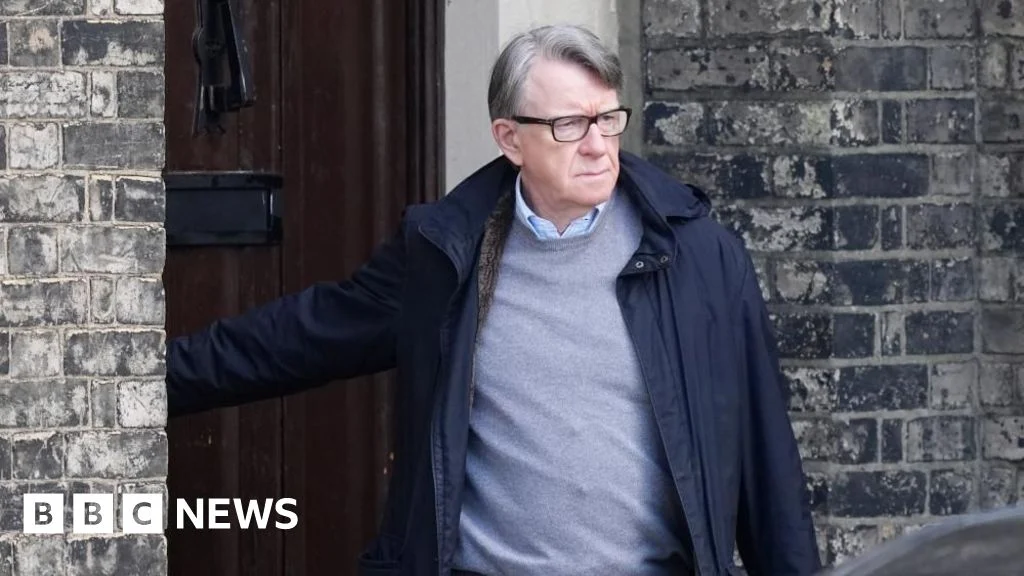
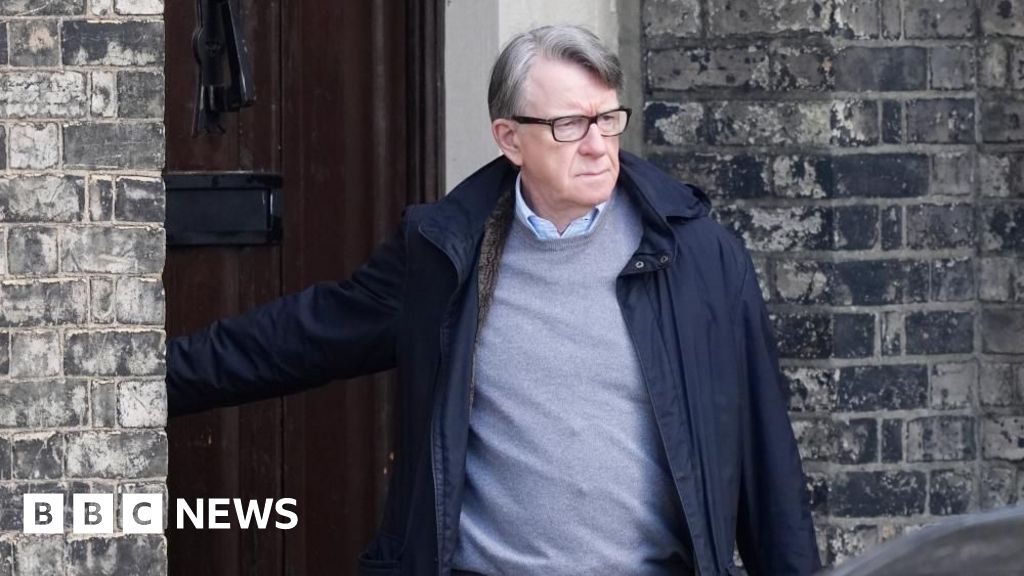
The Cabinet Office, the department responsible for supporting the Prime Minister and Cabinet, is currently in the advanced stages of preparing to release thousands of official files. These documents are expected to shed light on the decision-making process that led to Lord Mandelson’s ambassadorship, as well as the events preceding his subsequent dismissal. Crucially, while officials have already gained access to communications from the peer’s government-issued work phone, the demand for his personal device’s messages underscores a perceived gap in the existing records.
Government insiders have been quick to assert that the intention to solicit messages from Lord Mandelson’s personal phone was always part of their broader plan for full disclosure. They insist this move is entirely independent of recent controversies, particularly the high-profile theft of a mobile phone belonging to Morgan McSweeney, who served as Sir Keir Starmer’s former chief-of-staff. This distinction is vital for officials seeking to maintain the integrity and perceived impartiality of the ongoing investigation and document release process.
However, the timing has undoubtedly raised questions. Officials are believed to be in possession of some exchanges between Lord Mandelson and Mr. McSweeney, but the government has conspicuously declined to confirm whether other potentially vital communications may have been irretrievably lost due to the theft of Mr. McSweeney’s device. The messages residing on Lord Mandelson’s personal phone are therefore seen as potentially crucial, capable of filling in significant blanks and helping to reconstruct a more complete timeline of interactions that might otherwise remain unavailable to investigators and the public alike.
Opposition politicians, particularly those from the Conservative party, firmly believe that these personal phone messages could prove highly revealing. They suspect the communications might demonstrate the frequency and nature of Lord Mandelson’s interactions with key figures within the Labour government, including ministers and senior advisers, and potentially indicate the extent to which he may have influenced their decision-making processes regarding his appointment and other policy matters. The drive for transparency is, for many, a test of governmental accountability.
Lord Mandelson’s tenure as ambassador was abruptly cut short last year following a cascade of revelations concerning his long-standing friendship with the late Jeffrey Epstein, a financier convicted of sex offences. Epstein’s history, involving the trafficking and abuse of underage girls, cast a long shadow, making any association with him deeply problematic for a senior public official, especially one representing the UK on the international stage. The scandal quickly escalated, leading to intense public scrutiny and ultimately his dismissal from the diplomatic post.
Earlier this year, the issue gained significant parliamentary traction when Members of Parliament successfully forced the government’s hand. They voted in favour of a motion, spearheaded by the Conservatives, demanding the full disclosure of all relevant files pertaining to Lord Mandelson’s appointment. This parliamentary intervention underscored the depth of public and political concern surrounding the matter and the perceived need for absolute transparency.
It is understood that Lord Mandelson will be formally asked to hand over all documents that fall within the scope of this parliamentary motion. This mandate is broad, encompassing messages exchanged with ministers, other government officials, and specifically Mr. McSweeney, dating back to the summer of 2024. This period is critical as it covers the initial discussions and vetting processes leading up to his ambassadorial confirmation. The Cabinet Office has indicated that a second, considerably larger, tranche of documents related to Lord Mandelson’s appointment is scheduled for publication in the coming weeks, promising even further insights into the complex affair.
The theft of Morgan McSweeney’s work phone occurred in October, approximately a month after Lord Mandelson’s sacking but several months prior to MPs formally demanding the publication of relevant messages. This timeline has fueled speculation and suspicion among some political commentators and opposition figures.
Kemi Badenoch, the Conservative leader, articulated these concerns vividly in an op-ed published in the Daily Telegraph. She wrote that "something fishy is going on" regarding the mysterious loss of McSweeney’s phone. Going further, Badenoch called for all documents related to the theft itself to be disclosed, suggesting that "some people have even suggested it would be in McSweeney’s interest to walk around London waving his phone around until it was stolen." These incendiary comments highlight the intense political theatre surrounding the entire saga.
In an unusual move that further amplified the public discussion, the Metropolitan Police took the step of publishing the full transcript of the emergency call Mr. McSweeney made on 20 October last year. The transcript detailed his report that his work phone had been snatched directly from his hand by a young man riding a bicycle as he walked down a London street. While this provided a police account of the incident, it did little to quell the political questions surrounding the potential loss of information.
Sir Keir Starmer, the Labour leader, has publicly asserted that Lord Mandelson "lied" during the vetting process conducted prior to his appointment as ambassador. Downing Street, in turn, has expressed a hope that the documents now being published will serve to substantiate Starmer’s claim. This suggests a desire within the Labour leadership to distance themselves from the controversy and underscore their commitment to integrity.
However, it was widely known, and indeed public information, during the period of Lord Mandelson’s appointment, that he had maintained a friendship with Jeffrey Epstein even after the financier’s initial conviction for soliciting prostitution with a minor. This raises a crucial question: if the friendship was public knowledge, what exactly did Lord Mandelson allegedly "lie" about during the vetting process? The scope and nature of his contact post-conviction, or perhaps specific interactions, may be the focus of Starmer’s accusation.
Documents that have already been released by the Cabinet Office reveal that Sir Keir Starmer and his team were explicitly advised that Lord Mandelson’s relationship with Epstein posed a "general reputational risk" ahead of his confirmation as US ambassador. This advice, seemingly disregarded at the time, now adds another layer of scrutiny to the decision-making process within the government.
Further complicating the drive for transparency, the police have intervened and requested that the Cabinet Office withhold certain documents from publication. This decision stems from their ongoing investigation into allegations of misconduct in public office by Lord Mandelson himself. The police intervention highlights the serious legal dimension of the inquiry, moving beyond mere political scrutiny to potential criminal wrongdoing.
Among the documents specifically blocked from public release is a crucial vetting exchange involving three pointed questions that Mr. McSweeney reportedly posed to Lord Mandelson concerning his ties to Epstein. These questions are believed to have delved into sensitive areas, specifically: Lord Mandelson’s continued contact with Epstein following the financier’s first conviction for soliciting prostitution with a minor; reports that he had stayed at Epstein’s home while the financier was serving a prison sentence; and his association with a charity founded by Epstein’s notorious associate, Ghislaine Maxwell. The blocking of these particular documents underscores their potential significance to the police investigation and to understanding the full extent of the vetting process and Lord Mandelson’s responses.
Lord Mandelson has, to date, not responded to specific requests for comment on these latest developments. However, the BBC understands his consistent position to be that he has not acted in any way criminally, that his actions were not motivated by financial gain, and that he answered all questions about his relationship with Epstein accurately during the vetting process. This defence suggests a nuanced interpretation of "accuracy," potentially implying that he answered the questions posed to him truthfully, but perhaps without volunteering additional information that was not explicitly requested. The demand for his personal phone messages represents the latest, and potentially most intrusive, step in a saga that continues to challenge perceptions of transparency, accountability, and ethical conduct at the highest levels of British public life.


 Roy Suryo
 Nakalama John
 atisusanti