
 Ramos Leo
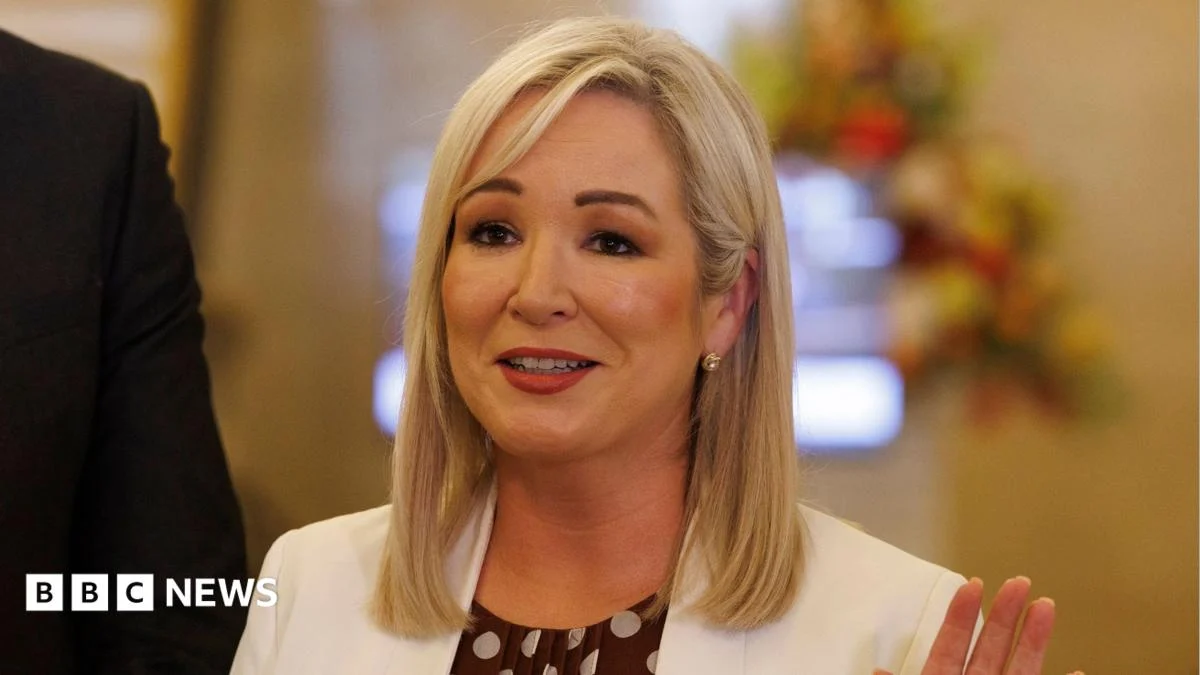
The decision to exclude O’Neill from the high-level economic discussions was formally communicated by DUP Deputy First Minister Emma Little-Pengelly, who asserted that the "concerns arising from O’Neill’s conduct and the anger and hurt felt by many people across Northern Ireland cannot simply be ignored or minimised." DUP leader Gavin Robinson echoed this sentiment, stating that the First Minister’s "arrogance will have consequences," directly linking the blockage to the Portadown incident. He underscored the DUP’s position that O’Neill’s "law breaking must have consequences," framing the exclusion as a necessary response to perceived disregard for the rule of law. This action follows a previous instance where Little-Pengelly also halted a planned engagement with Michael D. Higgins, the President of Ireland, indicating a pattern of DUP obstruction in response to O’Neill’s actions.
Michelle O’Neill vehemently condemned the DUP’s move, labeling it "reckless and irresponsible" and a "reactive stunt, driven by the DUP’s own internal pressures and electoral problems." She accused the DUP of being "consumed with their own internal leadership troubles and divisions," diverting attention from the pressing needs of the people of Northern Ireland. O’Neill described the DUP leader’s comments as "arrogant and supremacist," arguing that the blockage meant people in Northern Ireland would be unrepresented at a vital economic forum. Despite the setback, she affirmed her commitment to her role, stating she would be at the Assembly on Monday with her party colleagues to "keep showing up every day for people," emphasizing her focus on governance over political squabbles.
The root of this intense political confrontation lies in an unnotified demonstration in Portadown last month, where O’Neill and other senior Sinn Féin figures participated. The event, held in an area historically sensitive due to the contentious Drumcree parades, sparked outrage among unionists who accused Sinn Féin of acting unlawfully by failing to notify the Parades Commission. The police subsequently launched an investigation, interviewing O’Neill and others regarding their involvement. O’Neill has consistently defended her participation, stating it was the "right thing to do," a stance that further inflamed unionist sentiment, who view it as a dismissive attitude towards the regulatory framework governing parades and public assembly in Northern Ireland. For many unionists, the incident resurrected painful memories of past sectarian tensions and underscored a perceived double standard in the application of the law.
The National Economic Council, revived by Prime Minister Rishi Sunak over the summer, is intended to foster greater collaboration and address economic challenges across the UK’s nations and regions. For Northern Ireland, representation at such a council is critical, especially given its unique economic circumstances post-Brexit, the ongoing impact of the Windsor Framework, and persistent budgetary and funding challenges facing the devolved Executive. The DUP’s decision to prevent the First Minister from attending means that Northern Ireland’s voice, particularly from the perspective of the power-sharing government’s nationalist head, was absent from these crucial discussions. Deputy First Minister Little-Pengelly, however, requested a separate meeting with the Prime Minister to ensure Northern Ireland’s interests, including its urgent budgetary needs, could still be represented directly, attempting to mitigate the impact of O’Neill’s exclusion while maintaining the DUP’s principled stance.
The Secretary of State for Northern Ireland, Chris Heaton-Harris, expressed "deep frustration" that the Northern Ireland Executive would not be fully represented at the National Economic Council. He underscored the importance of all parties engaging constructively for the benefit of the region, stating, "I understand feelings are running high but it must be in the interests of the people of Northern Ireland that everyone gets round the table." This sentiment was echoed by other political leaders in Northern Ireland, many of whom criticized the DUP’s approach, albeit from different perspectives.
The DUP’s actions are also understood within the context of significant internal pressure and rivalry from other unionist parties. The Traditional Unionist Voice (TUV) leader Jim Allister, a staunch critic of the DUP’s power-sharing arrangements with Sinn Féin, dismissed the DUP’s response as "beyond pathetic." Allister, who advocates for a much harder line against Sinn Féin, claimed the DUP was "interested only in clinging to office, not principle," suggesting that the blockage was an insufficient and performative gesture. His party, which consistently outperforms the DUP in some unionist strongholds, capitalizes on any perceived weakness or compromise from the larger unionist party.
Pressure on the DUP leader Gavin Robinson has been particularly acute, evident in the actions of prominent DUP MP Carla Lockhart. Last week, Lockhart stepped down from the party’s ruling officer board in protest of Robinson’s perceived leniency in not withdrawing Emma Little-Pengelly from their joint Stormont office to force O’Neill’s removal as First Minister. On Thursday, Lockhart escalated her challenge, stating she would follow her "own course" if the party did not seek to remove Michelle O’Neill as First Minister. This public defiance from a key figure like Lockhart, representing Upper Bann, signals deep divisions within the DUP over how to respond to the Portadown row and the broader question of power-sharing with Sinn Féin. Other DUP representatives, including Assembly Member Diane Forsythe and Maurice Bradley, have publicly backed Lockhart’s calls for O’Neill’s removal, with Forsythe suggesting that, at a "bare minimum," official engagements through the joint Executive Office should cease immediately in the absence of "meaningful action." Bradley even argued that removing O’Neill "would not, in itself, require the Assembly to collapse," suggesting a procedural path for such a move. Robinson, in turn, has tried to walk a fine line, asserting that while O’Neill and her party colleagues "should be punished, that does not include punishing the rest of Northern Ireland," indicating a desire to avoid collapsing the Executive entirely.
Beyond the unionist camp, other parties expressed concerns about the DUP’s strategy. Alliance Party leader Naomi Long criticized the DUP, stating that refusing to attend or preventing others from attending the meeting with the Prime Minister was reckless and put party interests ahead of Northern Ireland’s economic future and the needs of the public. The Alliance Party, often positioning itself as a neutral arbiter focused on effective governance, consistently advocates for stability and cooperation within the Executive. The Ulster Unionist Party (UUP) leader Doug Beattie described the situation as a "political fudge" that was "all choreography and no consequences," adding that the move would "probably galvanise Sinn Féin further at the ballot box." The UUP, another traditional unionist party, often seeks a more pragmatic approach than the DUP’s hardline faction. Matthew O’Toole of the Social Democratic and Labour Party (SDLP), a nationalist party, warned that "plunging this place into more political chaos is not a sensible strategic move for unionism." He concluded that "ultimately it’s only going to make reasonable people here conclude that the largest unionist party simply doesn’t want to make the status quo work," highlighting the potential for the DUP’s actions to erode public trust in power-sharing.
The ongoing dispute highlights the inherent fragility of the power-sharing arrangements in Northern Ireland, where historical grievances and deeply entrenched political differences can quickly escalate into crises. The DUP’s decision to block Michelle O’Neill from the Glasgow meeting, driven by internal pressures and a desire to assert authority, risks further destabilizing an Executive that has only recently been restored after a prolonged period of collapse. While the DUP asserts it is upholding the rule of law and responding to unionist anger, critics argue that the move punishes the entire region by hindering its representation and progress on critical economic issues, further exacerbating political tensions rather than resolving them.


 Roy Suryo
 George Anjay
 Nakalama John

 atisusanti
