Roy Suryo
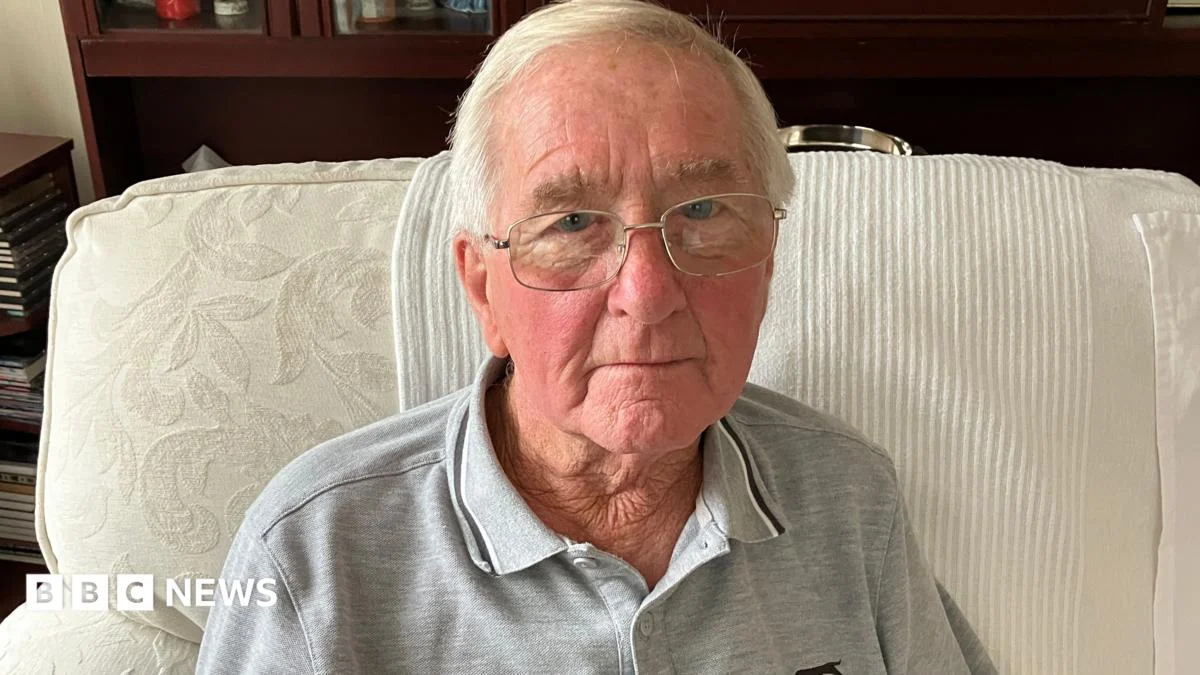
An 83-year-old recovering cancer patient, who has endured two heart attacks, was compelled to undertake a gruelling four-hour round trip to attend crucial medical tests, highlighting significant deficiencies in patient transport services in rural Wales. Charles Swift, a resident of Borth in Ceredigion, was referred to Withybush Hospital in Haverfordwest, Pembrokeshire, for cardiac assessments in August. The journey, a distance of 70 miles each way, presented a considerable challenge for a man with his complex medical history.
Mr. Swift’s plight began when he enquired about non-emergency patient transport. His request was met with a refusal from a Welsh Ambulance Services Trust (WAST) call handler, who cited his ownership of a car as a reason for ineligibility. "I can’t understand why pensioners have to run about in their own car," Mr. Swift expressed, his voice laced with frustration and disbelief. He highlighted the inherent difficulty of such journeys for an 83-year-old, particularly one managing ongoing health issues, stating, "It’s not a good journey to do. It was tiring."
The Welsh Ambulance Services Trust acknowledged that it is not always able to meet the escalating demand for patient transport, and confirmed that changes are being implemented to enhance the service. However, Mr. Swift’s experience with hospital taxi services also proved disheartening. When he contacted them, he was reportedly asked if he could walk, climb stairs, and if he owned a car. Upon answering affirmatively to all three, he was told, "You’ll have to use that then." This response underscored a perceived lack of empathy and understanding of his medical vulnerability.
The issue of inadequate transport was further exacerbated by a cancellation of pre-arranged hospital transport. On one occasion, Mr. Swift was informed on a Friday afternoon that his transport for a Monday appointment in Haverfordwest had been cancelled, forcing him to cancel his much-needed medical appointment. While he did eventually experience a "very pleasant" and problem-free journey when hospital transport was provided on a subsequent occasion, the inconsistency and unreliability of the service caused significant distress.
The Hywel Dda University Health Board’s website states that patients are generally expected to arrange their own transport to and from hospital appointments. While eligibility for non-emergency patient transport services provided by the Welsh Ambulance Service exists, stringent criteria must be met. These criteria typically include patients undergoing regular dialysis or cancer treatment, those requiring a stretcher or oxygen, or individuals who need to travel in their own wheelchairs. For Mr. Swift, whose primary concern was the physical strain of a long drive on his heart and recovering body, these criteria did not seem to fully encompass his needs.
The impracticality of relying on public transport for such journeys is stark. Trains from Borth to Haverfordwest involve a minimum journey time of three-and-a-half hours in each direction, making it an unfeasible option for someone with his health conditions. This leaves a significant gap for individuals in rural areas like Ceredigion who require accessible and reliable medical transport.
In response to these growing concerns, local councillors in Ceredigion have been vocal in their calls for an improved hospital transport system in rural areas. Councillor Hugh Hughes, who met Mr. Swift shortly after his initial appointment, described him as "distraught" and "absolutely exhausted" after his first challenging experience. Councillor Hughes highlighted the emotional and physical toll such situations take on vulnerable patients.
Following Mr. Swift’s initial request for transport, WAST reviewed his phone call. Mark Harris, WAST’s assistant director of operations, indicated that the transport would not have been refused if more comprehensive information had been provided. He assured that processes have been updated, and call-taking teams have received additional training, suggesting that Mr. Swift would receive a different response if he were to contact them again.
Mr. Harris acknowledged that increasing demand for transport and the growing distances patients are required to travel are placing a strain on resources. This can lead to transport cancellations when demand exceeds available capacity. "We are seeing an increase in the volume of journeys we have to cancel where the demand exceeds our available resource," he stated, adding that WAST is currently undertaking a "significant improvement programme" to address these challenges.
Despite these assurances, councillors and voluntary organisations involved in patient transport have reported persistent issues with bookings being cancelled at short notice, often the day before an appointment. This unreliability leaves patients in precarious situations, facing the prospect of missing vital medical appointments.
Councillor Hughes expressed his frustration that many services appear to be migrating further south, away from accessible local hospitals like Bronglais in Aberystwyth. He emphasized that while travel is sometimes unavoidable, the increasing prevalence of such long-distance journeys is a cause for serious concern.
Voluntary organisations are stepping in to bridge the gap created by the failing transport system. One such charity, mentioned in the original report, has taken 145 calls in the past two months regarding cancelled hospital transport. They have managed to assist patients in approximately a third of these cases, highlighting the critical role they play in ensuring patients can reach their appointments. This intervention is crucial, as "basically that means the person can actually get to the hospital for their appointment," as stated by a representative of the charity.
The charity has also observed a substantial increase in patients needing to travel significantly further than their local hospital, with some journeys extending to 40 to 50 miles. They also noted that longer journeys are becoming more common, and older patients are often "not really comfortable" driving to hospitals in unfamiliar areas, further compounding the problem.
Councillor Hughes stressed the urgent need for improved collaboration between the health board and the ambulance service. He warned that individuals are "falling through the net and are not getting the transport they need," indicating a systemic failure to support vulnerable patients.
Andrew Carruthers, chief operating officer at Hywel Dda University Health Board, acknowledged the challenges faced by patients in their extensive rural area, particularly when accessing specialist treatment requires longer travel distances. He stated that the health board works closely with WAST and would raise concerns to explore how "transport options available for our patients" can be enhanced. However, the ongoing experiences of patients like Charles Swift suggest that the current measures are insufficient to address the critical needs of those in rural communities, particularly the elderly and those with complex health conditions who rely on dependable medical transport. The story of Mr. Swift’s arduous journey serves as a stark reminder of the pressing need for a more robust, compassionate, and accessible patient transport system across Wales.



 George Anjay

 Nakalama John

 atisusanti
 Ramos Leo