
 Ramos Leo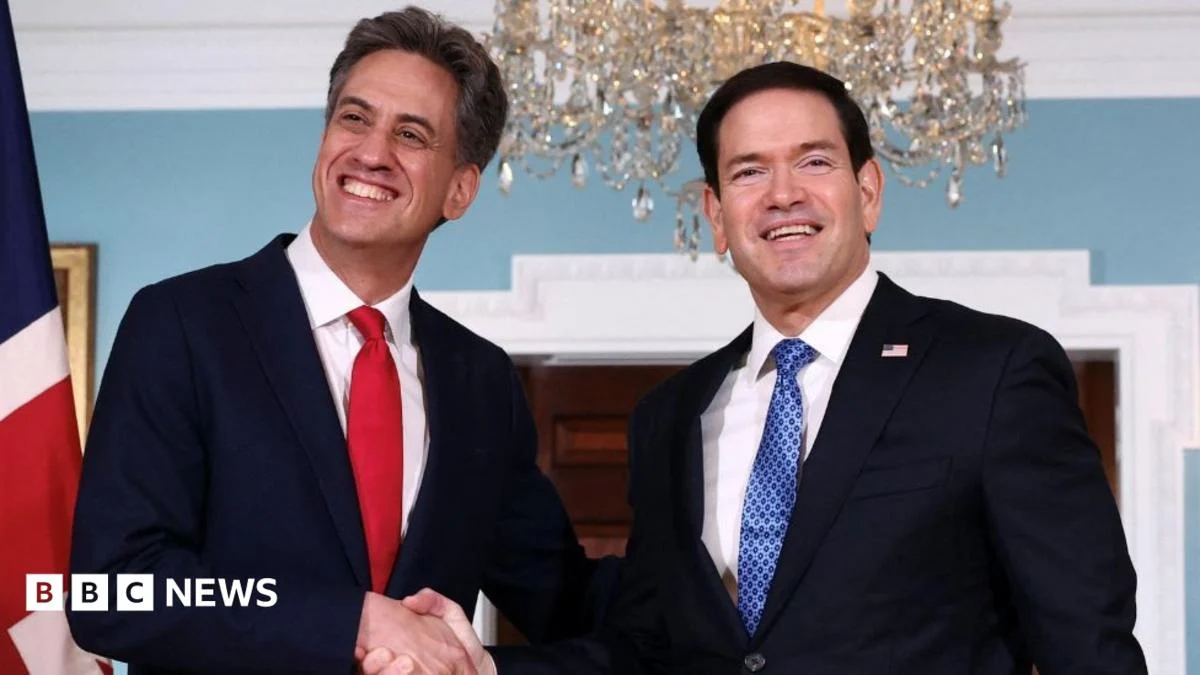
The Labour minister’s visit to the US capital is not merely a formality; it is a complex diplomatic tightrope walk, designed to reinforce the UK’s "strong, enduring and essential alliance" with the United States while navigating potentially thorny historical and ideological differences. Beyond the immediate economic imperative of the Strait of Hormuz, the discussions between the two senior diplomats are expected to delve into other pressing global challenges, including the ongoing war in Ukraine, the deepening humanitarian crisis in Gaza, and broader issues of global security and economic stability.
The invitation for Miliband to visit Washington was extended by Rubio himself, following an initial, brief encounter on the sidelines of a foreign ministers’ summit in the Philippines. That summit marked Miliband’s debut on the international stage as Foreign Secretary, a role bestowed upon him by Prime Minister Andy Burnham. His appointment raised eyebrows in some quarters, particularly within the White House, due to Miliband’s historically sharp criticism of former US President Donald Trump. Miliband had previously labelled Trump a "racist" and a "misogynist," comments that resurfaced as he stepped into his new diplomatic brief, casting a shadow of potential friction over the Anglo-American relationship, especially with the prospect of Trump’s potential return to the presidency.
The ideological chasm between Miliband and Trump extends beyond personal conduct to core policy positions. As UK energy secretary in a previous Labour government, Miliband was a staunch champion of net zero policies and the rapid expansion of renewable energy sources. In stark contrast, Trump is a trenchant opponent of wind farms, advocating instead for the unfettered opening up of North Sea oil reserves and a continued reliance on fossil fuels. This divergence presents a delicate balancing act for the current Labour government under Andy Burnham, who has reportedly signalled a more pragmatic shift in North Sea oil policy, a move that has garnered a degree of praise from the Oval Office. This strategic concession by Burnham highlights the perceived need to maintain cordial relations with Washington, even as Miliband, with his well-known environmental convictions, assumes a pivotal role in foreign policy. Consequently, the dynamic between Miliband and Rubio, as representatives of their respective nations and distinct political ideologies, will be scrutinised intently by both allies and adversaries.
The undercurrent of past tensions was explicitly brought to the fore last month by Washington’s top diplomat in London, Warren Stephens. Stephens publicly stated that Miliband had been "wrong" in 2016 to describe Trump as "a racist, misogynistic self-confessed groper," adding pointedly that he hoped Miliband’s "views have changed." Such direct commentary from a senior diplomat indicates the lingering sensitivities within the US administration regarding Miliband’s past pronouncements and underscores the expectation in Washington for a more conciliatory and pragmatic approach from the new British Foreign Secretary. This public challenge sets a complex backdrop for Miliband’s discussions, requiring him to project both continuity in the UK-US alliance and a personal diplomatic agility.
Speaking ahead of the crucial talks, Miliband reiterated the British government’s unwavering commitment to fostering and nurturing the "strong, enduring and essential alliance" with the United States. He expressed his keen anticipation for his "second meeting with Secretary of State Marco Rubio," highlighting the agenda’s critical dual focus: "the ongoing work to reopen the Strait of Hormuz and secure a lasting ceasefire, which is essential to ease cost-of-living pressures on British families." This statement directly links geopolitical stability to domestic economic welfare, framing the re-opening of the Strait as a tangible step towards mitigating inflation and improving the daily lives of ordinary Britons.
The Strait of Hormuz, a narrow sea passage between the Persian Gulf and the Gulf of Oman, holds immense strategic importance as the world’s most critical oil transit chokepoint. Approximately one-fifth of the world’s total petroleum liquids consumption and one-quarter of global liquefied natural gas (LNG) transit through this waterway annually. Its disruption has immediate and far-reaching economic consequences. The original article notes that the Strait had been open prior to "the US and Israel launched the war in February," implying a significant escalation of conflict in the Middle East that led to its closure or severe disruption. This "war" and subsequent instability transformed the Strait into a flashpoint, with increased risks for shipping, soaring insurance premiums for vessels, and delays that have profoundly impacted global trade routes. The knock-on effect for the UK has been stark: elevated fuel prices at the pump, increased costs for imported goods, and inflationary pressures across various sectors, from food to manufacturing inputs. Re-establishing secure and unhindered passage through this vital artery is therefore not just a matter of regional stability but a direct lever for global economic relief, with particular significance for energy-importing nations like the UK.
Beyond the immediate economic concerns, Miliband confirmed that the discussions would also encompass broader geopolitical challenges. "We will also discuss how we can continue to stand shoulder to shoulder with Ukraine against Russia’s war – as well as the importance of addressing the dire humanitarian situation in Gaza and working towards a lasting peace for Palestinians and Israelis," Miliband stated. This comprehensive agenda reflects the multifaceted nature of contemporary global diplomacy and the UK’s commitment to playing a robust role on the world stage alongside its primary ally.
Regarding Ukraine, Miliband is expected to stress the UK’s unwavering commitment to Kyiv, a stance that has been consistently maintained despite what is described as "erratic US support." This phrasing likely alludes to the fluctuating political will and congressional debates within the US regarding continued military and financial aid to Ukraine, particularly in the run-up to a US presidential election. Miliband will underscore that Ukraine’s security is inextricably linked to the broader European and transatlantic security architecture, reinforcing the message that the UK will stand with Kyiv "for as long as it takes." This aligns with the UK’s established leadership role in supporting Ukraine and contrasts with any potential wavering from other allies.
On the humanitarian crisis in Gaza, the talks will focus on the urgent need for a lasting ceasefire and a pathway towards a durable peace for both Palestinians and Israelis. This objective aligns with international calls for de-escalation, increased humanitarian aid access, and a long-term political solution, such as the two-state solution, which both the UK and US formally support. The meeting offers an opportunity for the two nations to coordinate their diplomatic efforts and exert pressure on relevant parties to alleviate suffering and work towards stability in the volatile region.
Adding another layer to his packed itinerary, Miliband will also be taking the UK’s seat on the World Bank board during his visit. This role provides an additional platform for the Foreign Secretary to engage on global issues beyond immediate geopolitical crises. In this capacity, he is scheduled to meet with World Bank President Ajay Banga. Their discussions are expected to cover a wide array of topics crucial for global development and stability, including strategies for poverty reduction, combating climate change through sustainable finance and green initiatives, and strengthening global resilience against future shocks, whether economic, environmental, or health-related. This aspect of Miliband’s visit underscores the UK’s commitment to multilateral institutions and its broader foreign policy objectives, which extend to promoting sustainable development and addressing systemic global challenges, areas where Miliband’s past experience and policy interests are particularly relevant.
The Washington visit, therefore, represents a pivotal moment for Ed Miliband in his new role as Foreign Secretary. He must simultaneously project strength and continuity in the UK-US alliance, address immediate economic pressures linked to global chokepoints, navigate complex geopolitical conflicts, and demonstrate the UK’s commitment to long-term global development. All of this unfolds against a backdrop of historical personal tensions with a potential future US President, making the dynamic with Secretary Rubio and the overall reception in Washington a crucial indicator of the future trajectory of the "special relationship."

 George Anjay
 Nakalama John
 atisusanti
 Roy Suryo
 Nana Banana