
 Nana Banana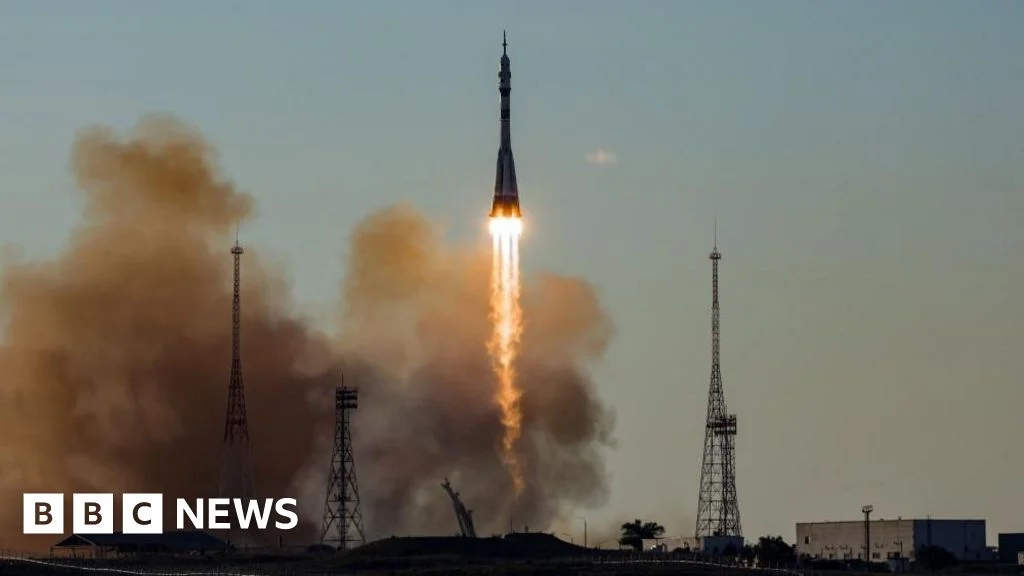
Accompanying Menon are two highly experienced cosmonauts from Roscosmos, Pyotr Dubrov and Anna Kikina, each embarking on their second spaceflight. Dubrov, known for his extended stay on the ISS during Expedition 65/66, brings a wealth of knowledge from his previous 355-day mission, providing invaluable insights into long-duration spaceflight adaptation and station maintenance. Kikina, Russia’s only active female cosmonaut, also contributes significant experience from her prior mission, reinforcing the critical role of diverse expertise and perspectives in complex space operations. Their combined experience will be crucial for guiding Menon through his initial weeks aboard the station and for executing the demanding scientific and operational schedule ahead. The crew is slated to spend approximately eight months aboard the International Space Station, with their return to Earth anticipated in April 2027, according to Nasa, allowing for a substantial period of research and station upkeep.
The Baikonur Cosmodrome, nestled in the vast steppes of Kazakhstan, once again served as the launchpad for humanity’s journey to orbit. Since Yuri Gagarin’s historic flight in 1961, Baikonur has been synonymous with pioneering space exploration, boasting a legacy unmatched in the annals of spaceflight. Its venerable Launch Pad 1, affectionately known as "Gagarin’s Start," has witnessed countless human and robotic missions, each contributing to our understanding of the universe. The pre-launch rituals, deeply ingrained in Russian space tradition, were observed, from the crew planting a tree on Cosmonaut Alley to signing their hotel room doors, reinforcing the deep historical and cultural significance of each launch from this iconic site. These traditions, though seemingly minor, provide a sense of continuity and solemnity to the momentous undertaking of space travel.
The Soyuz MS spacecraft, a direct descendant of Gagarin’s Vostok capsule, remains the steadfast workhorse for transporting crews to the ISS. Renowned for its unparalleled reliability and robust design, the Soyuz has been continuously refined over decades, embodying a philosophy of proven engineering and incremental improvement. The launch sequence itself is a symphony of power and precision: the ignition of the four strap-on boosters and the core stage engine, generating immense thrust to propel the 300-ton rocket skyward. The deafening roar, the pillar of flame, and the palpable vibrations are a visceral reminder of the immense energy required to escape Earth’s gravitational pull. Each stage separation, precisely timed, propels the crew further into the inky blackness, a ballet of controlled explosions designed to shed mass and gain velocity.
Within minutes of lift-off, the Soyuz MS-XX spacecraft, carrying its precious human cargo, was soaring through Earth’s atmosphere, rapidly gaining altitude and speed. The ascent profile is meticulously calculated to achieve a precise orbital insertion, setting the stage for the intricate rendezvous with the International Space Station. The journey to the ISS typically involves a series of carefully executed orbital maneuvers over several hours, sometimes days, culminating in a delicate docking procedure. This phase requires immense precision from both the spacecraft’s automated systems and the crew’s vigilant oversight, ensuring a safe and smooth link-up with the sprawling orbital outpost. The anticipation among the crew, both new and veteran, during this critical phase is immense, knowing that the station, their home for the next eight months, is steadily drawing closer.
The International Space Station itself stands as humanity’s most ambitious engineering feat and a symbol of unprecedented international cooperation. A permanently crewed orbital laboratory, it orbits Earth at an altitude of approximately 400 kilometers, traveling at nearly 28,000 kilometers per hour. Comprised of multiple modules from different nations – notably the United States, Russia, Europe, Japan, and Canada – the ISS provides a unique microgravity environment for scientific research across diverse disciplines. Its sheer scale, spanning the length of an American football field and weighing over 400 tons, is a testament to the ingenuity and collaborative spirit of its partner nations. For the incoming crew, it’s not just a workplace but a living space, a complex ecosystem requiring constant vigilance and maintenance.
Life aboard the ISS is a demanding yet profoundly rewarding experience. Astronauts and cosmonauts adhere to a strict schedule, balancing scientific experiments, station maintenance, exercise, and communication with mission control. The microgravity environment presents unique physiological challenges, necessitating daily, rigorous exercise routines to combat muscle atrophy and bone density loss. From conducting complex biological experiments in specialized glove boxes to observing Earth’s dynamic climate patterns, the crew contributes directly to scientific advancements that benefit life on Earth and prepare for future deep-space missions. Communication with family and friends, facilitated by regular video conferences and email, helps maintain morale and connection to home, mitigating the psychological challenges of prolonged isolation.
The eight-month mission of Menon, Dubrov, and Kikina is packed with a diverse array of scientific objectives. Among the primary goals will be continued research into human physiology in microgravity, vital for understanding the effects of long-duration spaceflight on the human body, a critical precursor to missions to the Moon and Mars. This includes studies on cardiovascular health, bone density, muscle degradation, and the psychological impacts of isolation. Materials science experiments will investigate the properties of new alloys and composites in the absence of gravity, potentially leading to breakthroughs in manufacturing on Earth. Earth observation studies will contribute to climate science, tracking environmental changes, natural disasters, and urban development. Furthermore, the crew will be responsible for maintaining the station’s complex systems, performing spacewalks if necessary, and facilitating the arrival and departure of cargo spacecraft, ensuring the continuous operation of this vital orbital outpost.
The ongoing collaboration between NASA and Roscosmos, exemplified by this Soyuz launch, remains a cornerstone of the ISS program, even amidst geopolitical complexities. This enduring partnership underscores a shared belief in the power of peaceful international cooperation for the advancement of science and humanity’s reach into space. Despite the shifting geopolitical landscape, the operational imperative of the ISS and the mutual benefits derived from its existence continue to bind these space agencies together. The commitment to flying integrated crews ensures redundancy and resilience, guaranteeing access to the station for all partner nations and fostering a truly global approach to space exploration.
Anil Menon, with his background as an emergency medicine physician, is expected to play a crucial role in onboard medical research and potentially serve as a crew medical officer. His medical expertise will be invaluable for monitoring the crew’s health and responding to any medical emergencies in the isolated environment of space. Pyotr Dubrov’s extensive experience will be critical for the maintenance and repair of the Russian segment of the station, as well as for overseeing complex scientific investigations. Anna Kikina, with her engineering background, will likely contribute significantly to systems management, robotics operations, and the implementation of new technologies, ensuring the station’s continued functionality and scientific productivity. Each crew member brings a unique skill set, forming a cohesive unit vital for the success of the mission.
This mission transcends the immediate scientific gains; it is an integral part of humanity’s broader vision for space exploration. The data and experience gathered on the ISS are directly applicable to the ambitious Artemis program, aiming to return humans to the Moon and establish a sustained lunar presence. The lessons learned in maintaining human health, developing advanced life support systems, and fostering international collaboration in low Earth orbit are indispensable for future endeavors to Mars and beyond. The ISS serves as a testbed, a proving ground for the technologies and human endurance required for humanity to become a multi-planetary species.
As April 2027 approaches, the crew will begin preparations for their journey home. The Soyuz spacecraft, which served as their ascent vehicle, will be reconfigured for its return voyage, detaching from the ISS and executing a precisely timed de-orbit burn. The fiery re-entry through Earth’s atmosphere, protected by its ablative heat shield, is a dramatic culmination of their mission. The parachute deployment and retro-rockets will ensure a soft landing on the Kazakh steppes, bringing the crew back to solid ground after months of living in microgravity. Their return will be met with comprehensive medical evaluations and a period of readaptation, as their bodies adjust to Earth’s gravity.
The mission of Anil Menon, Pyotr Dubrov, and Anna Kikina represents another vital stride in human spaceflight. Their eight months aboard the International Space Station will not only advance scientific knowledge and technological capabilities but also reinforce the spirit of international cooperation that defines humanity’s quest to explore beyond Earth. Each launch, each mission, builds upon the collective wisdom and courage of generations, pushing the boundaries of what is possible and inspiring future generations to reach for the stars.




 Roy Suryo

 Nakalama John
 atisusanti
 Ramos Leo
