
 Roy Suryo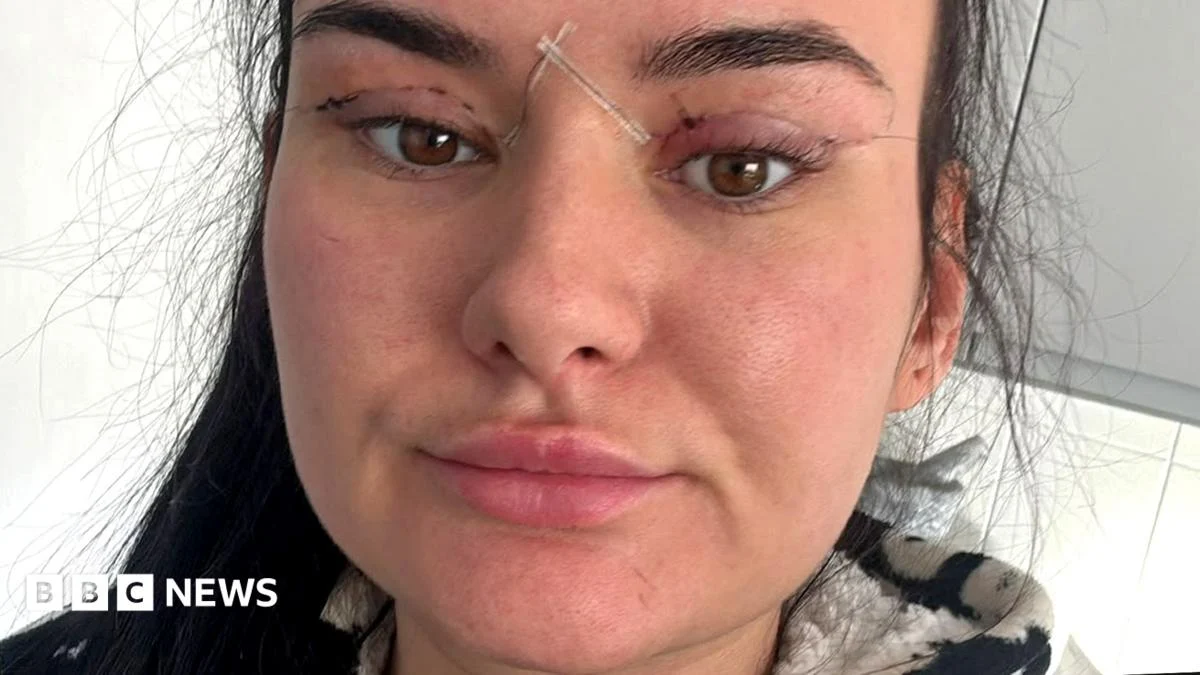
Dozens of women have come forward, sharing harrowing experiences. One woman described having to tape her eyes shut to sleep due to excessive eyelid skin removal, while another lived in fear of losing her sight. UK surgeons are increasingly seeing patients who cannot achieve full eyelid closure after undergoing these procedures abroad. Nikita, a 31-year-old from Dublin, sought a more defined eye appearance but found the cost of upper eyelid surgery in Ireland to be prohibitive, exceeding €4,000 (£3,400). Her research on TikTok led her to discover Faceland, a Dutch company, offering bleph procedures for as little as €750 (£650).
Nikita described her experience at Faceland’s Düsseldorf clinic as akin to a "conveyor belt," with a constant flow of patients. Faceland claims to have performed over 2,950 bleph procedures on UK patients across its clinics in the Netherlands, Germany, and Switzerland since October 2024. The company asserts it provides "safe and quality" treatments, stating that "less than 1% of procedures have led to a complaint," though this figure may not encompass all patients requiring revision surgery. While the majority of the BBC’s interviewees who reported issues had visited Faceland clinics, the total number of complications associated with the company remains unknown.
Nikita, who underwent her bleph in November 2025, admitted she underestimated the invasiveness of the procedure, mistakenly believing it to be comparable to getting lip fillers or Botox. Despite receiving local anaesthetic, she experienced excruciating pain as the surgeon began excising delicate eyelid skin. "I went into shell shock, it was horrible," she recounted. "When she was stitching me I could feel the needle going through my skin."
In the past three years, BBC analysis revealed that videos discussing blephs posted by UK social media accounts on four major platforms garnered nearly 150 million views, a fivefold increase compared to the preceding three years. Many of these posts showcase positive outcomes, with a significant number of individuals having received treatment from Faceland. One woman shared that her droopy eyelids had been impairing her vision and causing headaches. Ineligible for NHS treatment and unable to afford private care in the UK, she reported that her issues were resolved after undergoing a bleph procedure at Faceland.
Faceland’s website promotes its mission to transform the market by offering "affordable, accessible and high quality care." The company states that its treatments are performed by accredited medical doctors who receive internal surgical training from Faceland. In contrast to the typical three hours required for upper eyelid surgery in the UK, including preparation, the procedure, and post-operative care, patients who spoke to the BBC about their Faceland experiences reported spending less than an hour at the clinics. Faceland attributes its ability to significantly lower costs to enabling practitioners to perform a higher volume of treatments.
Eight days after her Faceland bleph surgery at the company’s Amsterdam clinic in June, Laura (a pseudonym), experienced a recurrence of her eyelid wounds, necessitating four visits to A&E. While the procedure initially appeared successful, complications arose after she removed her stitches back in the UK – a common practice for patients undergoing treatment abroad. The crescent-shaped incisions above her eyes, held together by the stitches, separated, revealing raw, infected wounds. UK surgeons emphasized that such an occurrence is highly unusual if a practitioner is properly trained. Laura, in her early forties, described repeatedly calling Faceland’s emergency helpline without success when the wounds reopened for the first time. In desperation, she sought immediate medical attention at A&E. "When I closed my eyes for too long the tension would cause my wounds to open up again," she said. "I was scared to go to sleep and was in constant agony."
Emails reviewed by the BBC indicate that Caryn (a pseudonym) contacted Faceland twice to report her complications, receiving a brief response 12 days later. Despite further email exchanges, Caryn reported no further communication from the company. Faceland maintains its position that it "did not leave her without support or follow-up during the aftercare process." The company expressed its regret if any patients felt inadequately supported by its teams or experienced complications.
Similar to Caryn, Laura, and Nikita, patients who have undergone inexpensive eyelid surgery abroad consistently cite limited aftercare as their primary grievance. Dr. Vize, an expert in the field, stated that "Aftercare for the typical bleph should be available to a patient 24/7." He added, "If your surgeon is hundreds of miles away, the ability to provide care with a sense of immediacy is impossible." He also cautioned that lower costs can sometimes correlate with diminished standards of care.
Faceland claims that patients can return to a Faceland clinic for stitch removal; however, none of the interviewed patients opted for this service. Dr. Vize considers patients removing their own stitches "a recipe for disaster," explaining that this practice increases the risk of infection and wound dehiscence, and that stitches should be removed by a qualified surgeon or nurse.
Although Nikita is largely satisfied with her results, aside from a minor scar, she is keen for others to learn from her experience and fully comprehend the inherent risks. "If I’d had the money or if I hadn’t listened to the spin on TikTok, I probably would have gone somewhere closer to home and not rushed into it," she reflected. Nearly two years later, Caryn continues to experience issues with her left eye, including blurry vision and scarring. Meanwhile, Laura fears permanent scarring above both her eyes. "I tried to fix a problem that didn’t really need fixing, and I’ve come back with a bigger problem that I need surgery for, and I can’t afford that," she stated. "It’s pretty devastating."


 George Anjay
 Nakalama John
 atisusanti
 Ramos Leo