
 Ramos Leo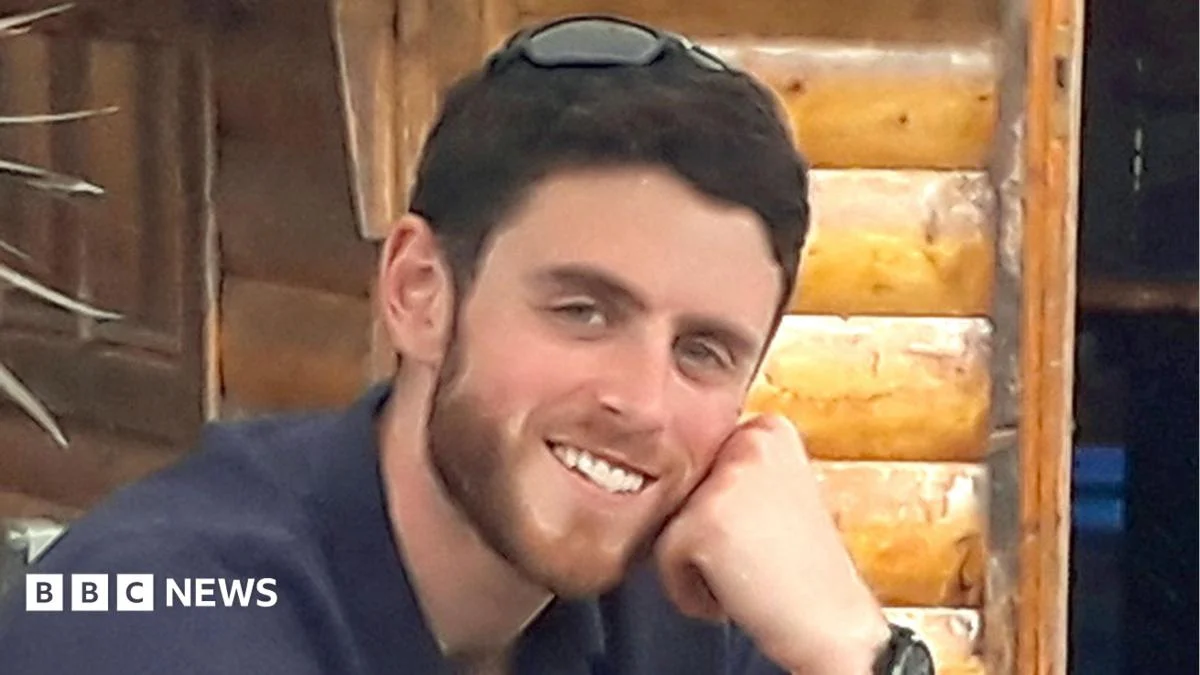
Prime Minister Andy Burnham has confirmed that Jessie Cole and Albert Bowers, two of the individuals convicted in the tragic death of PC Andrew Harper, will remain incarcerated, as he unveiled significant amendments to the government’s controversial early release scheme. Speaking exclusively to BBC Breakfast, Burnham announced that anyone found guilty of unlawful killing, a category encompassing manslaughter, would now be explicitly excluded from the scheme, directly impacting the eligibility of Harper’s killers who were previously set for potential early release. This decisive move comes amidst intense public pressure and a sustained campaign by PC Harper’s grieving family and former colleagues, who have tirelessly lobbied against any reduction in the sentences of those responsible for the officer’s death.
The changes represent a notable shift in policy, initially designed to alleviate critical overcrowding within England and Wales’s strained prison system. Burnham outlined a multi-pronged approach to create additional prison capacity, pledging to accelerate the deportation of foreign national offenders and to address the long-standing issue of inmates serving Imprisonment for Public Protection (IPP) sentences. These measures are intended to free up space, thereby mitigating the impact of keeping more offenders behind bars due to the new exclusions.
The case of PC Andrew Harper has been a deeply emotive touchstone in the debate surrounding sentencing and prison policy. In August 2019, the 28-year-old Thames Valley Police officer was responding to a report of a quad bike theft in Berkshire when he tragically became entangled in a tow rope attached to a car driven by Henry Long, as three teenagers fled the scene. He was dragged for more than a mile along a winding country road, sustaining catastrophic injuries that proved fatal. Long, the driver, was sentenced to an extended term of 16 years for manslaughter and was not eligible for early release under the original scheme. However, his accomplices, Jessie Cole and Albert Bowers, who were passengers in the vehicle, received 13-year sentences for manslaughter in 2020. Under the initial provisions of the Sentencing Act 2026, which aimed to release inmates after serving half their sentences instead of the customary two-thirds, Cole and Bowers would have become eligible for release significantly earlier, sparking outrage.
PC Harper’s widow, Lissie Harper, who has been a vocal advocate for justice reform and against early release for violent offenders, described the prospect of their reduced sentences as "deplorable." His mother, Debbie Adlam, also expressed profound distress, telling BBC Breakfast earlier this month of her "turmoil" amidst conflicting reports regarding the killers’ potential release, lambasting the government’s handling of the situation as a "hash." Their powerful testimonies resonated deeply with the public and put immense pressure on the government to re-evaluate its strategy.
Burnham acknowledged the compelling arguments made by PC Harper’s family. "I heard obviously what Andrew Harper’s family were saying, I mean who couldn’t? Nobody would want a position to arise where those guilty of killing a police officer are let out early from prison," he told the BBC, underlining the moral imperative behind his decision. He conceded that the expanded exclusions would result in "hundreds" more individuals remaining in prison, exacerbating the already severe issue of overcrowding in a system that currently stands at over 97% capacity across England and Wales.
To counter this, the Prime Minister detailed the government’s plan to create additional space. A significant component involves the termination of Imprisonment for Public Protection (IPP) sentences. These controversial sentences, introduced between 2005 and 2012, were handed to offenders deemed to pose a significant risk of causing serious harm to the public. Unlike determinate sentences, prisoners serving IPPs must remain in custody until the Parole Board is satisfied they no longer pose a risk, leading to many being held indefinitely beyond their minimum tariff. Burnham stated he had applied "common sense" to the treatment of IPPs, citing his "long-standing concerns" about their fairness and efficacy. "I was faced with a situation where people on those sentences who have more than served their time, not being released when others who’ve committed very serious crimes being released early," he explained, arguing that the public would prefer those who have served their time to be considered for release over those who haven’t completed their full terms for serious crimes.
According to Ministry of Justice data from June, 2,271 individuals are currently serving IPP sentences, with a striking 856 of them having never been released because the Parole Board deemed it unsafe. Burnham acknowledged that among these, there would be "individuals who will pose a risk to communities," and committed to establishing a cross-party oversight group to manage these releases responsibly. The government intends to table legislation to terminate IPP sentences by the "end of this Parliament," signalling a major reform in sentencing policy.
Regarding foreign prisoners, Burnham projected that "hundreds" could be returned to their home countries. The government plans to implement new powers early next year that would enable the immediate deportation of some foreign criminals after sentencing, preventing their return to the UK while ensuring that those convicted of the most serious crimes remain imprisoned for a substantial period before removal. However, it is understood that the government has not yet secured any additional prisoner return agreements with other nations, which could pose a challenge to the scale of these deportations. Furthermore, initial work has commenced on creating more cells within existing prisons by repurposing spaces currently used for other functions, such as administrative offices, workshops, or by converting single cells into multi-occupancy ones where appropriate.
Despite these proposed solutions, none of the announced measures are likely to generate significant additional prison capacity by October 1st, the scheduled start date for the first batch of early prisoner releases under the original Sentencing Act. The Prime Minister is reported to have made a "political decision" to utilise some of the remaining capacity within the existing prison system to allow for the immediate implementation of today’s policy changes, underscoring the urgency and political sensitivity of the situation.
Beyond unlawful killing, the Prime Minister confirmed that the early release scheme will also exclude prisoners convicted of indecent assault offences, death by dangerous driving, historic child sex offences, and causing or allowing the death of a child. Additionally, new "restriction zones" are to be introduced to enhance the protection of domestic violence survivors from perpetrators granted early release. These expanded exclusions, Burnham reiterated, would result in "hundreds" more prisoners staying behind bars. The precise figures for those affected are expected to be provided by the Justice Secretary during a statement to Parliament on Tuesday.
This latest announcement follows earlier revisions to the Sentencing Act 2026. Initially, the Act was conceived to address the burgeoning prison overcrowding crisis by facilitating the earlier release of a substantial number of inmates. However, it was met with fierce opposition, particularly from victims’ families and law enforcement communities. In his early days as Prime Minister, Andy Burnham had paused the changes brought in by the Sentencing Act for review. On August 3rd, the government first announced that prisoners guilty of rape, serious child sex offences, and grooming would be excluded from early release eligibility, alongside those convicted of murder who were never part of the scheme.
The government’s stance on manslaughter cases, specifically concerning PC Harper’s killers, has seen a notable evolution. Downing Street had initially cautioned that it might not be feasible to exclude "one or two offenders" convicted of manslaughter without jeopardising the entire prison system. However, Burnham later expressed confidence in his ability to block PC Harper’s killers from the scheme, marking a significant shift from his position just a week prior, when he had suggested there was "nothing more" he could do. This series of policy reversals led Conservative shadow home secretary Chris Philp to accuse Burnham and Labour of "re-traumatising victims and their families with their constant U-turns."
As of August 24th, the prison population in England and Wales stood at 86,843, pushing the system to 97.6% of its total operational capacity. The Sentencing Act 2026 was originally designed to introduce a number of key changes aimed at reducing the prison population and releasing many inmates earlier than previously planned. However, the subsequent amendments reflect a clear prioritisation of public safety and victim confidence over purely numerical solutions to prison capacity, albeit at the cost of intensifying the pressure on an already overstretched system. The implications of these changes, both for the prison population and for the broader justice landscape, will continue to unfold as the government grapples with this complex and highly sensitive issue.

 George Anjay
 Nakalama John
 atisusanti
 Roy Suryo
 Nana Banana