
 Ramos Leo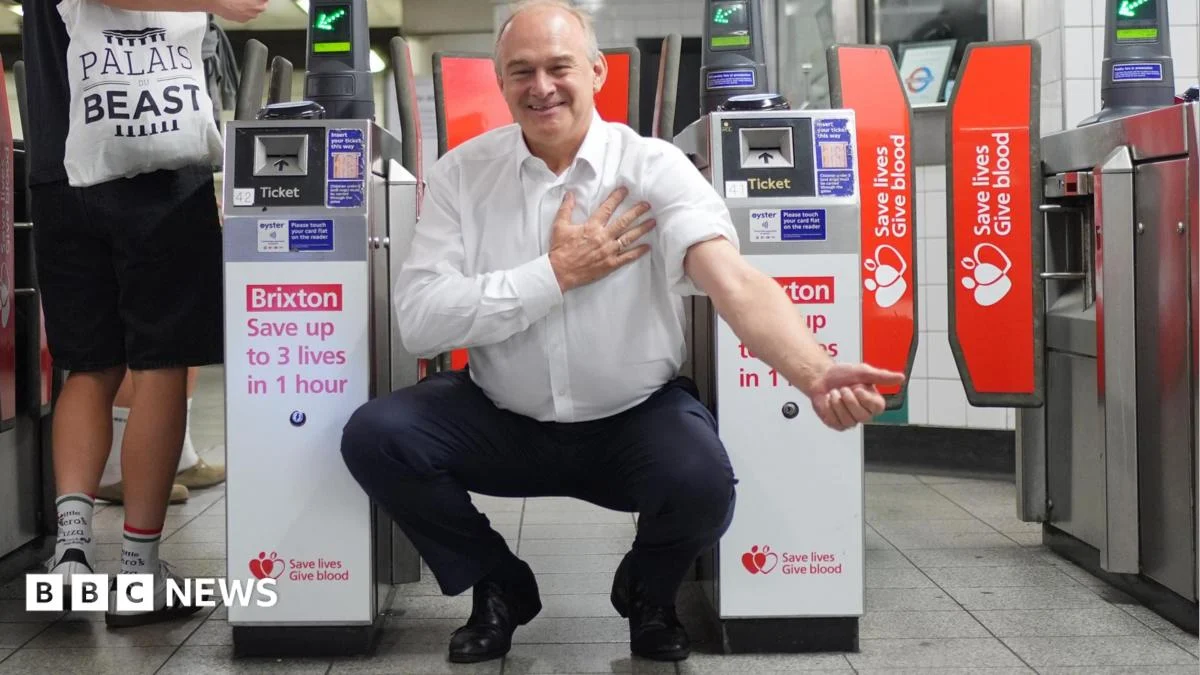
Poised to donate, Sir Ed diligently navigated the initial stages of the process, which included completing comprehensive paperwork designed to assess donor eligibility. This questionnaire is a crucial first line of defence, meticulously screening potential donors for a multitude of factors that could compromise the safety or efficacy of the donated blood. It delves into personal health history, recent medications, and, critically, recent travel destinations. It was this final category that became the unforeseen obstacle for the Liberal Democrat leader.
Upon review of his answers, particularly concerning his recent summer holiday, Sir Ed was informed by donor centre staff that he could not proceed with the donation. The reason: a recent trip to the Charente region in France. This particular area, like several others in metropolitan France, falls under a specific travel restriction imposed by NHS Blood Donation due to the potential risk of mosquito-borne viruses. The deferral rule stipulates that individuals returning from designated parts of France between May and November must observe a four-week (28-day) waiting period before they are eligible to donate blood.
This deferral, while seemingly a minor bureaucratic hurdle, underscores the rigorous commitment to patient safety that defines blood donation services worldwide. The risk in question primarily revolves around the potential exposure to viruses such as Chikungunya (ChikV) and Dengue fever, both of which are transmitted through the bite of infected mosquitoes. While these diseases are more commonly associated with tropical and subtropical regions, their presence has become increasingly noted in parts of southern Europe, including France, due to factors like climate change and increased global travel.
Chikungunya virus typically causes fever and severe joint pain, often accompanied by muscle pain, headache, nausea, fatigue, and rash. While rarely fatal, the joint pain can be debilitating and may persist for weeks or even months. Dengue fever, on the other hand, can manifest with high fever, severe headache, pain behind the eyes, muscle and joint pains, and rash. In a small percentage of cases, it can progress to severe dengue, a life-threatening complication involving plasma leakage, severe bleeding, or organ impairment. The concern for blood safety arises because a person infected with either virus might be asymptomatic or experience mild symptoms that go unnoticed, yet the virus could still be present in their bloodstream. If such blood were transfused to a vulnerable recipient, particularly an immunocompromised patient, it could pose a serious health risk.
The 28-day waiting period is not arbitrary; it is scientifically informed. This duration is generally considered sufficient to allow for the natural clearance of the virus from the bloodstream in most individuals who have been infected, thus significantly reducing the risk of transmission through donated blood. It provides a robust safety margin, ensuring that even if a donor were unknowingly exposed to and briefly carried the virus, it would likely no longer be detectable or transmissible by the time they donate.
A Liberal Democrat spokesperson, acknowledging the unexpected turn of events, confirmed Sir Ed’s deferral and his commitment to returning. "Ed unfortunately could not give blood today due to recent changes to rules regarding blood donations after travelling to certain destinations," the spokesperson stated. "Ed went to the Charente region in France on holiday which poses an infection risk due to mosquito prevalence, he will have to wait 28 days after returning home in order to give blood. He’ll be back." This message aimed to reassure the public of Sir Ed’s continued dedication to the cause, despite the personal setback.
The specific French regions covered by this travel restriction are numerous and geographically diverse, reflecting the broad areas where these mosquito-borne viruses have been identified or are deemed a significant risk. These include Bouches-du-Rhône, Charente, Dordogne, Hautes-Pyrénées, Haute-Garonne, Pyrénées-Orientales, Var, Gard, Hérault, Isere, Alpes-Maritimes, Vaucluse, and Corsica. Charente, situated in the Nouvelle-Aquitaine region of southwestern France, is known for its Cognac production and picturesque landscapes, making it a popular holiday destination. Its climate during the summer months can be conducive to mosquito breeding, hence its inclusion on the list.
Sir Ed’s campaign visit to the south London centre was part of a more extensive drive to promote blood donations as the NHS grappled with persistent shortages. NHS Blood Donation has issued urgent appeals, stating a critical need for over 140,000 new people to donate blood for the first time this year to meet ongoing demand. The urgency is amplified by the inherent biological limitation of blood itself: it has a finite shelf life, typically around 35 days for red blood cells. This means that stocks require constant and consistent replenishment, making regular donations indispensable.
Earlier in the year, the NHS had already sounded the alarm, warning of a "significant shortfall in blood stocks with hot weather, holidays and high demand all significantly impacting supplies." Hot weather can deter donors, while holiday periods often lead to fewer available appointments and a dip in the number of people coming forward. Simultaneously, demand for blood remains unwavering, driven by a myriad of medical necessities from emergency trauma care and complex surgeries to supporting patients undergoing cancer treatment, managing chronic conditions like sickle cell disease, or facilitating safe childbirth.
Gerry Gogarth, Director of Blood and Plasma Supply at NHS Blood and Transplant, reiterated the critical nature of the situation: "We urgently need anyone eligible to donate to book an appointment as soon as they can." His statement underscores the continuous pressure on the blood supply chain and the vital role that every eligible donor plays in sustaining it. Blood donation is not merely a charitable act; it is a fundamental pillar of modern healthcare, enabling life-saving procedures and treatments that would otherwise be impossible.
The process for becoming a blood donor is straightforward, yet thorough. Anyone wishing to donate blood can sign up on the NHS Blood Donation website, or use their dedicated app to register and book an appointment. Beyond travel restrictions, there are various other eligibility criteria designed to ensure both donor safety and recipient safety. These can include age and weight limits, general health status, recent medications, tattoos or piercings, and certain medical conditions. Each potential donor undergoes a confidential assessment to determine their suitability, reflecting the meticulous approach taken to safeguard the entire transfusion process.
Despite the personal deferral, Sir Ed Davey’s experience inadvertently served to highlight the importance of these rigorous safety protocols. It demonstrated that no individual, regardless of their public profile, is exempt from the rules designed to protect the health of blood recipients. His commitment to return after the mandatory 28-day waiting period reinforces the message that while temporary deferrals are sometimes necessary, the long-term need for blood donations remains paramount. The incident ultimately transformed a minor personal inconvenience into a valuable public education moment, underscoring both the critical need for blood and the unwavering commitment to safety that underpins the NHS blood supply system. As winter approaches and demand invariably rises, the call for new and returning donors remains as urgent as ever, irrespective of any recent holidays in sun-drenched European locales.



 George Anjay
 Nakalama John
 atisusanti
 Roy Suryo
 Nana Banana