Nakalama John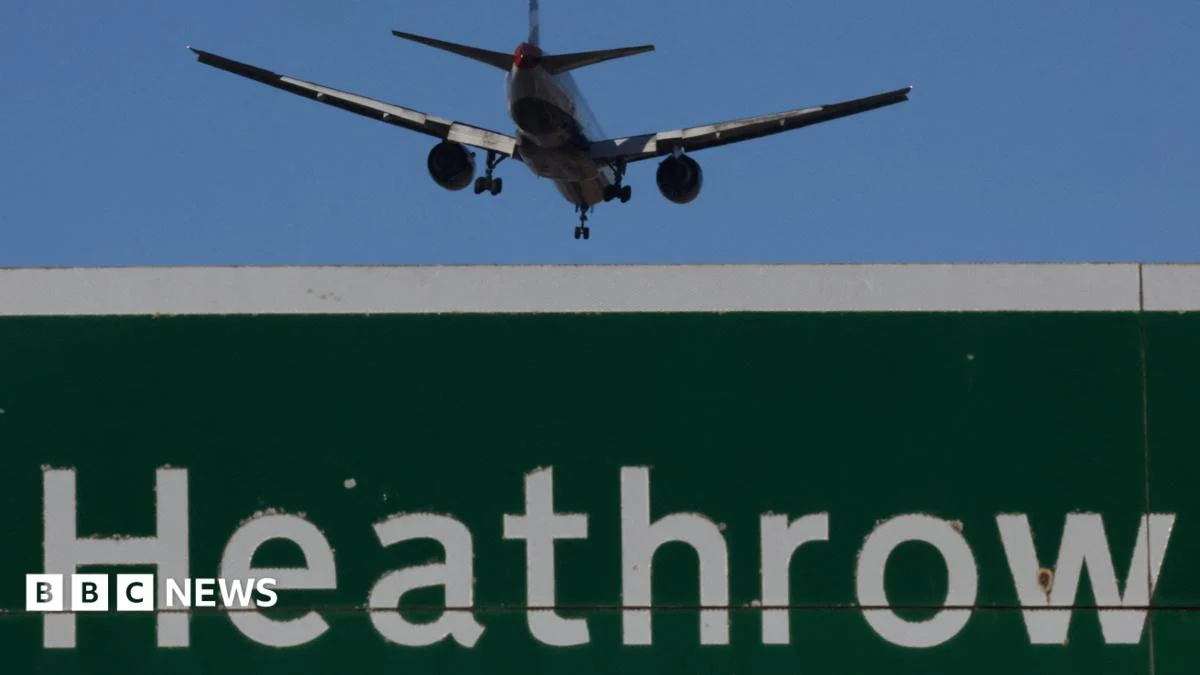
Burnham elaborated on his position, asserting, "I think we ought to hear the voice of people there first. It’s not right for me to just jump straight in on the back of the consultation." This statement underscores a commitment to due process and local democratic input, a characteristic often associated with his political style. His measured response comes as the government grapples with one of the UK’s most contentious infrastructure projects, balancing economic imperatives with environmental responsibilities and community concerns.
The potential delay in the project’s completion is a significant factor shaping the current debate. Originally envisioned to be operational by 2035, Heathrow Airport conceded on Saturday that the third runway might not be functional before 2039. This four-year slippage, attributed by Heathrow to the complexities of the planning process, introduces fresh uncertainty and provides Prime Minister Burnham with additional political breathing room to avoid an immediate, definitive commitment. The Department for Transport acknowledged that the original timeline had "always been ambitious," signaling a realistic appraisal of the hurdles involved in such a monumental undertaking. They affirmed their commitment to working with stakeholders "at pace," a recognition of the project’s national importance despite its challenges.
Burnham’s history with the Heathrow expansion is notable. As Mayor of Greater Manchester, he was a vocal opponent of the project, primarily driven by concerns that a massive investment in London’s airport infrastructure would disproportionately draw vital transport funding and attention away from the North of England, hindering its own regional development and connectivity ambitions. However, upon assuming the premiership, he adopted a more conciliatory tone, initially stating he was "open-minded" about the scheme. His current position, framed around listening to Londoners, represents a further evolution, moving from outright opposition to a pragmatic, albeit non-committal, neutrality as he prepares for his first annual Labour Party conference as prime minister. He emphasized, "There’s a consultation but there are different views and you have to take those views seriously in coming to a decision."
The economic arguments for a third runway are compelling and have historically garnered significant cross-party and industry support. Former Chancellor Rachel Reeves, a key figure in Burnham’s Labour government, had previously championed the runway as a vital engine for economic growth. Proponents estimate that the expansion, with an estimated cost of £33 billion, would create approximately 100,000 new jobs across the country and provide a substantial boost to the UK economy through increased trade, tourism, and business connectivity. The capacity increase is staggering: the current cap of 480,000 flights per year could surge to 720,000, averaging nearly 2,000 flights daily. This enhancement is seen by many as crucial for maintaining the UK’s status as a leading global aviation hub, especially in a competitive international landscape.
Trade unions, notably Unite and the GMB, have been staunch advocates for the third runway. Sharon Graham, Unite’s general secretary, articulated their stance forcefully: "A third runway at Heathrow is essential and we need to get going with it. This is more than just infrastructure. It’s about investing in the workforce, securing the future of good, unionised jobs and a guaranteed market for UK steel." This perspective highlights the project’s potential to underpin skilled employment, support industrial sectors like manufacturing and construction, and reinforce the union movement’s influence within major national projects. The promise of stable, well-paid jobs resonates deeply with a government focused on levelling up and improving living standards.
However, the opposition to the Heathrow expansion is equally formidable and multifaceted. Environmental campaigners, local resident groups, and high-profile political figures like Mayor of London Sadiq Khan have consistently voiced strong objections. Their concerns span a broad spectrum:
- Environmental Impact: Critics argue that adding a third runway would significantly increase carbon emissions, making it harder for the UK to meet its legally binding net-zero targets. The surge in flights would also exacerbate noise pollution over vast swathes of London and the Home Counties, and further degrade air quality in already heavily polluted areas.
- Local Community Devastation: The physical footprint of the expansion is immense. A third runway would necessitate the demolition of hundreds of homes, displacing entire communities and severing established social ties. Furthermore, it would require the diversion of rivers and the complex rerouting of a section of the M25 motorway through a tunnel, an engineering feat with significant environmental and logistical challenges. Villages such as Harmondsworth, Sipson, and Longford face existential threats.
- Cost and Feasibility: The £33 billion price tag is a major point of contention, with critics often citing the historical tendency for large-scale infrastructure projects to incur significant cost overruns. There are also doubts about the project’s long-term economic viability in an era of increasing environmental consciousness and potential shifts in global travel patterns.
- Alternative Solutions: Opponents argue that investment should instead be directed towards enhancing regional airports, improving rail links (such as High-Speed 2, itself a project fraught with delays and cost issues), and promoting more sustainable modes of transport, thereby distributing economic benefits more evenly across the UK rather than concentrating them in the South East.
Heathrow, for its part, acknowledges the need to address these concerns. Their statement, "We agree with the prime minister that local voices must be heard. We know from consistent polling over the last decade that communities support our plans for expansion and support is only growing over time," attempts to counter the narrative of widespread local opposition. However, this claim is often met with skepticism by anti-expansion groups who highlight the intensity and longevity of their grassroots campaigns. The airport hopes to secure planning permission by 2029, with the runway becoming operational "within a decade" of that approval, indicating a lengthy and arduous process ahead.
Prime Minister Burnham’s position on Heathrow represents a crucial test of his leadership and his ability to navigate complex, politically charged issues. He must reconcile the demands of powerful trade unions, who are a core Labour constituency, with the increasingly vocal environmental lobby and local communities. His cautious approach allows him to delay a definitive commitment, buying time to assess the full implications of the proposed delays, the evolving economic climate, and the public mood. It also reflects a broader shift in national infrastructure planning, where environmental and social impacts are gaining parity with purely economic considerations. As the UK grapples with its post-Brexit economic future and its commitments to climate action, the decision on Heathrow’s third runway will be a defining moment, with long-lasting implications for the country’s infrastructure, economy, and environmental policy under Andy Burnham’s premiership. The intricate dance between economic ambition, environmental responsibility, and local democracy continues, with the Prime Minister currently choosing a path of careful deliberation rather than swift endorsement.



 atisusanti
 Nana Banana
 George Anjay