Nana Banana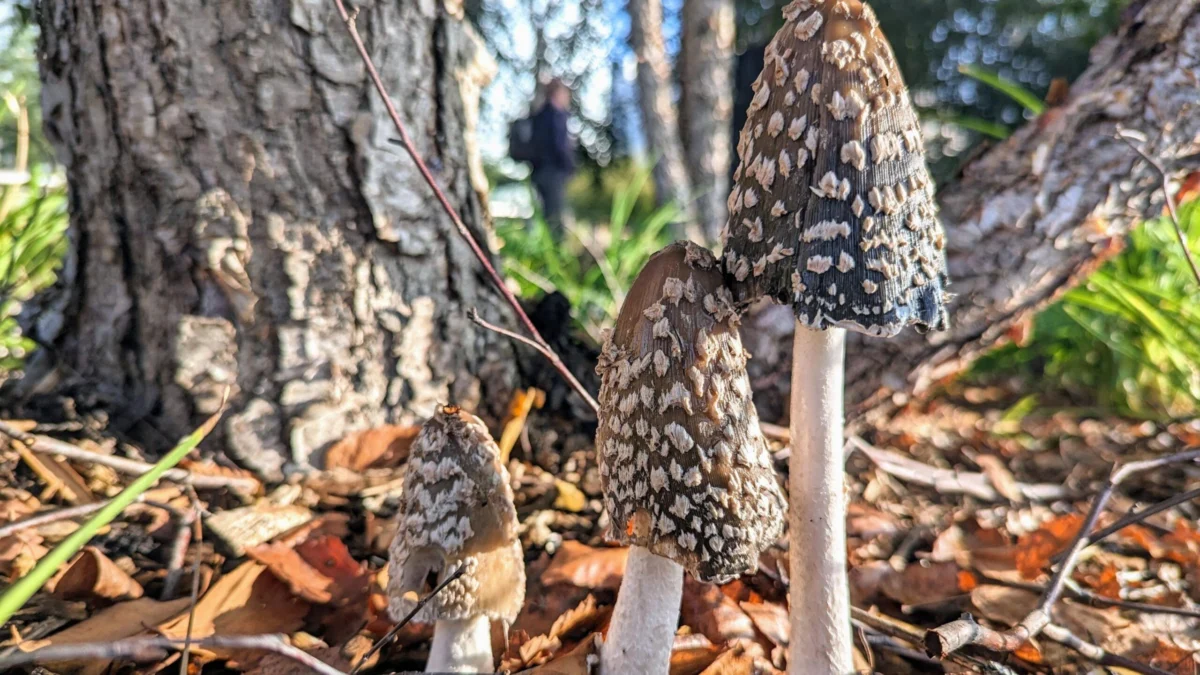
The cool, damp conditions characteristic of autumn provide the perfect environment for fungi to flourish, making it the prime season for mushroom spotting. From the classic fairytale toadstools that spark the imagination to intricate species resembling miniature bird’s nests or bizarre crimson cages, the diversity is astounding. These fascinating organisms can be found in almost any natural setting – tucked away in local parks, sprawling woodlands, and protected nature reserves – waiting for curious eyes to discover them. The simple act of pausing and scrutinizing the forest floor, the base of trees, or decaying logs can unveil a world many people walk past without ever noticing.

For James Benwell, an advocate from the Birmingham and Black Country Wildlife Trust, searching for fungi has become a cherished activity he shares with his young son. He observes that this engaging pursuit has a remarkable ability to transform what might otherwise be a routine family walk into an exhilarating expedition. The sheer variety of colourful and unusual species, each with its own unique characteristics, provides endless points of interest and discussion. It’s an accessible way to engage children with nature, encouraging observation skills and fostering a deeper connection to their local environment. Benwell passionately describes it as opening up a "hidden world" where every step holds the potential for a new and exciting discovery.
Across the West Midlands, the enthusiasm for mycology – the scientific study of fungi – is growing, with local fungi enthusiasts reporting a wide array of sightings. Tiny, delicate bird’s nest fungi, so small they often go unnoticed, have been recorded even in bustling Birmingham city centre parks. In the region’s ancient woodlands, the iconic bright-red fly agaric mushrooms, often associated with birch trees, make their striking appearance. Perhaps most remarkably, a rare red cage fungus was recently discovered in the popular Cannon Hill Park, highlighting the unexpected biodiversity lurking even in urban green spaces. These sightings underscore Benwell’s point that a little extra attention can reveal a rich tapestry of life beneath our feet.

With an astonishing diversity of over 15,000 species of fungi found across the UK, the autumn months offer a unique opportunity to witness this biological richness firsthand. Experts, including Lucas Large, the chairman of the West Midlands Fungus Group, are actively encouraging the public not just to observe, but to photograph and record their findings rather than picking them. This approach supports conservation efforts and contributes to citizen science, helping mycologists track species distribution and health. Large notes a significant increase in public interest in fungi in recent years, with the West Midlands Fungus Group regularly welcoming newcomers to its educational activities and guided fungi forays, demonstrating a burgeoning fascination with these often-misunderstood organisms.
Benwell highlights that one of the primary attractions of fungi spotting is the sheer variety of forms, colours, and sizes that can be discovered throughout autumn. "Sometimes you’ve just got to look through the leaf litter a bit, and you’d be amazed at the colours and different shapes and sizes of mushrooms you can find when you do look," he explains. This sensory exploration adds a vibrant dimension to outdoor recreation, moving beyond simply appreciating the changing leaves to actively seeking out the intricate details of the woodland floor.

Among the myriad species, some stand out for their striking appearance and cultural resonance. The fly agaric (Amanita muscaria), with its distinctive bright red cap adorned with white spots, is arguably one of the most recognisable mushrooms globally. Its vivid imagery is deeply ingrained in folklore and popular culture, appearing in classic tales like "Alice in Wonderland" and even in iconic video games like "Super Mario Brothers." Benwell fondly refers to it as "the mushroom of fairy tales," yet he points out a surprising truth: "there are still adults who’ve never seen it." This underscores how easily such natural wonders can be missed without a conscious effort to look closer.
Other species offer equally unusual and captivating sights. The bird’s nest fungi (Cyathus striatus or Crucibulum laeve, for example) are truly miniature marvels, resembling tiny cup-shaped nests complete with small, pebble-like spore cases that look uncannily like eggs. These ingenious structures, often found on decaying wood, are a testament to nature’s intricate designs. The rare red cage fungus (Clathrus ruber) is another spectacle, forming a vivid crimson, spherical lattice structure that appears almost alien. Its discovery in Birmingham’s Cannon Hill Park last year was particularly significant, marking only the second recorded sighting of the species in Birmingham and the Black Country. Benwell notes its extreme rarity, stating that "UK-wide, you’re only talking hundreds of records ever. It’s not a common species at all." Adding to its peculiar charm, Lucas Large reveals that this visually stunning fungus also possesses a "horrible" smell, which it uses to attract flies to aid in the dispersal of its spores – a fascinating example of evolutionary adaptation.

Lucas Large, with over a decade dedicated to studying fungi, recounts his personal encounter with one of the rarest species he has observed in the region: the coral tooth fungus (Hericium coralloides). He describes it as forming "this enormous kind of white, coraloid fruiting body," emphasizing its unique and delicate structure. Such rare sightings highlight the importance of careful observation and the potential for incredible discoveries even in seemingly familiar landscapes.
While the aesthetic appeal and educational opportunities presented by these colourful fungal displays are immense, experts issue a critical warning: the beauty of wild mushrooms can conceal deadly dangers. It is absolutely crucial for the public to understand that several species found in the UK can cause severe illness or even death if consumed. The death cap mushroom (Amanita phalloides), for instance, is responsible for the vast majority of fungus-related fatalities, as highlighted by the Woodland Trust. Its innocuous appearance can easily be mistaken for edible varieties, making it exceptionally dangerous.

Both Lucas Large and James Benwell strongly advise against any attempts to forage for wild mushrooms without specialist, expert knowledge. Large unequivocally states that "there was no foolproof shortcut to determining whether a mushroom was poisonous." He stresses that "the only way to do it is to know which one it is, or be sort of certain that you’ve got a particular species." This requires extensive training and experience, not simply relying on anecdotal evidence or superficial identification guides. Benwell reinforces this sentiment, cautioning that "there are mushrooms that will harm you, that will make you sick or even kill you in this country." His pragmatic advice is clear: "The best place to get your mushrooms if you want to eat them is the supermarket."
Instead of focusing on consumption, families are encouraged to simply enjoy fungi where they are found, appreciating their natural beauty and ecological significance. Whether exploring the urban oases of Birmingham city parks, the ancient woodlands of Cannock Chase, the vast expanse of Sutton Park, or the biodiverse Wyre Forest, the joy lies in discovery and observation. When Benwell embarks on fungi-spotting adventures with his son, they adhere to a simple, yet vital, rule that ensures both safety and respect for the natural environment: "No licking, no picking, no kicking."

This straightforward approach allows families to fully immerse themselves in the excitement of discovery, fostering a sense of wonder and curiosity about the natural world, while simultaneously safeguarding the region’s remarkable fungal diversity. By encouraging mindful interaction with these intriguing organisms, families can cultivate a deeper appreciation for the intricate ecosystems around them, turning every autumn walk into a truly enriching and memorable experience for all.




 Nakalama John

 atisusanti
 George Anjay