
 Ramos Leo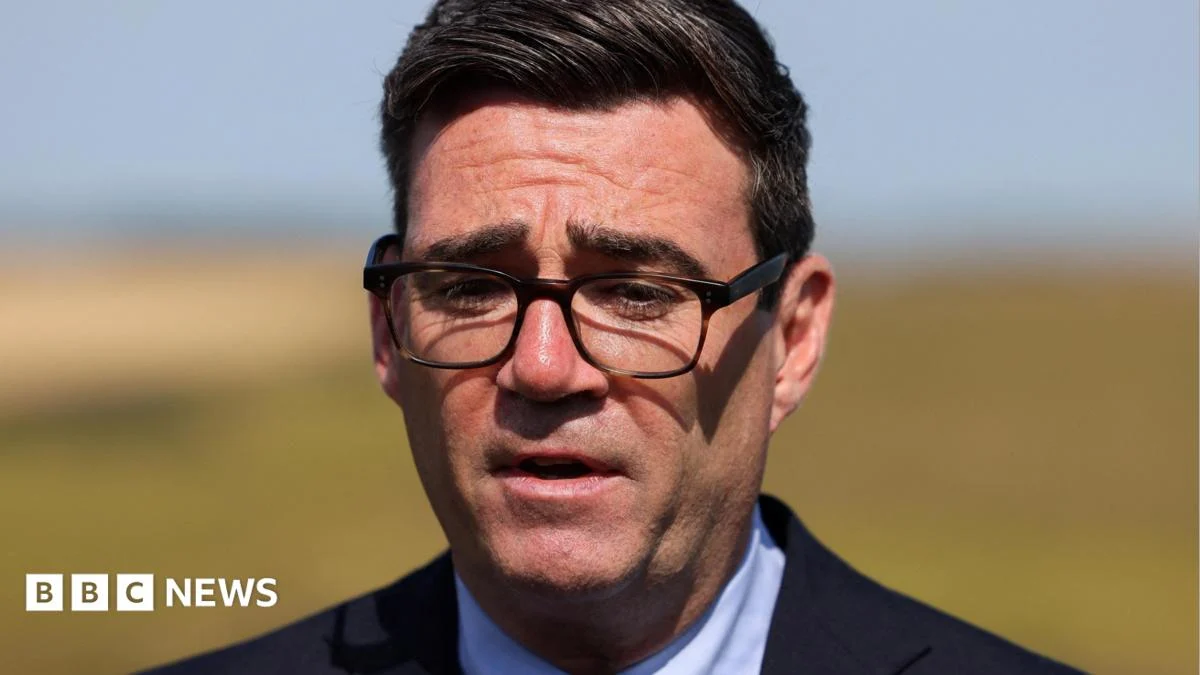
His political opponents are already sharpening their attacks, seizing upon an issue they believe will deeply discomfit a new prime minister early in his tenure. Prior to this, Burnham had cultivated an image of a pragmatic, approachable leader, capable of navigating political waters with a pretty deft touch. This current imbroglio, however, presents a stark contrast to his carefully constructed public persona. Conservative Shadow Home Secretary Chris Philp wasted no time in articulating the opposition’s stance, stating bluntly: "This is the most important decision Andy Burnham has made since he became prime minister and he’s got it wrong." The opposition’s strategy is clear: to portray Burnham as weak on crime and out of touch with public safety concerns, an accusation that can be devastating for any government.
For Labour MPs, however, this challenging week has provided a different kind of insight, showcasing Burnham’s willingness to confront difficult choices head-on and make decisions that, as he declared in his inaugural speech in Downing Street, are "more about problem solving than point scoring." While politically painful, many within the party view his actions as a necessary, if unpalatable, response to an inherited crisis.
Burnham’s initial two weeks in office were indeed pretty problem-free, marked by a series of high-profile announcements designed to set a new tone for government. From a popular cap on bus fares to a determined commitment to a comprehensive overhaul of social care, coupled with a blitz of engaging social media videos, every move was carefully orchestrated. The aim was to portray a more relaxed and relatable Prime Minister, deeply focused on everyday issues affecting ordinary Britons. This carefully crafted narrative of a government in touch with the people now faces its first significant challenge, a sharp pivot from the comfort of populist policies to the harsh realities of governance.
The long-simmering overcrowding crisis in our prisons has presented Burnham with an acute dilemma for which there are, regrettably, only unpalatable choices. This issue, a ticking time bomb within the justice system, has reached a critical point, threatening the integrity and safety of correctional facilities nationwide. Crucially too, these are some of the first truly difficult and morally ambiguous choices Burnham has had to make in office, demanding a level of pragmatism that risks alienating parts of the electorate.
The roots of this crisis stretch back long before Burnham’s arrival in Downing Street. In 2023, with space in jails on the verge of running out, the last Conservative government initiated a temporary measure, releasing some prisoners up to 18 days early. This was, however, merely a stop-gap solution, a desperate attempt to stave off an immediate collapse rather than a strategic resolution to systemic issues. The underlying problem of insufficient prison capacity, a consequence of years of underinvestment and increasingly tougher sentencing guidelines, continued to worsen.
Just days after becoming prime minister in July 2024, Sir Keir Starmer inherited this looming catastrophe. He was forced to contemplate a more far-reaching prisoner release scheme, acknowledging the severity of the situation by publicly stating: "it is shocking for our country to have got into a state where we have too many prisoners and not enough prison places." His administration was therefore compelled to act, grappling with the legacy of a justice system stretched to its breaking point.
In January of this year, Sir Keir’s government passed the controversial Sentencing Act. This legislation, a desperate measure to address the chronic lack of prison space, laid the groundwork for the early release of several thousand prisoners, commencing this autumn. Critically, the Act, in its original form, included provisions for the early release of individuals convicted of some very serious crimes, a detail that would later fuel significant public and political outrage.
Andy Burnham, keenly aware of how sensitive and politically explosive this issue would be, immediately ordered a comprehensive review upon taking office. His objective was to mitigate the most egregious aspects of the inherited scheme, attempting to reconcile the practical necessity of reducing prison numbers with the paramount concern for public safety and justice for victims.
His frustration was palpable when he eventually announced the findings of his review. While he successfully removed some categories of prisoner from early release – notably rapists and child sex offenders – he was unable to achieve the comprehensive exclusion he desired. "The truth is I wanted to go even further," he confessed, conveying the agony of a leader constrained by legal frameworks and the sheer scale of the crisis. "I have pushed to the very limits of what is possible to do," he added, highlighting the immense pressure and the difficult compromises he was forced to make. The legal and logistical complexities of reversing an established Act, coupled with the urgent need to alleviate prison overcrowding, meant that a complete overhaul was simply not feasible within the short timeframe.
The Conservatives, ever vigilant for an opportunity to undermine the new Labour government, immediately seized on the fact that, despite Burnham’s intervention, his decisions still meant that among those being let out early would be some who committed grooming-related crimes, as well as some killers, including those responsible for the death of PC Andrew Harper. This detail provided potent ammunition for the opposition, allowing them to frame Burnham’s pragmatism as a dangerous compromise on public safety.
"The Labour government has made mistake after mistake on this early release scheme," declared Chris Philp, amplifying the Conservative critique. "Despite our warnings in Parliament, they initially planned to release rapists and dangerous criminals. But, even after Andy Burnham’s review, it turns out they still plan to release cop-killers and men involved in the grooming gang scandal early. It’s an insult to PC Harper’s family and many other victims." Philp’s words were carefully chosen to evoke maximum public outrage, linking the government’s policy directly to specific, emotive cases that resonate deeply with the public sense of justice.
Kemi Badenoch, the Conservative leader, demonstrated her political acumen during her time opposing Sir Keir Starmer, managing to identify key issues that forced him onto the back foot and into what proved to be a damaging series of policy shifts. She has now employed a similar strategy, seizing on the early releases to try and inflict comparable damage on his successor. Her approach is calculated: to portray Burnham as either indecisive or dangerously lenient, thereby eroding public trust in his government’s ability to maintain law and order.
A first sign of this strategic pressure came when Burnham had to "personally intervene" this week, as his spokesperson confirmed, to order officials to find out precisely how many people convicted of grooming-related offences might still be getting early release. This urgent directive was a direct response to Badenoch, who had publicly highlighted the issue in an open letter to him, effectively forcing his hand and demonstrating the immediate impact of her opposition.
The Conservatives are now meticulously planning how they can maintain and intensify this pressure when parliament returns in September. Their strategy will involve parliamentary manoeuvres aimed at forcing a debate on the issue in the Commons, a move designed to place Labour MPs in an incredibly uncomfortable position, compelling them to vote on a policy that could be deeply unpopular in their constituencies.
Shadow Justice Secretary Nick Timothy has already laid down a gauntlet, publicly calling on the government to introduce "emergency primary legislation as soon as Parliament returns in September." He argues that this is the only viable way to permanently exclude "killers – like the killers of PC Harper – child abusers and grooming gang members from early release." His demand seeks to force a clear binary choice, daring the government to either concede to his proposal or face continued accusations of leniency towards serious offenders.
For now, Labour MPs are off on their summer breaks, a temporary reprieve from the immediate political heat. The prevailing sentiment among many is one of resigned pragmatism. "There is no point in bemoaning what is going on," one MP stated phlegmatically, capturing the mood of acceptance. "Andy Burnham’s inherited this vexed issue that our jails are full; it’s in the nature of being PM." This perspective underscores the inherited nature of the crisis, seeking to shift blame away from the new leader.
Despite the difficulties, confidence in Burnham remains strong within the party. "I have every confidence in him. Over all the years Andy Burnham has never been fearful of speaking to victims directly," adds another MP, who has served on the justice select committee, highlighting Burnham’s established credentials and empathy. However, this same MP added a crucial caveat, reflecting a deeper, more systemic concern within Labour ranks: "We need to have an honest conversation about who we are sending to jail as we don’t have the spaces to accommodate everyone we are sending." This points to the long-term challenge of balancing public demand for punitive justice with the practical realities of prison capacity, a conversation many believe has been avoided for too long.
Another MP, from the left of the party, confirmed that Labour members still felt overwhelmingly positive about their new leader, despite the brewing storm over prisoner releases. "They don’t believe he has a magic wand. I don’t blame him for the overcrowding crisis and I don’t think voters do," the MP explained, suggesting a degree of public understanding for the complexity of the inherited problem. This indicates that while the issue is politically damaging, it may not fundamentally undermine Burnham’s standing with his core supporters or, perhaps, a significant portion of the electorate who recognise the systemic nature of the problem.
And, crucially, the MP added a note of renewed optimism: "at least we have a recognisably Labour government. It feels like we are in play again, with a second chance to make a difference, maybe even to win a second term." This sentiment reflects a deeper hope within the party that despite this early challenge, Burnham’s premiership marks a turning point, offering a renewed opportunity to implement Labour values and secure a lasting legacy. The prisoner release row, while undoubtedly a baptism of fire, serves as a stark reminder that the path to a second term will be fraught with difficult choices and intense political battles. How Burnham navigates this first major test will undoubtedly set the tone for the rest of his time in office, defining his leadership and the trajectory of his government.

 George Anjay
 Nakalama John
 atisusanti
 Roy Suryo
 Nana Banana