
 Ramos Leo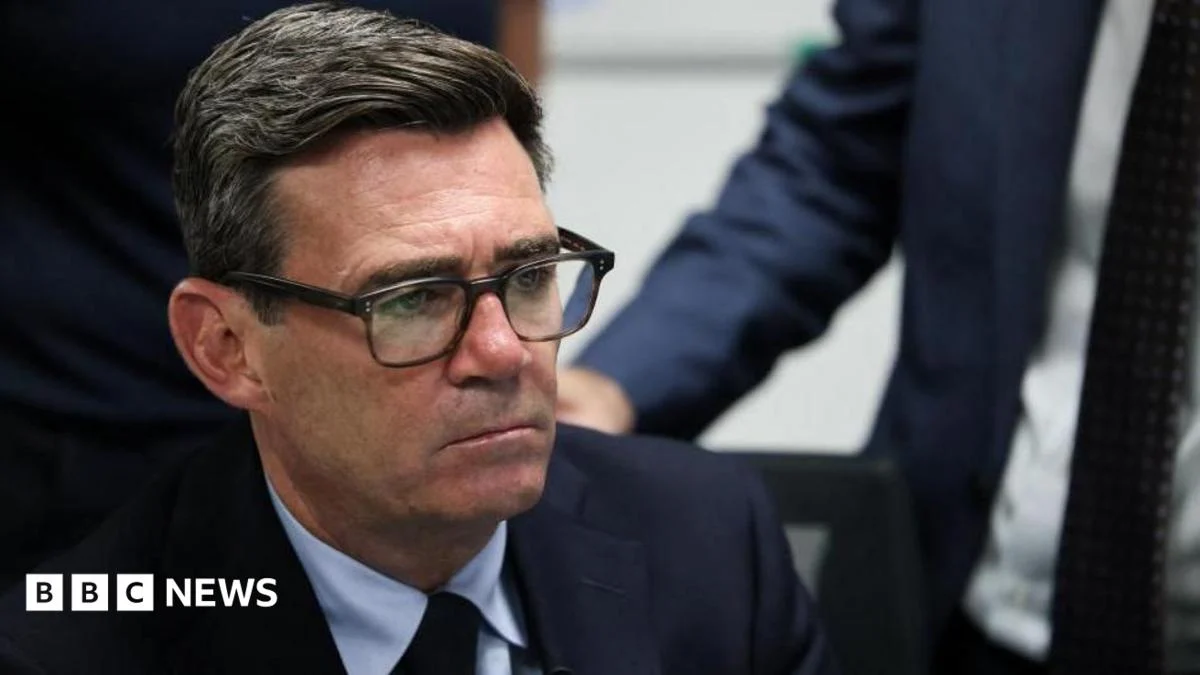
The controversial early release scheme, designed to alleviate unprecedented overcrowding in prisons across England and Wales, had been temporarily halted by Burnham on July 23rd for an urgent review. The initial proposal, which sought to free some prisoners earlier than their scheduled release dates, drew immediate and fierce backlash. Critics argued that such a measure would compromise public safety and disrespect the suffering of victims, particularly given the broad categories of offenders potentially eligible. The scheme is now set to restart in October, but with these crucial modifications.
Prime Minister Burnham, acknowledging the depth of public sentiment, stated his desire to "go even further" in restricting eligibility but cautioned that such measures were constrained by the imminent threat of the prison system collapsing, a scenario he warned would ultimately place the public "at much greater risk." This highlights the precarious tightrope the government is walking between addressing a severe operational crisis within the justice system and responding to the moral and ethical demands for stricter penal enforcement.
A potent symbol of this public anger emerged through the advocacy of Lissie Harper, the widow of PC Andrew Harper. Her impassioned plea against the early release of her husband’s killers resonated deeply across the nation. PC Harper, a 28-year-old police officer, was tragically killed in 2019 when he was dragged for over a mile by a car as three teenagers fled the scene of a quad bike theft in Berkshire. His death sparked a national debate on sentencing and victim rights. Mrs. Harper had previously revealed her distress upon receiving a letter from the Ministry of Justice (MoJ) confirming that the offenders responsible for her husband’s death could potentially be included in the early release scheme. Reacting to the government’s Monday announcement, Lissie Harper expressed her continued outrage, stating she was "beyond appalled and bristling with anger to hear that Andrew’s killers are soon to be free to roam the streets," underscoring that even with the new exclusions, certain perpetrators of grave crimes remain eligible, perpetuating a sense of injustice for specific victim groups.
The underlying issue necessitating such drastic measures is the severe overcrowding plaguing the prison estate. England and Wales have seen their prison population surge to record levels, pushing facilities beyond their operational capacity. Factors contributing to this crisis include longer sentences being handed down by courts, a backlog of cases exacerbated by the pandemic, and a shortage of available prison places. Prison officers have painted a dire picture of the conditions, with one telling the BBC that facilities were "creaking at the seams," warning that "delaying the releases until October could mean we simply run out of space." This stark reality illustrates the immense pressure on the government to find solutions, however unpalatable they may seem to the public.
Under the new adjustments announced by Burnham, the specific exclusion of rapists, groomers, and serious child sex offenders marks a departure from previous interpretations of the Sentencing Act. Amended in January, the Act originally based early release eligibility primarily on the length of a fixed sentence, rather than the nature of the offence itself. While the Act already excluded some of the most dangerous criminals, such as murderers serving life sentences or those on extended sentences, the inclusion of rape and child sexual offences represents a direct response to the public’s demand for greater protection for vulnerable victims. The government has indicated that this immediate change does not require new legislation before the October restart, though future legislative amendments may be considered to formalise and potentially expand these exclusions.
Beyond the excluded categories, the revised scheme outlines specific parameters for other offenders. Those convicted of less serious crimes will see their eligibility for release accelerated. Offenders serving sentences of four years or more for other crimes will now be eligible for release halfway through their sentences, a reduction from the previous two-thirds threshold. For individuals serving less serious sentences, the possibility of release after serving just one-third of their time, rather than half, has been introduced. These changes are slated for a phased implementation, commencing with prisoners serving sentences of less than 575 days. The scheme will gradually expand to include inmates jailed for 12 years or more, with their eligibility for early release projected for June 2027.
Crucially, the government has stressed that these earlier releases will not equate to unconditional freedom. Prime Minister Burnham emphasised that there would be a "presumption" that eligible offenders would be tagged and subjected to longer periods of supervision. Tough new rules, including "restriction zones," will also be imposed, aiming to mitigate risks to the community. Furthermore, for those who serve their full sentence but have been convicted of rape or serious child sex offences, the government has announced strengthened post-release surveillance. This will include 12 months of mandatory GPS monitoring and enhanced community supervision, reflecting an intensified effort to manage high-risk individuals after their incarceration.
In a move to support victims further, the government also announced an additional £10 million investment for frontline victim support services. This funding includes the establishment of a new national helpline, aiming to provide greater assistance and resources to those affected by crime. This financial commitment appears to be an attempt to address the deep-seated trauma and distress caused by the prospect of early releases.
However, the announced changes have not fully appeased all critics. Shadow Justice Secretary Nick Timothy branded the announcement a "U-turn" but maintained that it "doesn’t go far enough." He highlighted that "some child sex offenders and killers… will still be released early," expressing concern that "the trauma of victims being told their abusers may be released can’t be undone." This sentiment echoes Lissie Harper’s ongoing frustration regarding her husband’s killers, who, despite the new exclusions, may still fall outside the defined categories and thus remain eligible for earlier release.
A notable omission in the list of excluded offences drew sharp criticism from Domestic Abuse Commissioner Dame Nicole Jacobs. She voiced concern that perpetrators of domestic abuse were not explicitly barred from the scheme. Dame Jacobs stressed that "it is critical that no abuser is released in October unless I am confident that victims’ safety is not being compromised," underscoring the ongoing vulnerability of domestic abuse victims and the need for their protection to be paramount in any early release considerations.
The operational implications of the revised scheme also raised questions among justice professionals. While a prison officer underscored the immediate pressure on space, a probation officer expressed skepticism regarding the practicalities. The probation officer stated it was "not clear there’s anything actually new here in terms of how probation staff are going to manage people being released earlier," suggesting that the existing strain on probation services, already stretched thin, may not be adequately addressed by the new provisions. This highlights a critical challenge: simply releasing prisoners earlier without a robust and well-resourced probation infrastructure risks undermining the very public safety the scheme purports to protect.
In essence, the government’s latest announcement represents a complex and politically charged compromise. It is an attempt to alleviate an acute prison overcrowding crisis while responding to a powerful moral imperative to protect the most vulnerable and honour the suffering of victims. However, the varied reactions from victim advocates, opposition politicians, and frontline justice workers underscore the deep divisions and unresolved challenges that continue to plague England and Wales’s justice system. The fine balance between compassion, punishment, public safety, and practical logistics remains a formidable hurdle for the current administration.

 George Anjay
 Nakalama John
 atisusanti
 Roy Suryo
 Nana Banana