
 Ramos Leo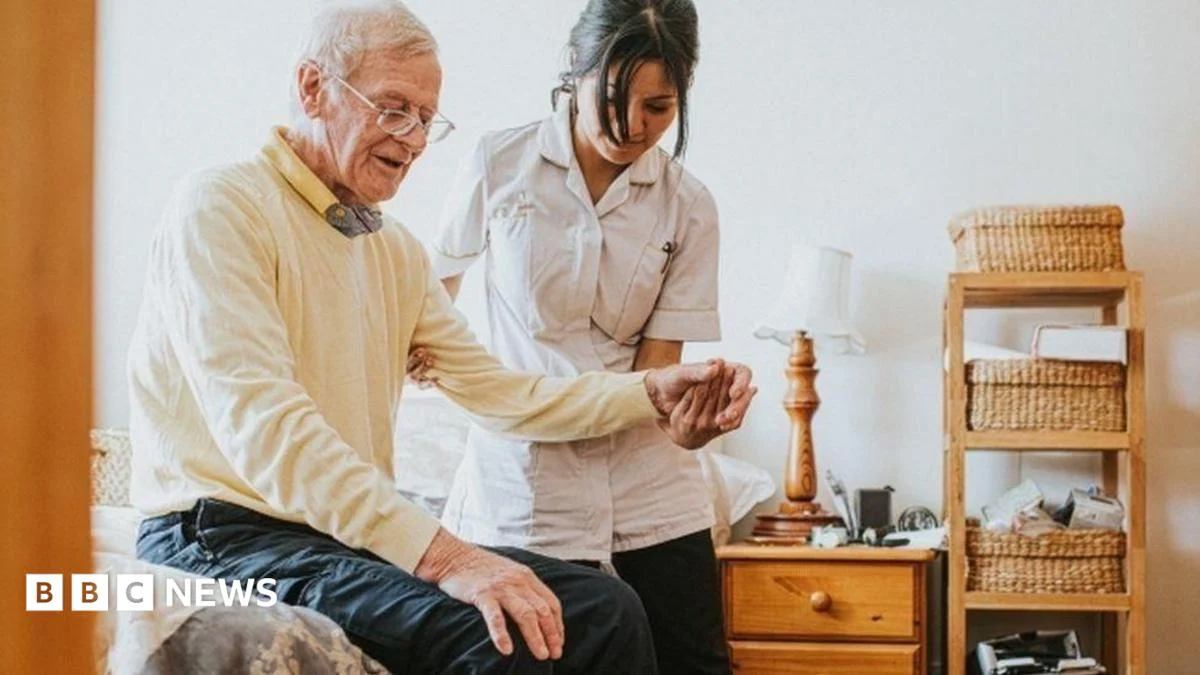
A comprehensive national social care service for Wales, envisioned to be free at the point of use, will not come to fruition within the current Senedd term, which extends until 2030. This candid admission comes from Delyth Jewell, the deputy Welsh government minister with responsibility for social care, a statement that underscores the profound complexities and financial hurdles inherent in transforming the sector. Jewell’s remarks, made during a Welsh government event at the prestigious National Eisteddfod, directly address a key pledge from Plaid Cymru’s 2026 Senedd election manifesto, which advocated for social care to be provided "free at the point of use to all those who need it," mirroring the foundational principle of the National Health Service.
The promise of a national social care service resonates deeply with the public desire for a more equitable and accessible system, similar to the NHS. The concept implies a fundamental shift from the current means-tested model, where individuals often bear significant costs for their care, to one where access is determined solely by need, not ability to pay. For Plaid Cymru, integrating social care into a universal, publicly funded framework has been a long-standing aspiration, reflecting a commitment to social justice and the protection of vulnerable citizens. However, Jewell’s clarification that this ambitious goal is "not something we’ll be able to achieve in its entirety in this term" highlights the formidable practical and economic realities facing the Welsh government. She expressed a desire to firmly "get us on a path towards a system that can be considered truly national," acknowledging that such a transformation is a multi-decade endeavour rather than an immediate overhaul.
Social care in Wales, like healthcare, is a devolved matter, meaning its policy and funding are overseen by the Welsh government and implemented through local authorities. This devolution allows for distinct approaches compared to England, Scotland, and Northern Ireland, yet all face similar demographic pressures and funding challenges. Currently, the cost of social care in Wales is met through a complex system involving direct payments from residents, contributions from their local authority following a means test, or a combination of both. This means-testing often leads to individuals exhausting their life savings, selling their homes, or facing immense financial strain to cover essential care needs, a situation many argue is inherently unfair and unsustainable. The current system also contributes to a ‘postcode lottery,’ where the availability, quality, and specific eligibility criteria for care can vary significantly depending on an individual’s local authority, creating disparities in access and outcomes across Wales.
The scale of investment required to transition to a national social care service free at the point of use is monumental. Estimates for such a transformation often run into billions of pounds annually, requiring a complete reimagining of funding mechanisms. When questioned on whether the Welsh government would consider utilising its limited tax-raising powers to finance such a service, Jewell indicated that the immediate focus remained on improving the efficiency of the existing system. "At the moment what we want to focus on is ensuring that the system we have works in the most efficient way possible," she stated, adding, "I think there are a lot of ways of ensuring that the money that’s being spent is spent a lot more efficiently." While efficiency improvements are always desirable, critics and experts often point out that systemic underfunding cannot be solved by efficiency alone, especially when aiming for a universal service model. The existing funding gap in social care is widely acknowledged, exacerbated by an aging population, increasing complexity of care needs, and a persistent workforce crisis.
The challenge of funding is compounded by a severe shortage of care workers. The social care sector in Wales, much like across the UK, grapples with low pay, demanding working conditions, and a lack of clear career progression pathways, leading to high turnover and persistent vacancies. A truly national service would necessitate not only a robust funding model but also a comprehensive strategy to professionalise the workforce, improve terms and conditions, and enhance training and development opportunities. Without a stable, well-compensated, and adequately skilled workforce, any reform, however well-intentioned, risks failure. Achieving integration between health and social care is another critical objective. The current fragmented system often results in delayed discharges from hospitals, duplicated assessments, and a lack of seamless transitions for individuals requiring both medical and social support. A unified national service could potentially streamline these processes, leading to better patient outcomes and more efficient use of resources across the wider public services.
Jewell’s comments arrive against a backdrop of renewed national dialogue on social care reform, spurred by developments across the border. Last week, UK Prime Minister Andy Burnham announced a national conversation on the future of adult social care in England, signaling a recognition at the highest levels of government that the crisis demands urgent attention. Burnham, echoing concerns widely held by stakeholders, acknowledged that "difficult decisions" would be necessary regarding funding reforms to transform social care. Significantly, the Prime Minister did not rule out tax rises to help pay for social care in England, a stark contrast to Jewell’s current emphasis on efficiency within the existing Welsh framework. Burnham went further, asserting that it was a "major dereliction of public duty" that successive governments had failed to adequately address the social care crisis, a sentiment that resonates deeply with families and care providers grappling with the current system. This parallel conversation underscores the shared, cross-border urgency of social care reform, even as devolved administrations pursue their own policy pathways.
For Plaid Cymru, the deputy minister’s statement presents a political tightrope walk. While acknowledging the impossibility of achieving the manifesto promise within the current term, Jewell’s commitment to setting Wales "firmly on a path" towards a national service seeks to reassure supporters that the long-term vision remains intact. However, electoral pledges often carry significant weight, and the deferral of such a fundamental reform could lead to questions about political will and the realistic scope of ambition within a coalition government. The Plaid Cymru-Labour cooperation agreement in the Senedd, while providing stability, also requires careful negotiation and compromise on policy priorities, especially those with substantial financial implications.
Social care charities and advocacy groups in Wales will likely view Jewell’s statement with a mix of understanding and continued urgency. While recognising the immense challenges, they will undoubtedly press the Welsh government for concrete steps and a clear roadmap towards the promised national service. Economists and policy analysts will continue to highlight the long-term economic benefits of a robust social care system, including its role in supporting the workforce, reducing pressure on the NHS, and fostering a healthier, more productive society. The costs of inaction – both human and economic – are widely understood to outweigh the costs of reform in the long run.
In conclusion, while the aspiration for a national social care service free at the point of use remains a "massive priority" for Delyth Jewell and the Welsh government, the journey to its full realisation is protracted. The current Senedd term, extending until 2030, will not see the complete establishment of such a system. Instead, the focus will be on laying the groundwork, improving efficiencies within the existing framework, and charting a clear course for future reform. The comparison with the UK Prime Minister’s more direct acknowledgment of potential tax rises for social care in England highlights the differing immediate approaches to addressing a shared national crisis. For Wales, the path towards a truly national social care service will require sustained political commitment, innovative funding solutions, and a comprehensive strategy to tackle the intertwined challenges of finance, workforce, and integration, extending far beyond the current electoral cycle.


 George Anjay
 Nakalama John
 atisusanti
 Roy Suryo
 Nana Banana