
 Ramos Leo
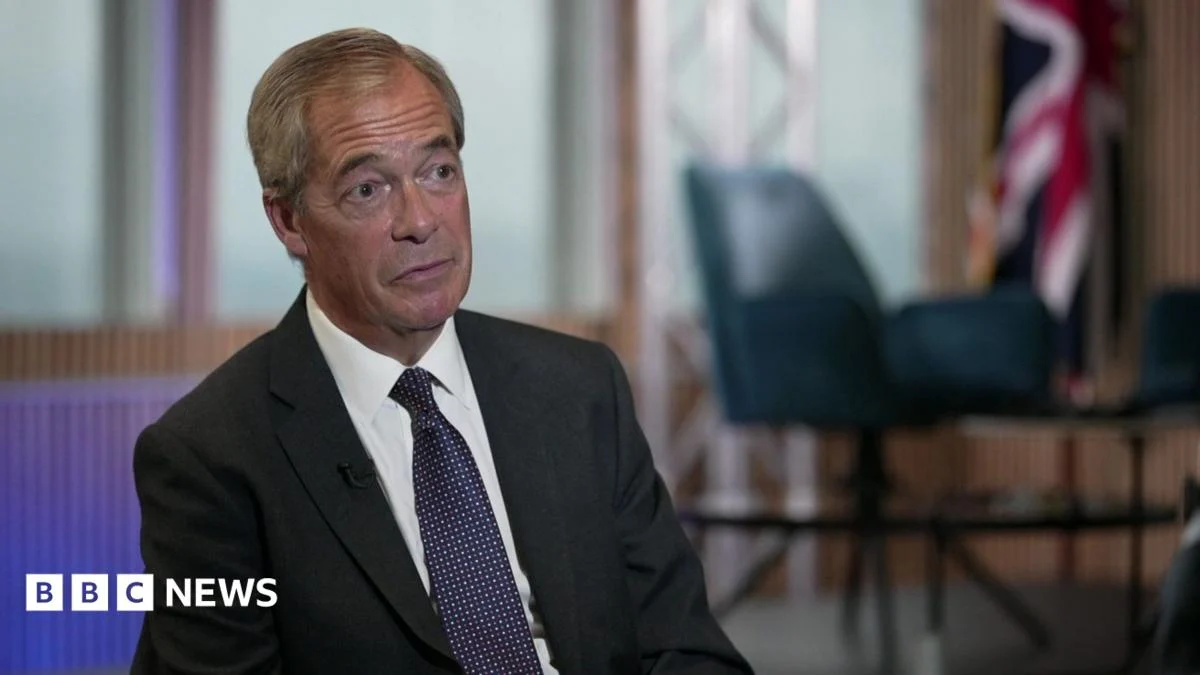
At a recent news conference, Farage expressed "entire confidence" that the audacious plan could be fully justified under the tenets of international maritime law. This stance comes as the Conservatives have dismissed the scheme as lacking credibility, while a Labour minister warned it would lead to prolonged "arguing with France" rather than effectively addressing the root causes of illegal crossings.
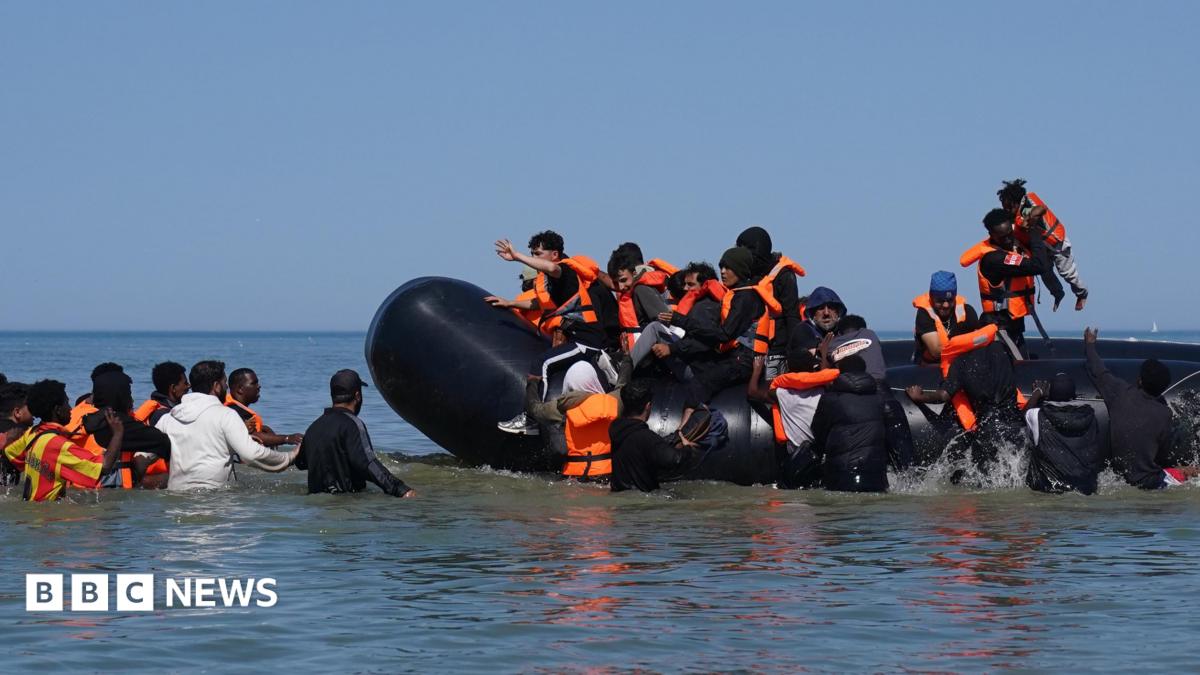
Reform UK’s comprehensive proposal, slated for implementation should the party form a government after the next general election, outlines a multi-faceted military operation. It envisages the deployment of military-crewed inflatable boats from a fleet of ten Royal Navy patrol vessels. These smaller boats would "come alongside" migrant vessels attempting to traverse the perilous English Channel. Onboard, Border Force officers and police personnel would be tasked with arresting individuals in the migrant boats. Subsequently, these individuals would be returned to their point of departure in France or Belgium by Royal Navy personnel or Royal Marines.
The party’s document further details that return operations would be executed by military personnel, with Border Force officers available to manage instances of "non-compliance." A Bay Class landing ship would serve as a floating detention facility, providing "detention capacity at sea" for up to 700 individuals. This aspect underscores the scale of the proposed operation and the expectation of potentially large numbers of intercepted migrants.
Zia Yusuf, Reform’s home affairs spokesman, clarified at the news conference that the party’s initial aim would be to secure an agreement for disembarking arrested migrants at French ports. However, he emphatically added a caveat: "If the Elysee Palace refuses, make no mistake – His Majesty’s Royal Marines will disembark them safely on the very shore they left that morning." This declaration signals a willingness to proceed unilaterally, risking significant diplomatic fallout. Farage, speaking alongside Yusuf, downplayed the likelihood of a major diplomatic confrontation, suggesting that French attitudes towards such an idea were "softening."
The legal underpinning for Reform’s plan, as presented in their policy document, hinges on an interpretation of international law that prioritizes the protection of migrants’ lives in dangerous boats. Specifically, it cites the United Nations Convention on the Law of the Sea (UNCLOS), which mandates a duty on states to "render assistance to any person found at sea in danger of being lost." Farage asserted his confidence that his party’s policy of "securely picking people up and safely taking them back to France" would align with "other conventions of international law." Yusuf acknowledged that the plan could trigger a "diplomatic argument" but maintained that France has a "commitment under international law" to process migrants.
However, this interpretation has been sharply contested by legal experts. Andrew Serdy, an authority on the public international law of the sea at the University of Southampton, strongly argued that Reform’s proposals "would require the agreement of France, which is a bold assumption to make, as there is no reason to expect it to agree." This highlights a fundamental flaw in Reform’s strategy, as France’s sovereign right to refuse the re-entry of individuals to its territory, especially those not its nationals, remains a significant legal and practical barrier.
James Turner KC, a lawyer at Quadrant Chambers specializing in maritime issues, further elaborated to BBC Verify that while UNCLOS grants states rights to prevent infringements of its immigration laws within a "contiguous zone" extending up to 24 nautical miles from its coast, this provision does not automatically entitle countries to "collect asylum seekers in its contiguous zone – or anywhere else – and take them back to the state they set off from." Critics also point to the 1951 Refugee Convention and the principle of non-refoulement, which prohibits returning individuals to a country where they face a serious threat to their life or freedom, as significant legal obstacles to Reform’s plan. Forcibly returning asylum seekers to France, which is generally considered a safe country, might complicate the application of non-refoulement, but the broader principle of state sovereignty and mutual agreement remains paramount.
‘Model is working’
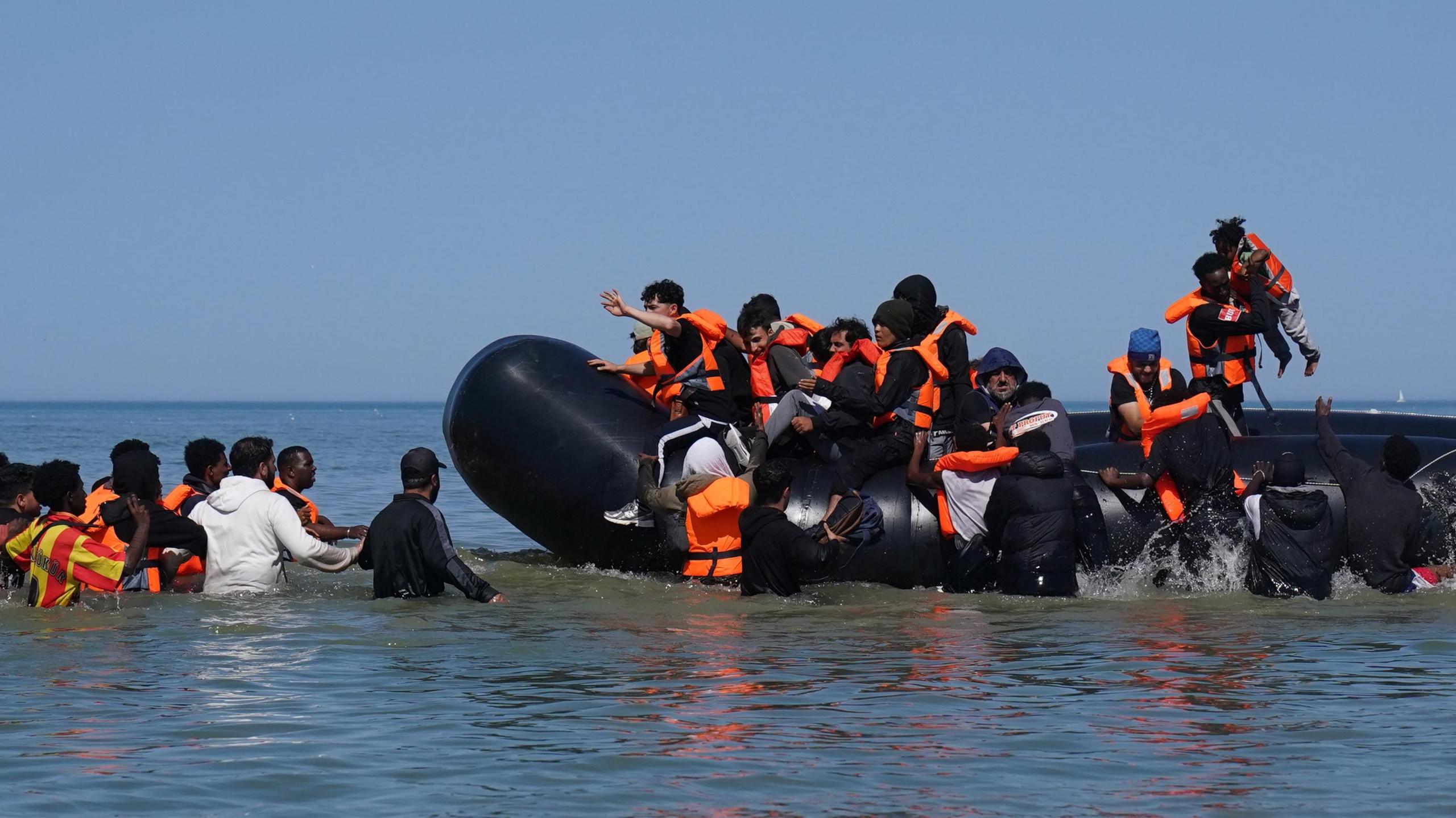
The debate surrounding Reform UK’s proposals unfolds against a backdrop of ongoing efforts to manage irregular migration across the English Channel. Recent Home Office figures indicate a complex and evolving situation. More than 2,000 migrants have reportedly arrived in the UK on small boats since Andy Burnham assumed the role of prime minister two weeks prior, with 326 individuals crossing the Channel on a single Saturday. However, crucially, Home Office figures also show that crossings so far this year are down by approximately 43% compared to the same period in 2025, suggesting a fluctuating but overall downward trend since a peak in 2022.
Between 1 January and 1 August 2026, a total of 14,526 people crossed the English Channel by small boat from France. This represented a substantial decrease of 43% compared to the same period in the previous year. These small boat crossings have, since 2020, become the most prevalent method for individuals detected entering the UK without permission. A vast majority of those arriving by small boat claim asylum, which, under international law, permits them to remain in the country while their application is under review. Small boat arrivals constituted 42% of all asylum applications between April 2025 and March 2026. The average number of people on boats arriving in the UK between 2 August 2025 and 1 August 2026 was 67, a figure that has more than doubled since 2021, exacerbating concerns about overcrowding and safety. Experts warn that such overcrowding significantly elevates the risks of crossings, with the United Nations (UN) reporting at least 84 fatalities during Channel crossing attempts in 2024. In a broader context, small boat arrivals represent only about 5% of total immigration into the UK from January 2025 to December 2025. The current government has reiterated its commitment to "smash the gangs" orchestrating these crossings to reduce numbers.
Analysis of demographics reveals that people from Eritrea accounted for the largest proportion of arrivals, at 18% of all individuals detected between April 2025 and March 2026. Other significant nationalities included Afghanistan (4,490 arrivals), Iran (4,378), Sudan (4,389), and Somalia (3,740). Alarmingly, in the latest figures spanning January 2025 to December 2025, the Home Office identified at least 2,000 small boat arrivals as potential victims of human trafficking or other forms of modern slavery, underscoring the severe exploitation inherent in these journeys. In addition to small boat crossings, another 4,535 individuals were detected entering the UK without permission via other means, such as concealing themselves in vehicles, or travelling on ferries or through airports, between April 2025 and March 2026. This figure marked a 22% reduction compared to the preceding year. The total number of individuals living in the UK illegally after having initially arrived legally (e.g., on a visa) remains an unknown variable.
Energy Secretary Miatta Fahnbulleh, commenting on the Labour government’s approach, asserted that its intensified action against smuggling gangs represented a "model that is working." She expressed skepticism about Reform’s plan, characterizing the proposed involvement of the Navy as another "gimmicky" idea, reminiscent of strategies explored by the previous Conservative government. Fahnbulleh warned that Reform’s approach would primarily result in "a lot of time arguing with France, and not enough time actually getting to grips with the problem."
The prime minister’s recent visit to Dover highlighted the government’s commitment to "changing the whole approach" to small boat crossings. This includes a significant doubling of enforcement officers dedicated to tackling people-smuggling gangs on both sides of the Channel. According to Home Office data, the number of National Crime Agency (NCA) officers engaged in combating gangs facilitating small boat crossings has surged from 376 at the start of 2025 to nearly 800. This focus on disrupting criminal networks and enhancing international cooperation contrasts sharply with Reform UK’s more confrontational stance.
Conservative shadow home secretary Chris Philp echoed criticisms of Reform’s plan, deeming it "not credible." He highlighted the central challenge: "They can’t answer the question how they would disembark immigrants back in France if the French don’t agree." Philp concluded with a dismissive remark, stating, "Reform’s policy I am afraid as usual is on the back of a fag packet," underscoring the perception among political rivals that the proposal lacks detailed practical and legal consideration. The deep divisions in approach to this complex issue underscore the formidable challenges facing any government seeking to address the ongoing migrant crisis.



 George Anjay
 Nakalama John
 atisusanti
 Roy Suryo
 Nana Banana