
 Ramos Leo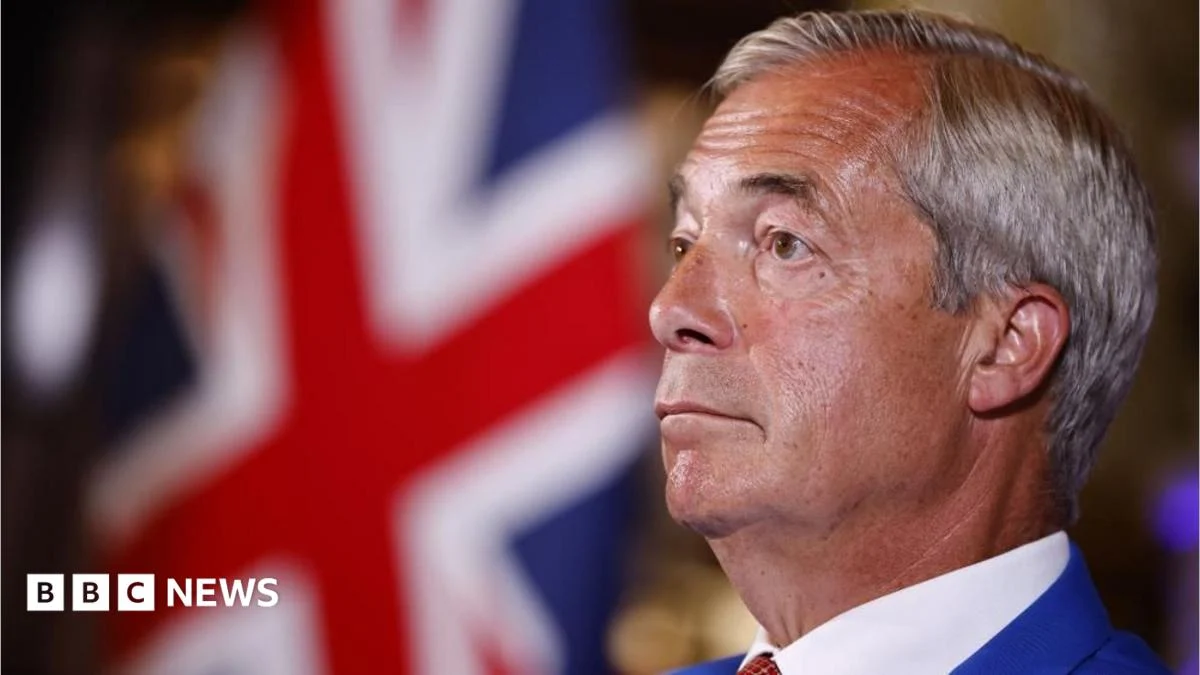
Farage, a veteran Eurosceptic politician known for his instrumental role in the Brexit campaign, confirmed that these discussions with Tice took place in spring 2024. He stated that the primary objective of these talks was to "scope out what would happen to Reform’s finances" if he were to resume leadership. However, he was quick to qualify these interactions, insisting that it "wasn’t a deal, it wasn’t an agreement," but rather a fact-finding exercise. Crucially, Farage also stressed that these conversations occurred "quite some time after" he had received a substantial £5 million gift from a billionaire donor, a point he believes is significant in the ongoing scrutiny surrounding the donation.
This timing and the nature of the discussions have ignited fresh controversy, with the Labour Party asserting that Farage’s remarks have "blown a gaping hole" in his previous arguments for not declaring the £5 million gift. Farage had consistently maintained that the sum, provided by British cryptocurrency investor Christopher Harborne, was an "unconditional gift" intended solely for his personal security. He argued it "wasn’t political in any sense at all" and, critically, that he was not an MP when he received it. These points formed the bedrock of his defence against accusations of non-compliance with parliamentary rules.
Reform UK’s political adversaries have vehemently contended that Farage should have declared the gift in the MPs’ register of interests upon his election to Parliament in July 2024. The Parliamentary Standards Commissioner had initiated an investigation into whether Farage had indeed breached these rules, examining the circumstances surrounding the donation and its potential connection to his political activities. However, this investigative process was temporarily suspended when Farage made the unexpected move last month to stand down as the Member of Parliament for Clacton, thereby triggering a by-election.
Farage publicly justified his decision to resign his seat by stating that the "people of Clacton should be the judges of my actions," framing the by-election as a direct democratic referendum on his conduct and the controversial gift. This bold manoeuvre, a calculated political gamble, places the responsibility for judgment squarely with the electorate. The Parliamentary Standards Commissioner’s investigation is poised to resume should Farage emerge victorious in the Clacton by-election, which is scheduled to take place on 13 August. His success in this contest would not only reinstate him as an MP but also restart the formal inquiry into his financial declarations, placing his political future under continued intense scrutiny.
Farage had previously stepped away from frontline politics in 2021, embarking on a career in broadcasting, where he hosted shows and maintained a public profile, often commenting on current affairs without holding elected office. His return to active politics for the 2024 general election was a dramatic reversal of his stated intentions. In May 2024, while serving as Reform UK’s honorary president, he had publicly announced that he would not be standing as a candidate in the general election slated for July of that year, citing a desire to focus on supporting Donald Trump’s presidential campaign in the United States. However, at the beginning of June, in a move that sent shockwaves through the British political landscape, he reversed this position, declaring his candidacy for Clacton and simultaneously assuming the leadership of Reform UK, replacing Richard Tice.
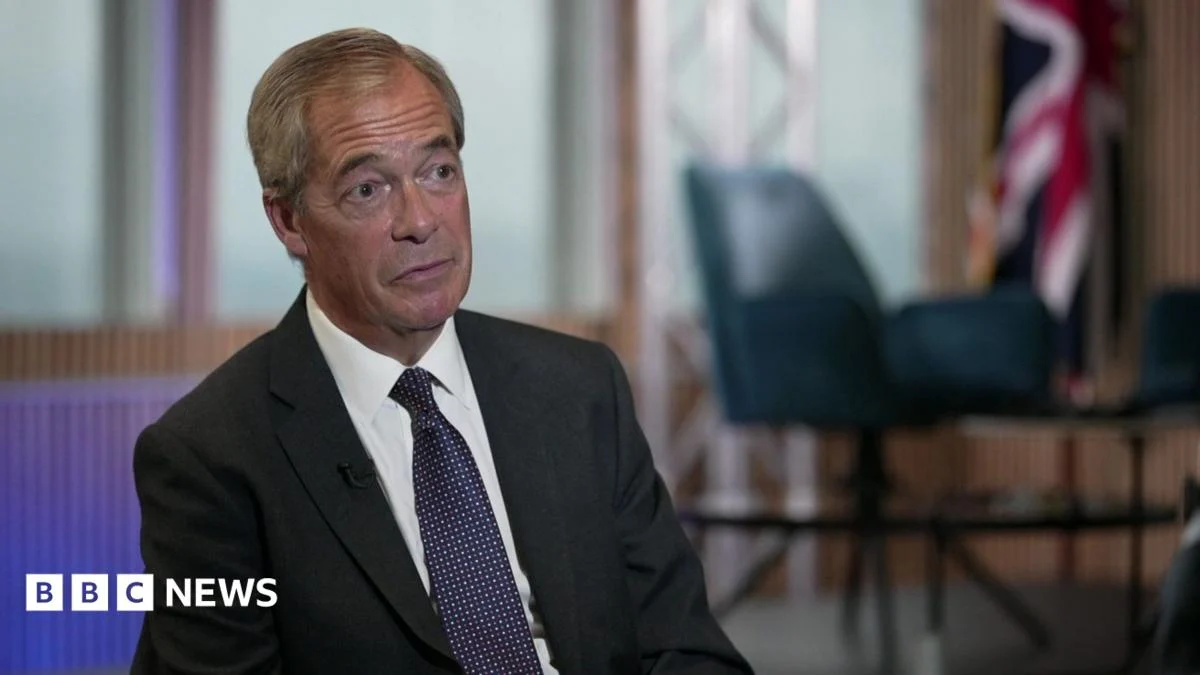
During a press conference held on Monday, Farage was directly confronted with questions regarding The Sunday Times report and whether he had, in fact, negotiated a deal concerning Reform UK’s financial health in anticipation of his potential return to leadership. He reiterated his initial lack of intention to return to politics or as leader of Reform. However, he conceded, "in the spring of that year I did talk to Richard Tice about what the liabilities would be if I was to come back to that position." Farage articulated the practical necessity of such inquiries, adding, "And you’d be a bit of a mug, wouldn’t you, to walk into a job and not find out what the potential liabilities were, and they were substantial." He acknowledged Tice’s crucial role, noting, "But without Richard, the party wouldn’t have even survived, so that was useful for me to know." Yet, he maintained his distinction: "But it wasn’t a deal, it wasn’t an agreement, it was subject to if I came back." He further underscored the separation between the gift and the discussions, emphasizing, "If you want clarification on this, that came quite some time after the gift, which is perhaps the important point."
Bridget Phillipson, who chairs the Labour Party, seized on Farage’s statements, asserting that they critically undermined his defence regarding the £5 million gift. "Nigel Farage has blown a gaping hole in his excuse for why his secret £5m ‘gift’ from a crypto billionaire did not need to be declared," she stated. Labour’s argument hinges on the premise that if Farage was actively discussing the financial implications of a potential return to Reform UK leadership in spring 2024, then the £5 million gift, received around the same period, could no longer be credibly presented as purely "personal" and "non-political." The discussions about party liabilities suggest a continued, albeit exploratory, engagement with the political sphere, raising questions about the true intent and purpose of such a substantial donation to a high-profile political figure.
The controversy is deeply rooted in the Commons code of conduct, which sets stringent rules for financial transparency among Members of Parliament. This code explicitly states that new MPs "must register all their current financial interests, and any registrable benefits (other than earnings) received in the 12 months before their election within one month of their election." This clause is central to the debate, as Farage was elected in July 2024, meaning any registrable benefits received from July 2023 onwards would fall under this requirement.
The rules do provide for certain exceptions, stipulating that "purely personal gifts or benefits" from family members or commercial loans would not normally have to be registered. Farage’s defence has consistently sought to align the £5 million gift with the "purely personal" category, emphasizing its allocation for his security. However, another crucial aspect of the code directly challenges this interpretation, advising that "both the possible motive of the giver and the use to which the gift is to be put should be considered." Furthermore, it includes a cautionary directive: "if there is any doubt, the benefit should be registered." This particular clause places a significant burden on MPs to err on the side of transparency, especially when the donor is a wealthy individual and the recipient is a prominent public figure with a history of political engagement. The fact that Christopher Harborne is a significant donor to political causes, including Reform UK in the past, further complicates Farage’s claim of the gift being entirely non-political.
The financial health of Reform UK itself adds another layer of context to Farage’s discussions with Richard Tice. Reform UK, while gaining traction in opinion polls, especially during the general election campaign, has historically operated with more modest financial resources compared to the two main parties. Understanding the "potential liabilities" would have been critical for anyone considering leadership, encompassing potential debts, ongoing operational costs, and the significant financial outlay required for general election campaigning. Farage’s past leadership of UKIP and the Brexit Party would have made him acutely aware of the financial pressures and responsibilities involved in running a national political movement. His acknowledgment that "without Richard, the party wouldn’t have even survived" hints at the precarious financial situation that Tice had managed to navigate.
The Clacton by-election, scheduled for 13 August, now serves as a high-stakes arena where Farage’s political integrity and the public’s perception of his financial dealings will be directly tested. A victory would not only affirm his mandate from the Clacton electorate but also provide him with political capital as the investigation resumes. Conversely, a defeat would represent a significant personal setback and could severely undermine his standing and the momentum of Reform UK. The broader implications of this saga extend to the vital principle of transparency in British politics, reinforcing the public’s expectation that politicians declare all relevant financial interests to prevent undue influence or conflicts of interest. The full list of candidates standing in the Clacton by-election provides the electorate with their choices in this pivotal contest.

 George Anjay
 Nakalama John
 atisusanti
 Roy Suryo
 Nana Banana