Ramos Leo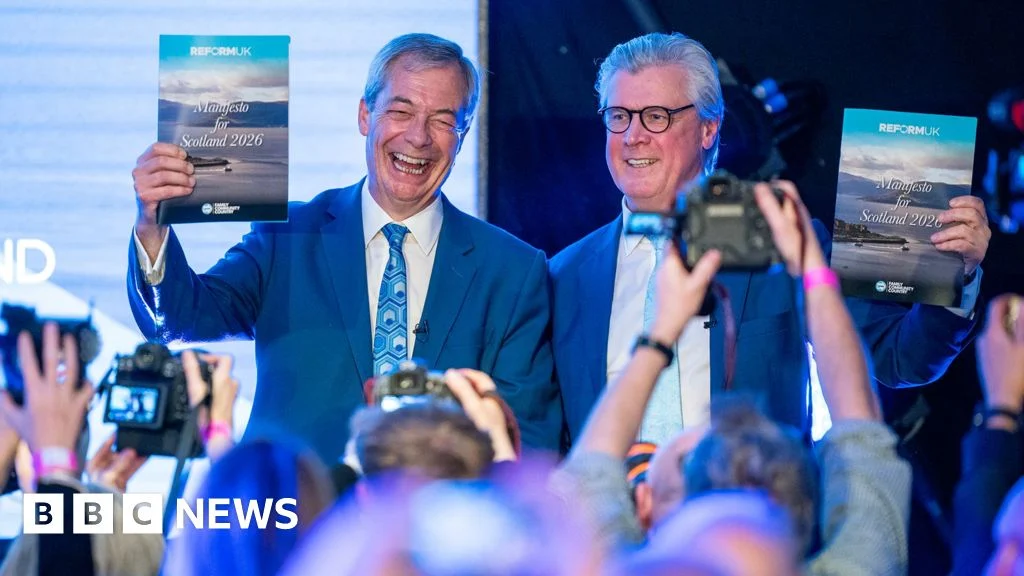
The controversy surrounding Mr. Niven stems from reports, notably by The Herald newspaper, which revealed that he had been banned from acting as a company director for a period of seven years. This disqualification was imposed after it emerged that Niven had allegedly diverted several thousands of pounds from a taxpayer-backed Covid loan into his personal bank account. Such loans, part of government schemes designed to support businesses struggling during the pandemic, were crucial lifelines, making their alleged misuse a particularly egregious breach of trust. Mr. Niven was understood to have served as a director at Britannia Maritime Security, a Glasgow-based firm specializing in providing security services to the shipping industry. The integrity of such a position demands scrupulous financial conduct, and the allegations against Niven represent a significant lapse.
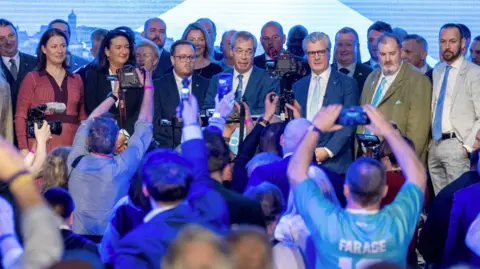
In response to the swift emergence of these damaging reports, a spokesperson for Reform UK issued a concise but firm statement: "We take allegations like this very seriously, and a full investigation is underway." The rapid suspension, occurring within hours of the official candidate announcement at the party’s Holyrood manifesto launch on Thursday, underscores the gravity with which the party viewed the claims. While the investigation is ongoing, Niven’s immediate removal from the candidate list signifies the party’s attempt to distance itself from the allegations and uphold a semblance of financial rectitude, particularly crucial for a party often positioning itself as a challenger to established political norms and a champion of fiscal responsibility. The incident casts a shadow over Reform UK’s initial campaign efforts and raises pertinent questions about its candidate vetting processes.
The Niven controversy, while significant, was not an isolated incident in what quickly became a turbulent unveiling for Reform UK. Malcolm Offord, a prominent figure within Reform UK and a former Conservative peer, publicly acknowledged that he was aware of a number of other candidates having made "controversial comments" on social media. His defence, however, suggested a more lenient stance on past remarks, stating, "We are not stopping people from standing for Reform just because they might have said something fruity in the past." This statement set the stage for further revelations about the online histories of several other Reform UK candidates, igniting a broader debate about political correctness, freedom of speech, and the standards expected of public figures.
Among the other candidates whose past comments drew significant criticism was Senga Beresford, the Reform candidate for Galloway and West Dumfries. The Daily Record reported that Beresford had openly supported Tommy Robinson – a controversial far-right activist known for his anti-Islam views – in his efforts to organize a large "patriotic rally" in London in 2024. More alarmingly, Beresford was also reported to have called for the deportation of Muslims, a statement widely condemned as Islamophobic and discriminatory. When confronted with these revelations, Lord Offord defended Beresford’s comments by characterizing them as having been "done in a former life before she was a member of Reform." He added, "We have to not take offence at every moment in time," implying a need for greater tolerance of past controversial remarks, particularly if made before joining the party. This defence, however, failed to assuage critics who argued that such deeply divisive and hateful sentiments, regardless of when they were expressed, are incompatible with holding public office or representing a mainstream political party. The implications of such comments for community cohesion and public trust are profound.
Further scrutiny fell upon Rachael Wright, the Stirling candidate from Auchterarder. The Courier newspaper reported that Wright had been involved in spreading unsubstantiated rumours concerning asylum seekers purportedly moving into a former school in Perthshire. The dissemination of such rumours can be highly damaging, contributing to xenophobia, fear, and misinformation within local communities, particularly around sensitive issues like immigration and asylum.
Adding to the list of controversial remarks was Linda Holt, the Reform candidate for Fife North East. Holt had reportedly referred to former First Minister Humza Yousaf as a "grandstanding Islamist moron" and asserted that "he’s not British." These comments are not only deeply offensive and potentially racist but also reflect a divisive and inflammatory rhetoric that targets individuals based on their ethnicity, religion, and national identity. Such language, directed at a prominent political figure, raises serious concerns about the tenor of political discourse and the respect afforded to opponents.
Lord Offord reiterated his defence for these candidates, emphasizing Reform UK’s unique approach to candidate selection. "We have brought in 80% of candidates who are not politicians, they are real people with real lives who said real things in a past life," he stated. He acknowledged the challenges posed by the digital age, where "everything is written down and remembered," but argued for a more "realistic" view of past comments. Offord maintained that while these remarks were made before the individuals became candidates or even party members, they would now be "held to higher standards" as official representatives of Reform UK. This strategy positions Reform UK as an anti-establishment party, appealing to voters who are disillusioned with traditional politicians and appreciate what they perceive as "straight talking." However, it also opens the party up to considerable criticism regarding its vetting processes and the quality of its candidates.
The incident with Stuart Niven and the subsequent revelations about other candidates highlight a critical distinction in the nature of political scandals. While Niven’s case involves concrete allegations of financial misconduct and legal disqualification – a matter of direct integrity and adherence to law – the controversies surrounding Beresford, Wright, and Holt pertain more to rhetoric, ideology, and past expressions of opinion. Reform UK’s swift action on Niven’s suspension indicates a clear zero-tolerance policy for financial impropriety. However, Lord Offord’s more nuanced defence of the other candidates’ "fruity" comments suggests a strategic tolerance, or even embrace, of contentious views, particularly those expressed prior to their formal association with the party.
This approach aligns with Reform UK’s broader political identity, heavily influenced by figures like Nigel Farage, who built a career on challenging mainstream narratives and embracing populist, often provocative, discourse. The party seems comfortable with the idea that generating controversy can also generate publicity, getting "people talking about the issues they want to discuss." This deliberate embrace of a "straight talking" image, even if it entails defending controversial past statements, can appeal to a segment of the electorate that feels unheard or misrepresented by conventional politics. Conversely, it risks alienating more moderate voters and reinforcing the perception of the party as extreme or unsuitable for serious governance. Other political parties, aware of this dynamic, are often quick to criticize Reform UK’s controversial candidates, seeking to portray them as a "bogeyman" to rally their own supporters. This ensures that such "rows over contentious comments" are likely to remain a familiar feature of the Scottish election campaign.
Beyond the immediate controversies, Reform UK is positioning itself as a significant force in the upcoming Holyrood election, scheduled for May 7, where voters will elect 129 members of the Scottish Parliament. Current polling data suggests a remarkable surge in support for Reform UK, indicating around 20% of the vote. This level of support could potentially see the party emerge as the second-largest force in the Scottish Parliament, a considerable achievement for a relatively new political entity in Scotland. Such a shift would dramatically alter the political landscape, challenging the dominance of established parties like the SNP, Labour, and the Conservatives.
At their manifesto launch, Reform UK outlined ambitious policy pledges aimed at "turbocharging the economy in Scotland." Lord Offord promised that if his party were to win the Holyrood election, the "first thing" they would do would be to "cut income tax." He acknowledged that implementing their full manifesto, which includes significant economic reforms, would be a long-term project, requiring "10 years – the equivalent of two parliamentary terms." This long-term vision suggests a commitment to fundamental change rather than short-term fixes.

During a subsequent appearance on a BBC Radio Scotland phone-in, Offord was further challenged on the party’s plans for introducing new nuclear power, a topic of considerable debate in Scotland. He maintained a confident stance, asserting his belief that the challenges associated with dealing with radioactive waste, traditionally a major concern for nuclear energy opponents, were now "a smaller problem than it used to be." This position reflects Reform UK’s broader emphasis on energy security and economic growth, potentially prioritizing nuclear power as a reliable, low-carbon energy source despite historical environmental concerns.
As the election campaign unfolds over the coming weeks, Reform UK’s ability to navigate these internal controversies while maintaining its polling momentum will be a crucial test. The party’s blend of populist rhetoric, anti-establishment appeal, and controversial candidate selections presents a unique challenge to the established political order in Scotland, ensuring a dynamic and often contentious electoral battle.


 Roy Suryo
 Nakalama John
 atisusanti