
 Roy Suryo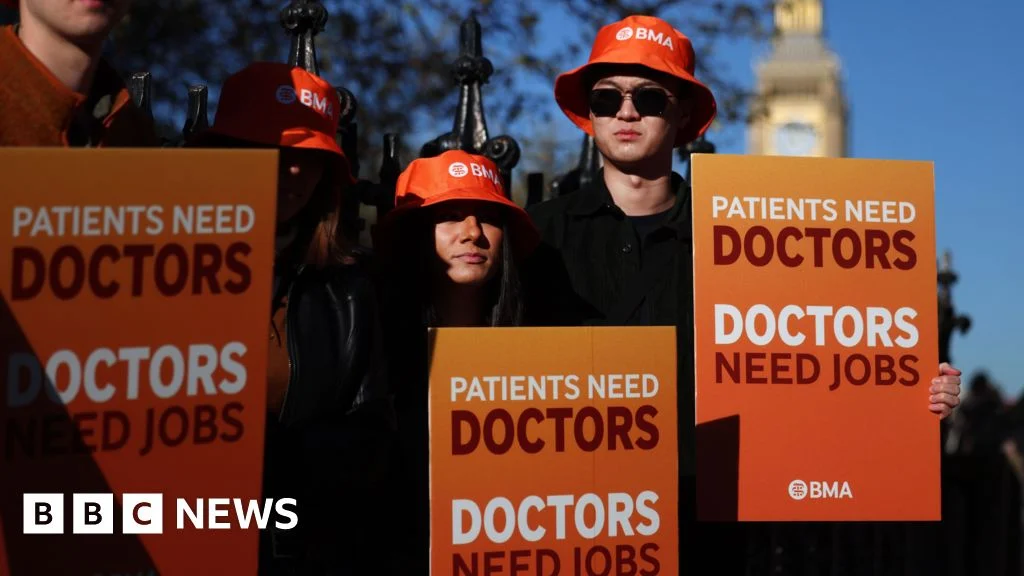
In a significant development that has averted further industrial action, resident doctors in England have announced the cancellation of their planned strike, which was set to commence on Monday. This decision follows a last-minute "new offer" presented by the government, which the British Medical Association (BMA) has agreed to put to its members for a vote. The anticipated walkout, scheduled to run from 07:00 BST on Monday, 15 June, until 06:59 on Friday, 19 June, would have marked the 16th instance of industrial action in the protracted dispute over pay and working conditions.
Health Secretary James Murray hailed the development as an opportunity to "draw a line under the damaging disputes of recent years," while the BMA stated they had upheld their "end of the bargain" after the government demonstrated a shift in its negotiating stance. The breakthrough came after days of intensive talks, including discussions held on Saturday, just hours before the strike was officially called off.
Despite the averted strike, some patient disruption over the coming week is unavoidable. NHS England confirmed that while 95% of operations and appointments were initially slated to proceed, thousands of procedures have already been postponed. The task of rescheduling these appointments and reinstating them on the original timetable will present a considerable challenge for hospital administrators and medical staff alike. Nonetheless, the news has brought a palpable sense of relief to both the striking doctors and the healthcare system.
Government sources indicated that the new offer does not include additional funding for the current year. However, it proposes accelerated increases in pay scales for the following year. Furthermore, the offer commits to the creation of 4,500 new training positions for newly qualified doctors and includes provisions for covering doctors’ examination fees.
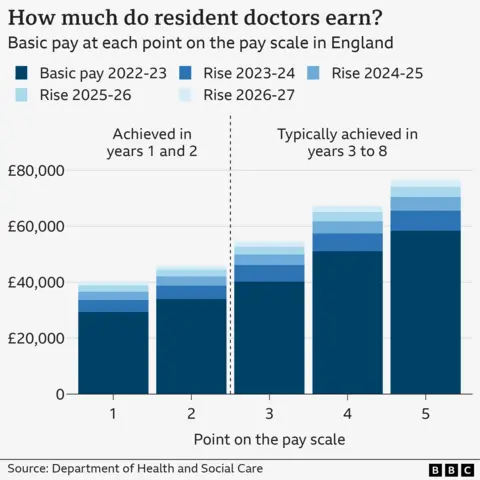
Resident doctors, formerly referred to as junior doctors, have seen their pay increase by a cumulative 33% over the past four years, with a 3.5% rise implemented this year. This has brought starting salaries to just over £40,000, while the most senior resident doctors now earn a basic pay of £76,500. Substantial additional earnings, amounting to thousands of pounds annually, are also available through remuneration for unsociable hours and extra shifts.
However, the BMA contends that when inflation is factored in, resident doctors are earning approximately 20% less than they did in 2008. This persistent real-terms pay cut remains a core grievance for the medical professionals. The union’s ongoing campaign highlights the erosion of their earning power over more than a decade, despite increases in their workload and responsibilities.
Health Secretary James Murray expressed his satisfaction with the outcome, stating, "It is a positive and welcome development – especially for patients – that the BMA have called off these unnecessary strikes." He further emphasized the financial constraints faced by the government, noting, "The country simply cannot afford to increase the pay offer for this year. I am pleased that the BMA have recognised this, which has allowed us to make progress in other areas, such as training places and working conditions." This statement underscores the government’s commitment to addressing issues beyond immediate salary increases, focusing on the long-term professional development and support for resident doctors.
Dr. Jack Fletcher, chairman of the BMA’s resident doctors committee, articulated the union’s position, stating, "We have always been clear that no strikes needed to go ahead if we received an offer appropriate to put to our members." He acknowledged the eleventh-hour nature of the resolution but stressed the BMA’s willingness to engage constructively when the government demonstrates flexibility: "This should not have been left to the last moment, but we hold up our end of the bargain when the government shifts its position." This sentiment reflects a desire for earlier and more proactive engagement from the government to prevent industrial action.
Sir Ciarán Devane, chief executive of the NHS Alliance, characterized the suspension of the strike as a "vital chance to reset the conversation" and urged both parties to strive for a "fair, sustainable agreement." His call for renewed dialogue signifies the broader implications of the dispute for the NHS and the need for a lasting resolution that benefits all stakeholders.
It is understood that the strike was originally called after Health Secretary Murray had explicitly stated in a May meeting that he was unwilling to negotiate on pay, deeming the union’s demands as "unrealistic and unaffordable." The BMA had previously voiced criticism, suggesting that Murray had exhibited "the same unwillingness to move" as his predecessor, Wes Streeting. This indicates a historical pattern of intransigence that the union had sought to overcome.
The BMA has orchestrated a series of strikes in England since 2023, protesting against pay levels and working conditions. The most recent industrial action, a six-day walkout in April, occurred after the BMA rejected an offer that encompassed an increase in training jobs, accelerated career progression, and a commitment to reimburse out-of-pocket expenses such as exam fees. This prior rejection highlights the depth of the disagreement and the specific points of contention that have fueled the prolonged dispute. The current offer, therefore, represents a significant shift in the government’s approach, acknowledging the need to address a broader spectrum of concerns beyond just nominal salary increases. The upcoming vote by BMA members will be crucial in determining the future trajectory of this critical negotiation.



 George Anjay
 Nakalama John
 atisusanti
 Ramos Leo
 Nana Banana