
 Nakalama John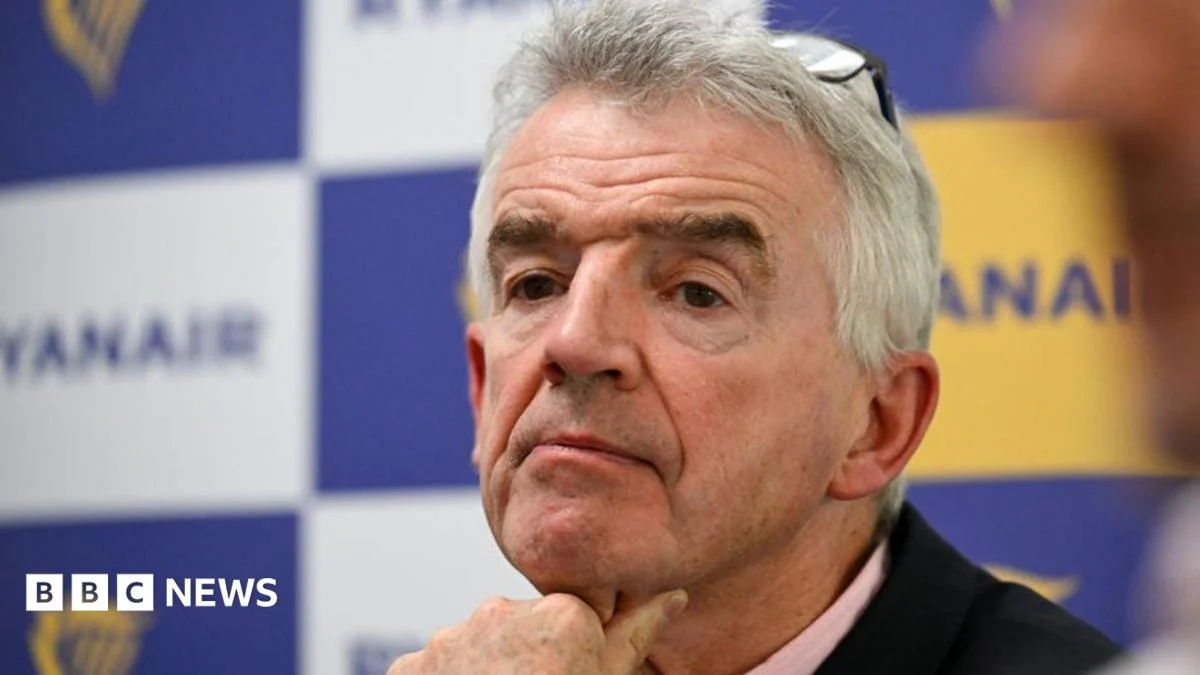
His precise wording, which quickly drew widespread condemnation, stated that some people were "desperate to get to Ryanair’s low fares because they can’t afford to fly with the high-fare rapists around Europe." The immediate aftermath saw a wave of criticism, particularly from organisations dedicated to supporting victims of sexual violence. Among the most prominent was the Dublin Rape Crisis Centre (DRCC), which promptly wrote to O’Leary, articulating the profound distress his language had caused. The DRCC’s letter, subsequently seen by the BBC, demanded an apology and sought to educate O’Leary on the far-reaching impact of his carelessly chosen words.
Initially, O’Leary remained defiant, robustly defending his choice of terminology. When challenged by a reporter from the Press Association regarding the appropriateness of his language, he retorted, "British Airways, Lufthansa, and everybody else’s high fares, I’ll happily offend them on a regular basis." Pressed further on whether such a comparison would offend sexual assault victims, he acknowledged that rape was "a terrible crime," yet still maintained that his remarks could not possibly trivialise it. This initial stance, characterised by a perceived lack of empathy and a dismissal of the concerns raised, only served to intensify the backlash against him and Ryanair.
However, a notable change of heart occurred, culminating in a video apology posted on Friday. In this video, O’Leary revealed that the preceding ten days had been filled with "conversations with family and friends, both inside and outside Ryanair." These discussions, he admitted, had brought about a crucial realisation: "I have come to realise however that the word that I used so carelessly has caused considerable upset and offence to a wide number of people, especially to victims and survivors." His apology was delivered with a tone of contrition, stating, "I want to apologise, sincerely and unreservedly, to those people, especially to the survivors." He acknowledged his language as "careless" and pledged, "it won’t happen again. I will try to learn from this mistake, and do better in future." This public declaration marked a significant climbdown for a figure notoriously unapologetic throughout his career.
The DRCC’s intervention had been particularly powerful. Rachel Morrogh, the chief executive of the Dublin Rape Crisis Centre, had penned a strongly worded letter to O’Leary following his initial comments. In her correspondence, she directly accused him of seeking to generate headlines through shock value, asserting that such a strategy came at a grave cost to vulnerable individuals. Morrogh revealed that the DRCC had received numerous calls from rape victims who were "upset and distressed because of what you said," underscoring the real-world, deeply personal impact of his flippant comparison. To address his apparent lack of understanding, she generously offered O’Leary comprehensive training on the pervasive and devastating impact of sexual violence, alongside a fervent plea for him to issue an apology. Her letter contained a poignant line: "I can’t imagine you would ever use the term so flippantly again if you truly understood [what] it was like to survive rape."
O’Leary’s initial response to Morrogh’s heartfelt appeal was dismissive. He maintained his position that "no remarks of mine could possibly trivialise the heinous crime of rape." Consequently, he declared, he would "not be issuing any apology or accepting your offer of training." This steadfast refusal, prior to his later video apology, painted a picture of a corporate leader seemingly impervious to the emotional and societal implications of his words. His eventual apology therefore represents a notable departure from his long-established public persona.
Indeed, this is not the first instance where Michael O’Leary’s famously outspoken nature has landed him in controversy, or where his business dealings have been intertwined with highly provocative language. His career has been punctuated by a series of contentious remarks, often employed as a deliberate strategy to generate publicity and underscore Ryanair’s aggressive, low-cost ethos. In 2004, for example, he reportedly referred to the owners of Stansted Airport as "a bunch of overcharging rapists" during a heated dispute over airport charges. This earlier incident, nearly two decades prior, illustrates a recurring pattern in his communication style, where extreme analogies are used to demonise perceived adversaries in the business world.
Beyond external rivals, O’Leary has also been known to direct his sharp tongue towards his own employees, famously calling some of his staff "lazy bastards." He has shown little patience for customer complaints, once telling passengers seeking refunds, "we don’t want to hear your sob stories." These past remarks, while certainly controversial and often deemed inappropriate by conventional standards, were typically framed as part of his "maverick" leadership style, aimed at projecting an image of ruthless efficiency and no-nonsense business acumen. For years, this persona served Ryanair well, contributing to its reputation as a no-frills, cost-effective airline that prioritised efficiency above all else. His confrontational approach often made headlines, effectively providing free publicity for the airline.
More recently, in June, Ryanair announced that it would "reluctantly" cease charging parents to sit next to their children, a policy shift that came only after a watchdog investigation was initiated. Despite this change, O’Leary insisted that the airline’s previous policy had complied fully with existing laws, once again demonstrating his tendency to resist external pressure until absolutely necessary. This incident, while less charged than the "rapists" remark, nonetheless highlights his characteristic stubbornness and his preference for defending Ryanair’s practices to the hilt, even in the face of public disapproval or regulatory scrutiny.
The latest apology over the "high-fare rapists" comment, however, signals a potential turning point. The use of a term associated with such a grave crime, especially when directed at competitors, evidently crossed a line that even O’Leary could not indefinitely defend. The sustained pressure from the Dublin Rape Crisis Centre, coupled with what he described as personal reflections and conversations, appears to have compelled him to recognise the profound difference between provocative business rhetoric and language that trivialises severe human suffering.
This incident underscores the evolving landscape of corporate responsibility and public discourse. In an era where social media amplifies every statement and public figures are held to increasingly higher standards of ethical communication, the traditional "maverick" approach to leadership is facing greater challenges. While O’Leary’s bluntness has long been a hallmark of his brand, this particular controversy highlights the potential for irreparable damage when offensive language is used, especially concerning sensitive issues like sexual violence. The apology, delivered personally in a video, suggests a recognition that the commercial benefits of headline-grabbing provocations are increasingly outweighed by the reputational risks and the ethical imperative to avoid causing harm to vulnerable groups. It remains to be seen whether this apology marks a permanent shift in O’Leary’s communication style or merely a temporary retreat in the face of overwhelming criticism. Nevertheless, for many, the apology itself is a significant step, acknowledging the power of words and the responsibility that comes with holding a prominent public platform.


 Nana Banana


 George Anjay