Nakalama John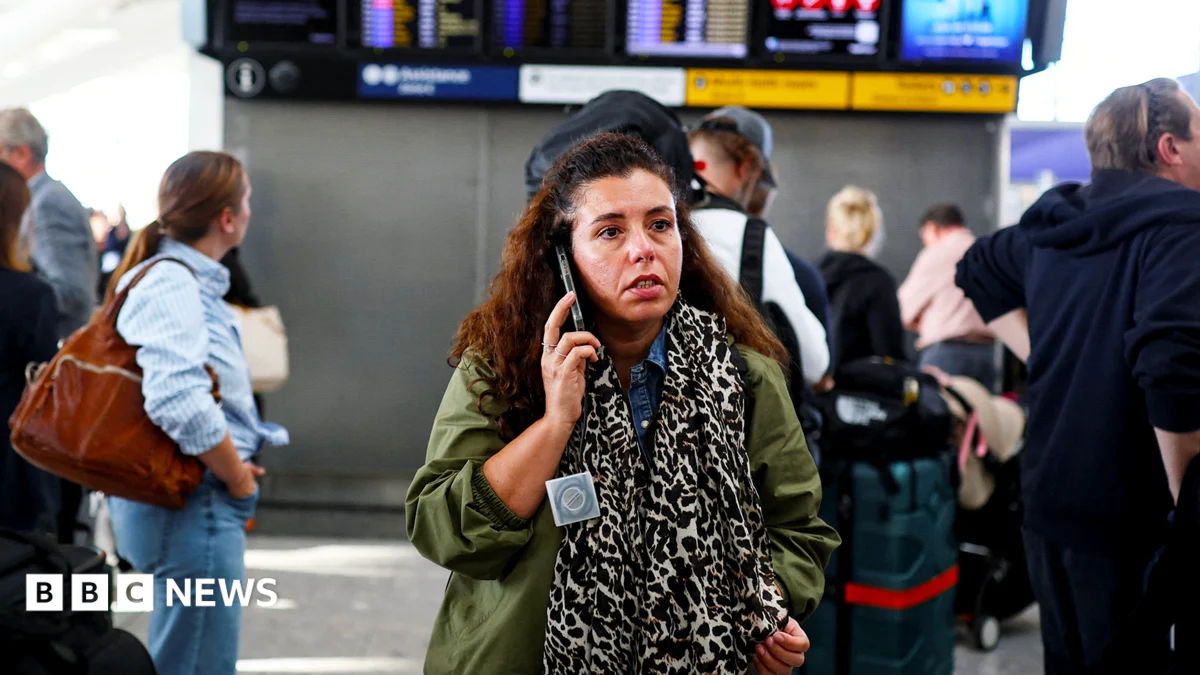
The immediate fallout from this millisecond malfunction was severe and far-reaching. Over 2,000 flights were cancelled, stranding hundreds of thousands of passengers both domestically and internationally. The human cost of the disruption was palpable, with countless individuals forced to endure nights sleeping on airport floors, while others found themselves unexpectedly marooned overseas, grappling with uncertainty and mounting expenses. Major international hubs like Heathrow, Gatwick, Luton, and Glasgow Airports bore the brunt of the cancellations and delays, leading to an intricate logistical nightmare that took days to untangle as aircraft and crew were left severely out of position.
Martin Rolfe, Nats chief executive, addressed the mounting criticism, firmly stating his refusal to resign despite calls for his departure. He described the software defect as "very, very obscure," highlighting the complexity of the systems Nats operates. Rolfe emphasised the inherent fragility of modern air travel, noting, "You can fly to almost anywhere from almost any airport at almost any time. If that stops, even for a moment, then you get huge disruption." He asserted that his primary responsibility was to ensure such incidents occur "as infrequently as possible."
The incident prompted immediate and intense scrutiny from various quarters. Transport Secretary Heidi Alexander lambasted the disruption as "completely unacceptable," reflecting widespread public frustration. Industry body Airlines UK, representing major carriers, wasted no time in formally writing to Nats, demanding immediate compensation for the substantial costs incurred by airlines due to the system failure. These costs typically include rebooking passengers, providing accommodation and meals, repositioning aircraft, and covering crew expenses, all of which run into millions of pounds. Questions were also vigorously raised concerning the overall resilience of Nats’ systems, with some airlines openly challenging Mr. Rolfe’s continued leadership.
In an initial report published on its website, Nats provided further technical insight into the incident. The software defect, which manifested at precisely 10:00 am on September 8th, resulted in air traffic controllers having significantly reduced information available to them. This critical data loss necessitated the immediate implementation of restrictions to limit air traffic, a measure deemed essential to maintain safety within UK airspace. While the defect occurred mid-morning, it did not become apparent as a serious, system-wide problem for another two and a half hours, prolonging the response time. The crucial system restart only commenced just after 3:15 pm, and the comprehensive restrictions on UK airspace were not fully lifted until 7:30 pm that evening, underscoring the protracted nature of the technical resolution.
The aftermath of the failure extended far beyond the initial day of disruption. The sheer volume of displaced aircraft and out-of-position crew meant that normal operations took several days to completely resolve, causing a ripple effect of cancellations and delays across Europe and beyond. Mr. Rolfe issued an apology to all those affected, expressing that Nats was "devastated" by the impact. However, he also reiterated the service’s unwavering commitment to safety, stating, "Our primary role is to keep our skies safe, and everyone who flies through them. At no point last week was safety in question." He defended Nats’ rigorous testing protocols, remarking, "We have tested these systems so much… We spent so much time making sure they work that anything that does happen of this nature is, by its very nature, going to be incredibly complicated and probably difficult to understand at the time."
Reacting to Nats’ preliminary findings, Transport Secretary Heidi Alexander reiterated her condemnation of the "unacceptable" and "frustrating" disruption for passengers, airlines, and airports alike. "It’s clear we need to urgently understand why this issue was not discovered and fixed before it caused chaos," Alexander stated, confirming that a comprehensive review by the Civil Aviation Authority (CAA) was already underway to scrutinise the incident and Nats’ procedures.
Adding to the pressure on Nats, this was highlighted as the third national air traffic incident in the past three years, raising serious concerns about the long-term reliability and robustness of the UK’s air traffic control infrastructure. In 2023, a separate computer shutdown over the busy August bank holiday weekend led to widespread disruption, affecting an estimated 700,000 passengers. Furthermore, a smaller Nats outage in 2025 resulted in 150 flight cancellations, indicating a concerning pattern of recurring system vulnerabilities.
Tim Alderslade, chief executive of Airlines UK, voiced the collective frustration of the airline industry. "Once again, it is passengers who have suffered and airlines who have picked up the pieces – and the tab – of an ATC [Air Traffic Control] system failure, while Nats itself faces no real consequences," he asserted. Alderslade emphasised that passengers deserved "commitment and proof that the system is being fixed," rather than repeated assurances. He reiterated that Airlines UK was formally writing to Nats not only "to demand immediate compensation for the costs incurred" by its member airlines but also to insist on "a credible plan to improve resilience" within the national air traffic control system.
Adding a human face to the statistics, 26-year-old Addie Kitson shared her harrowing experience. She had been on holiday in China when her return flight home to the UK was abruptly diverted to Sweden. "I thought I landed fine," she recounted to the BBC, "but then they went: ‘Welcome to Stockholm’ and I went: ‘Ooh, that’s not London’." After being informed about the critical issues affecting UK airspace, Addie and her fellow passengers were kept on the plane for several hours before being permitted to disembark. They subsequently endured a gruelling 19 hours inside Stockholm airport, a situation made worse by inadequate support.
Addie found herself accumulating nearly £100 in unexpected costs, forced to purchase essential refreshments, adaptors for her devices, and even pay for Wi-Fi access to attempt to work remotely. Her frustration was compounded by the paltry assistance offered: "I got one £11 food voucher that didn’t even cover the cost of a sandwich in Stockholm airport," she lamented. Her experience highlighted a broader point of contention for many passengers: the rules surrounding compensation. Airlines typically only provide compensation for delays and cancellations if the disruption is deemed to be within their control. However, air traffic control failures are often classified as "extraordinary circumstances" by regulators, absolving airlines of the legal obligation to pay direct financial compensation to passengers beyond rebooking or providing care. Addie questioned this classification, particularly given the recent history of multiple air traffic outages. "It doesn’t seem that extraordinary," she concluded, echoing the sentiment of many who felt caught in a bureaucratic loophole while bearing the brunt of systemic failures. The incident underscores the urgent need for Nats to not only address the technical vulnerabilities but also to restore public and industry confidence in the reliability of the UK’s air traffic control infrastructure.

 George Anjay
 Ramos Leo
 Nana Banana