Nakalama John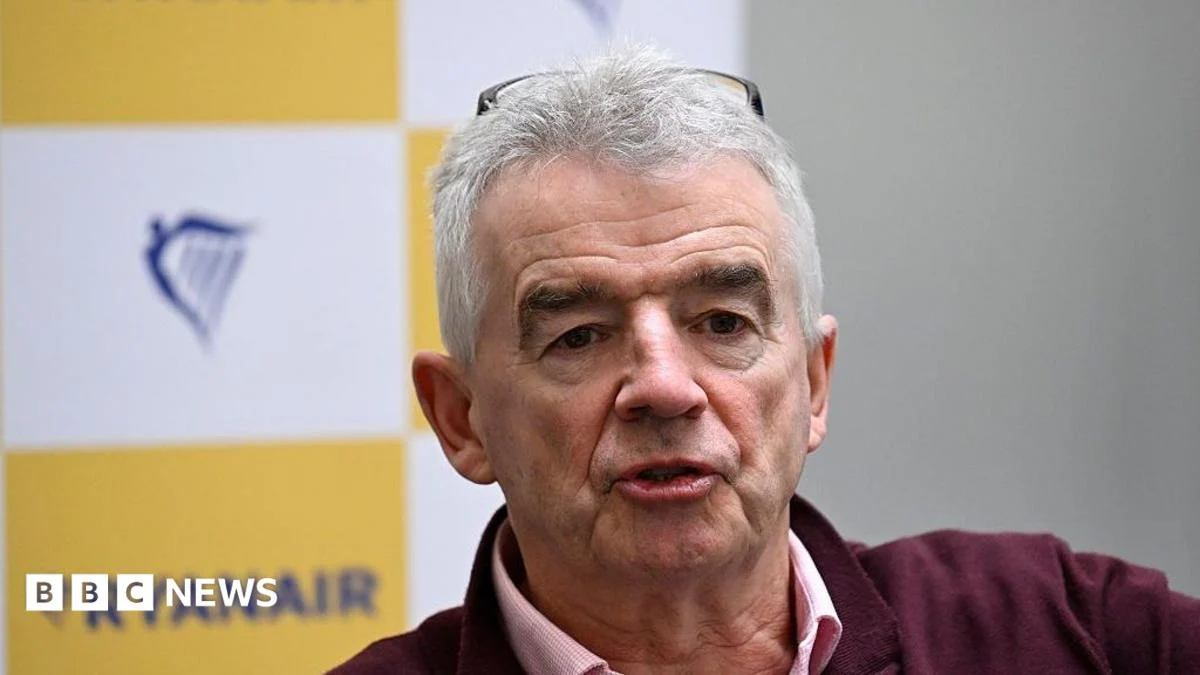
O’Leary, known for his blunt and often abrasive communication style, initially doubled down on his choice of words when questioned by reporters ahead of Ryanair’s yearly meeting with shareholders. Asked by a Press Association reporter whether the language was appropriate, he responded with an unequivocal "Absolutely." He then clarified his targets, stating, "British Airways, Lufthansa, and everybody else’s high fares, I’ll happily offend them on a regular basis." When pressed on whether such language might offend sexual assault victims, O’Leary acknowledged that rape was "a terrible crime," but stopped short of any suggestion that his use of the term was inappropriate in the context of commercial competition. This initial defiance set the stage for a wider public and political backlash.
The Dublin Rape Crisis Centre (DRCC) was among the first to formally challenge O’Leary’s remarks. Rachel Morrogh, the DRCC’s chief executive, penned a strongly worded letter to O’Leary, accusing him of a calculated attempt to generate headlines through his comments. Morrogh highlighted the severe impact his flippant use of the term had on survivors of sexual violence, revealing that the DRCC had received calls from rape victims who were "upset and distressed because of what you said." To underscore the gravity of the issue and educate O’Leary on the profound trauma associated with sexual assault, she offered him training on the impact of sexual violence, urging him to issue a public apology. "I can’t imagine you would ever use the term so flippantly again if you truly understood [what] it was like to survive rape," Morrogh wrote, appealing to his sense of empathy.
However, O’Leary remained unrepentant. In his response to the DRCC, he unequivocally stated, "I am quite clear that no remarks of mine could possibly trivialise the heinous crime of rape." He maintained that since he had not "trivialised the heinous crime of rape," he would "not be issuing any apology or accepting your offer of training." This steadfast refusal to apologize, even in the face of direct appeals from a support organization for victims, intensified the controversy and drew further condemnation. His argument hinged on the premise that his comments, though using the word "rapists," were clearly directed at corporate entities and their pricing policies, and therefore could not be construed as trivializing the act of sexual violence itself. Critics, however, argued that the word carries such immense weight and horror that its use in any context outside of its direct meaning is inherently insensitive and disrespectful to victims.
The political sphere quickly weighed in, with senior figures from both Ireland and the UK expressing their disapproval. Ireland’s deputy premier, Simon Harris, condemned O’Leary’s language as "clearly an inappropriate use of language" and stressed that O’Leary "should have moved to rectify it." Harris’s comments carried significant weight, coming from a high-ranking government official in Ryanair’s home country, suggesting a broader societal expectation for more responsible corporate communication. Similarly, UK Transport Secretary Heidi Alexander, speaking to UK radio outlet LBC, delivered a sharp, pragmatic assessment of the situation. She quipped that victims of rape are "not going to be rushing to book tickets with him, let’s be honest," implying that O’Leary’s controversial tactics might alienate a significant portion of the traveling public, regardless of his intentions. These political statements underscored the perception that O’Leary’s remarks were not merely a marketing faux pas but a breach of acceptable public discourse for a prominent business leader.
This is by no means O’Leary’s first foray into contentious public statements. His career has been punctuated by numerous instances of provocative language, often seen as a deliberate strategy to generate publicity for Ryanair, whether positive or negative. In 2004, for example, he reportedly called the owners of Stansted Airport "a bunch of overcharging rapists" during a heated dispute over airport charges, demonstrating a consistent pattern of using the same inflammatory term to describe entities he perceives as exploiting consumers. This earlier incident suggests that O’Leary views the term as a strong, albeit controversial, metaphor for corporate greed rather than an insensitive slight to victims of actual sexual violence.
Beyond his "rapists" comments, O’Leary has a well-documented history of disparaging remarks aimed at various groups, including his own staff and passengers. He has been known to refer to some of his employees as "lazy bastards" and once infamously told passengers seeking refunds, "we don’t want to hear your sob stories." Such comments, while perhaps intended to project an image of no-nonsense efficiency and cost-cutting, have often been perceived as dismissive and arrogant, contributing to a sometimes polarizing public image for both O’Leary and Ryanair.
More recently, in June, Ryanair faced scrutiny over its policy of charging parents to sit next to their children. While the airline initially defended its practice as compliant with existing laws, O’Leary eventually stated that the airline "would reluctantly" stop charging parents, a decision made after a watchdog investigation was opened. This episode, much like the current controversy, highlighted a tension between Ryanair’s aggressive commercial practices and evolving public expectations for corporate responsibility and customer welfare.
The persistent use of such language raises significant questions about Ryanair’s corporate social responsibility and its brand reputation in an increasingly socially conscious world. While O’Leary’s brashness has undoubtedly contributed to Ryanair’s brand recognition and its image as a no-frills, low-cost carrier that challenges the establishment, there’s a growing sentiment that such tactics may be outdated and counterproductive. In an era where companies are increasingly expected to demonstrate empathy and align with societal values, O’Leary’s defiant stance against apologizing for remarks that cause distress to vulnerable groups could alienate a significant segment of the market. His calculated risk-taking with language may appeal to some who appreciate his candidness, but it undeniably carries the potential to deter others who prioritize ethical conduct and respectful communication from the brands they choose to support. The incident serves as a stark reminder of the fine line between provocative marketing and genuinely offensive discourse, and the enduring challenge for corporations to navigate public perception in the digital age.




 Roy Suryo