Nana Banana
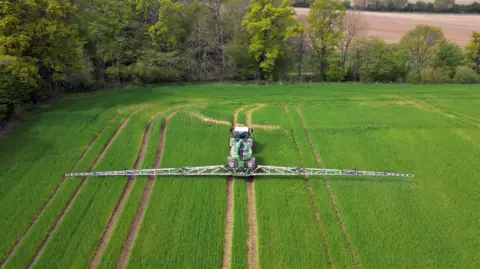
Andrew Williamson, who manages a significant 900-acre arable farm near Bridgnorth, Shropshire, growing a variety of staple crops including wheat, barley, and oats, articulated the profound concerns reverberating through the farming community. Speaking from his farm, Williamson highlighted how the industry is struggling to maintain the affordability of its output amidst these dramatic price increases, which have been exacerbated by geopolitical instability impacting global energy markets.
The root of the problem lies in the interconnectedness of global supply chains and energy prices. The cost of natural gas, a primary component in the manufacturing of nitrogen fertilisers, has seen significant volatility in recent weeks. This instability, driven by global events and heightened tensions in key energy-producing regions, has sent shockwaves through the agricultural sector. Last week, the price of oil soared to over $100 a barrel, prompting governments worldwide to consider and even release emergency strategic reserves to stabilize markets and mitigate the economic fallout.
For arable farmers like Williamson, the immediate impact of fertiliser price hikes is a major concern for future yields. While his farm was "fortunate" enough to have secured most of its fertiliser supply for the current season last year, a common practice among arable operations to lock in prices, the outlook for next year’s crop is grim. He typically procures fertiliser for the subsequent season later in the year, and the current "very expensive prices" make future planning incredibly challenging and risky.

Williamson detailed the stark reality of the price surge: "Since July [presumably of the previous year], when we stocked up on fertiliser, the price had gone up by 50%," he explained. "Rather than being £330 a tonne, it’s now £490 a tonne." This 50% increase represents a substantial additional cost burden for farms already operating on thin margins. The National Farmers’ Union (NFU) underscores the severity of this, stating that natural gas accounts for approximately 60-80% of the cost of producing nitrogen fertilisers, making the industry highly susceptible to energy market fluctuations.
This financial pressure is not new, but it has intensified dramatically. Williamson noted that farms like his were already "struggling to break even and cover our cost of production" even before the latest increases. The rising price of fertiliser "makes that even more difficult," threatening the economic sustainability of these crucial enterprises. Compounding the current crisis, farmers are also recovering from "two really poor harvests" in preceding years, which would have depleted financial reserves and resilience, leaving them particularly vulnerable to the current cost surges. Adverse weather conditions, disease outbreaks, or market gluts can all contribute to poor harvests, severely impacting a farm’s annual income and long-term investment capacity.
The burden of these price increases is not distributed evenly across the farming community. Williamson warned that livestock farmers would be "hammered" more immediately and severely. Unlike arable farmers who can often purchase fertiliser in bulk in advance, livestock operations typically buy fertiliser as and when needed throughout the growing season for pastures and forage crops. This means they are directly exposed to the immediate, elevated market prices, with less opportunity to hedge against volatility.
The situation is incredibly frustrating for farmers, who operate on long planning cycles. "Farming is a long-term investment, we’re two years from when we purchase things to when we [see] return from it," Williamson explained. This extended lead time means that current input costs will not translate into revenue until far into the future, making financial forecasting and risk management extraordinarily complex. For farmers across the UK, "every single decision we make carries more risk and more change of getting it wrong," he added, describing the climate as "really quite concerning and quite worrying."

This downturn is particularly disheartening as, just recently, "confidence was starting to build a little bit" in the agricultural sector. With "Spring’s here, the crops look well," farmers were feeling a sense of optimism, only to be "hit by costs of fuel, fertiliser, and everything is out of our control," Williamson lamented. This feeling of powerlessness against global forces underscores the precarious position of primary producers.
Consumers will undoubtedly feel the ripple effect of these rising costs on supermarket shelves, albeit indirectly. Williamson clarified that this wouldn’t primarily be "down to the commodity prices," emphasizing that "if you look at the value of wheat in a loaf of bread it’s very small." The true impact on consumer prices comes from the aggregate effect of increased costs across the entire supply chain – from cultivation and harvesting to processing, packaging, transport, and retail overheads. While the raw commodity cost might be a small fraction of the final product price, a significant increase in that fraction, combined with rising energy and labour costs at every subsequent stage, inevitably pushes up prices for the end consumer. This also highlights the disparity between the prices farmers receive for their produce and the prices consumers pay, with much of the value added further along the chain.
Beyond fertiliser, the price of red diesel is another critical factor impacting agricultural operations. Red diesel, or rebated fuel, is subject to a significantly lower fuel duty rate than regular diesel and is legally restricted to specific industries, including agriculture, for off-road use in vehicles and machinery. Williamson reported that its price has also "gone up massively," seeing a roughly 50% increase compared with pre-conflict levels. The distinction between fuel and fertilisers, he explained, is that "you have to keep buying your fuel as you need it." This means farms cannot stockpile red diesel as effectively as they might fertiliser, leaving them "always going to be struck by it" as a constant, unavoidable operational expense. Tractors, combine harvesters, irrigation pumps, and even heating for farm buildings rely heavily on red diesel, making its price a direct determinant of daily operational costs.
In light of these challenges, Williamson is advocating for "real transparency" in the fuel supply chain. He points out the frustrating pattern where prices "rocket up and then fall like a feather," suggesting an imbalance that disadvantages both producers and consumers. "I don’t mean just for farmers, I mean for consumers, and people buying fuel at the pumps," he urged. This call for greater accountability resonates with wider public sentiment and recent political discussions.
Last week, accusations of price gouging within the fuel supply sector gained traction, prompting a response from government officials. Energy Secretary Ed Miliband stated on Friday that the government "would ‘not tolerate’ profiteering" from the Iran conflict, indicating an awareness of potential market manipulation and a commitment to address it. This governmental scrutiny offers a glimmer of hope for farmers who feel helpless against market forces.
Ultimately, the plight of Shropshire farmers, and indeed farmers across the UK, is rooted in their position as "price-takers, not price-setters." Unlike many other industries that can adjust their prices to reflect increased input costs, farmers often have little leverage when selling their produce to large processors and supermarkets. They are forced to accept market rates, which often fail to cover their escalating production expenses, making it incredibly difficult to maintain profitability. "We’re price-takers, not price-setters and that is something… we’ve got to deal with," Williamson concluded, highlighting the systemic challenge that requires broader policy consideration and potentially a re-evaluation of the power dynamics within the food supply chain to ensure a sustainable future for British agriculture.



 Roy Suryo
 George Anjay
 Ramos Leo
 atisusanti