
 Nana Banana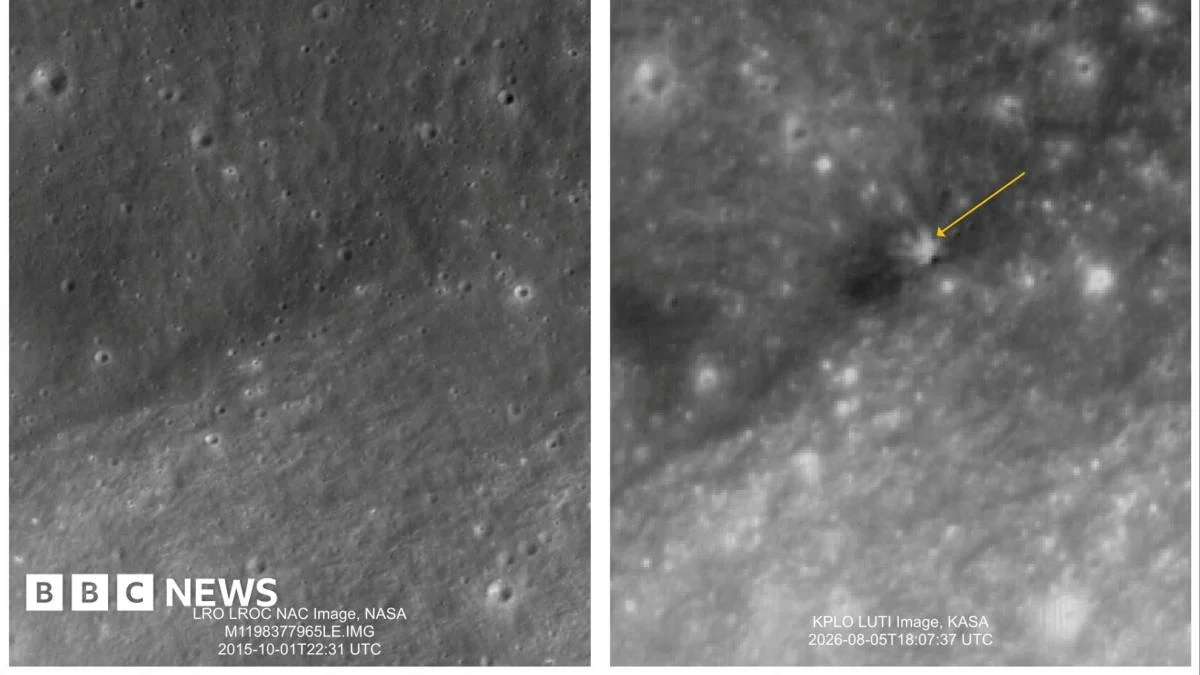
The journey of the now-infamous rocket part began more than two years ago. This particular Falcon 9, specifically its second or upper stage, blasted off from Florida in January 2022. Its primary mission was critical: to carry two lunar landers into space, providing the initial thrust necessary to escape Earth’s gravitational pull. Once in Earth orbit, the upper stage performed a crucial propulsive burn, firing its engines hard enough to send both landers out of Earth’s orbit and onto a precise trajectory towards the Moon. Following this successful maneuver, its job was complete, and the spent stage was left to drift.
Rather than falling back to Earth or being directed into a safe disposal orbit, the spent stage found itself in a long, looping orbit that swung out towards the Moon and back again. This became a cosmic ballet dictated by the complex gravitational interplay of three celestial bodies: Earth, the Moon, and the Sun. Over the next 18 months, these gentle yet persistent gravitational tugs, along with the subtle pressure exerted by sunlight itself (known as solar radiation pressure), collectively gave the derelict rocket stage a faint but continuous push. These minute forces, imperceptible on a human scale, steadily altered its trajectory.
Astronomers tracking the rocket part, particularly keen observers of near-Earth objects and space debris, eventually worked out that those small, accumulated nudges had placed it on an undeniable course towards the Moon. What began as a mere drift transformed into a predictable, albeit unintended, collision. As the days passed, the object’s speed relative to the Moon increased dramatically, accelerating it towards its terminal destination. Experts like Bill Gray, a developer of astronomical software used to track asteroids and space junk, were instrumental in pinpointing its trajectory and predicting its precise impact time and location.
The impact itself occurred on Wednesday, March 2, 2022, on the far side of the Moon, near the Hertzsprung crater. While the event happened in broad daylight for many parts of the world, the tiny flash it produced upon collision would have been far too faint to see, even through powerful telescopes on Earth. The Moon’s lack of atmosphere meant there was no air resistance to slow the object down, resulting in a high-speed strike at approximately 5,800 miles per hour (9,300 kilometers per hour). This immense kinetic energy release was expected to carve out a new crater, estimated to be between 10 to 20 meters (33 to 66 feet) in diameter, and approximately 2-3 meters (7-10 feet) deep, providing a fresh scar on the ancient lunar surface.
While this impact was accidental, it presented a unique, albeit unplanned, scientific opportunity. Controlled impacts, such as those made by the upper stages of Apollo rockets or NASA’s LCROSS mission, have intentionally created craters to study subsurface material. This uncontrolled event, however, offered a chance to observe the aftermath of an unpredictable lunar surface interaction, potentially revealing insights into the Moon’s regolith and geological composition through the ejecta plume created. It also served as a stark reminder of the growing problem of space debris, not just in Earth orbit, but increasingly in the broader cosmic neighborhood, prompting discussions about future regulations for lunar activities.
It is important to clarify that the crashed object was the expendable upper stage of the Falcon 9 rocket. SpaceX’s pioneering reusability concept primarily applies to the rocket’s first stage booster. Indeed, the company continues to push the boundaries of rocket reusability, a testament to its innovative engineering. The same type of booster section, though not the one whose upper stage crashed, is a workhorse for SpaceX. For instance, another Falcon 9 booster, having already completed numerous missions, is due to set off on its 18th flight on 10 August, a remarkable achievement in aerospace engineering. This upcoming mission hopes to launch 29 Starlink satellites to low-Earth orbit, further expanding SpaceX’s vast satellite constellation designed to provide global broadband internet access. This ongoing operational tempo highlights SpaceX’s pivotal role in commercial spaceflight, even as the debris from one of its earlier missions leaves a permanent mark on the Moon.
In the wake of such lunar events, the role of international space agencies becomes increasingly vital. South Korea’s Korea Aerospace Research Institute (KARI) stands at the forefront of this observation effort with its Danuri (Korea Pathfinder Lunar Orbiter) mission. Launched in August 2022 and successfully entering lunar orbit in December of the same year, Danuri represents South Korea’s first foray into deep space exploration. Equipped with a suite of advanced scientific instruments, including a high-resolution camera, a gamma-ray spectrometer, and a magnetometer, Danuri’s primary objectives include mapping lunar topography, investigating the Moon’s magnetic field, and searching for potential resources like water ice in permanently shadowed regions. Its mission is a significant step for South Korea, solidifying its position as a serious contender in the global space race.
With its sophisticated instrumentation and strategic lunar orbit, Danuri is well-suited to observe the aftermath of the SpaceX impact. KARI’s high-resolution camera, for example, could potentially capture detailed imagery of the newly formed crater, providing crucial data on its size, morphology, and the distribution of ejecta. This information could complement observations from other lunar orbiters, such as NASA’s Lunar Reconnaissance Orbiter (LRO), and contribute to a more comprehensive understanding of the impact mechanics and the Moon’s surface geology. KARI’s commitment to sharing its findings and stunning lunar images not only enhances global scientific knowledge but also showcases the prowess of South Korea’s burgeoning space capabilities, inspiring future generations and fostering international collaboration in space exploration.
The accidental impact of the SpaceX rocket debris serves as a poignant reminder of humanity’s ever-growing presence in space and the dynamic nature of our solar system. As more nations and private entities set their sights on the Moon for scientific study, resource extraction, and potential future human outposts, events like this underscore the need for greater international cooperation and the development of comprehensive guidelines for managing space traffic and debris, even in translunar space. South Korea’s KARI and its Danuri orbiter are not just sharing captivating images; they are actively contributing to a deeper understanding of our celestial neighbor, ensuring that every mark made on the lunar surface, intentional or otherwise, can be leveraged for scientific advancement.




 atisusanti
 George Anjay
 Nakalama John

 Ramos Leo