
 Nakalama John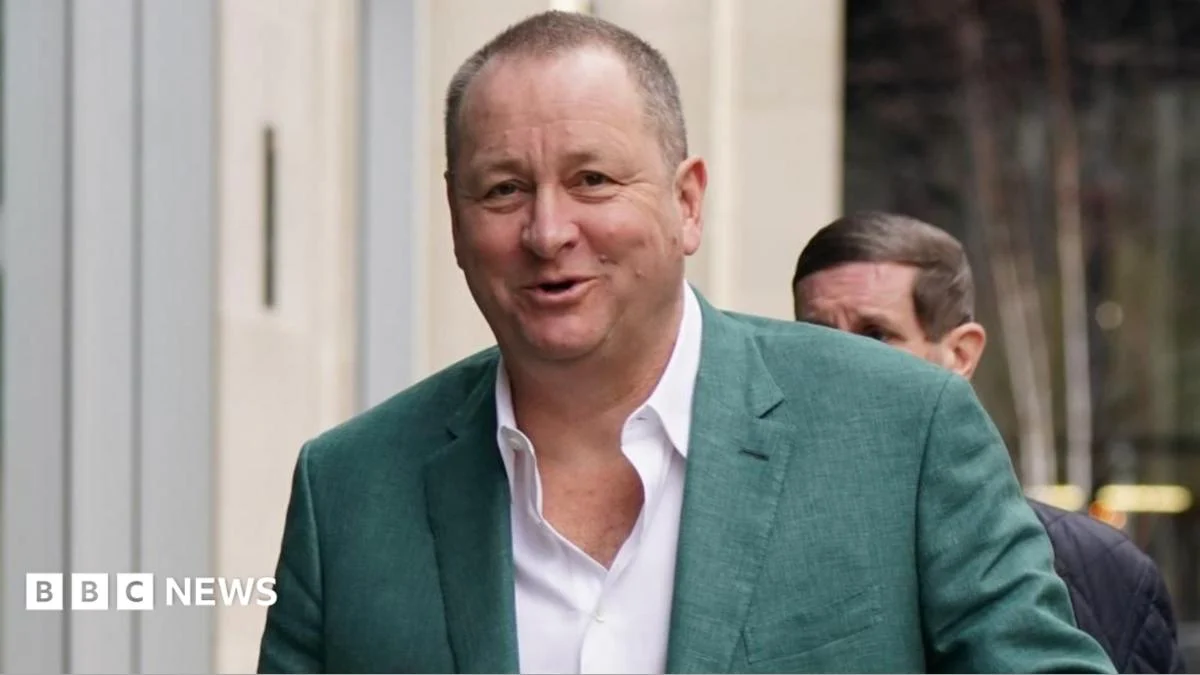
Billionaire Sports Direct founder Mike Ashley has launched a fierce broadside against recent economic and retail policies proposed by Prime Minister Andy Burnham, dismissing them as "populist reactions" that fail to grasp the fundamental challenges facing British businesses. In a strongly worded letter addressed directly to Downing Street, the outspoken entrepreneur accused Burnham of "jumping on ‘everyday fixes’ or bandwagons," rather than confronting the deep-seated issues that are causing widespread struggles across the commercial landscape. Ashley specifically highlighted "disastrous" business rates policies and the "dramatically increasing cost of employing workers" as the true impediments to economic growth and stability. This critique aligns with Ashley’s long-standing campaign for a radical overhaul of the business rates system, which he argues disproportionately burdens traditional retailers.
Ashley particularly derided a previous proposal by Burnham to increase business rates on large warehouses, typically operated by online giants like Amazon, as a mechanism to fund reductions for traditional high street establishments such as pubs and clubs. He labelled this idea "delusional," arguing that such a move would exacerbate existing problems within the retail sector rather than providing genuine solutions. The very structure of business rates, based on the rateable value of commercial properties, has long been a contentious issue for physical retailers, who argue it imposes a significant fixed cost regardless of profitability, unlike corporation tax which is levied on earnings. This system, critics like Ashley contend, puts high street businesses at a severe disadvantage compared to online competitors with smaller physical footprints or out-of-town distribution centres.
A Downing Street spokesperson responded to Ashley’s criticisms by outlining Prime Minister Burnham’s broader economic vision. The spokesperson affirmed the government’s commitment to "build a new economy that backs British business, delivers growth in every postcode and ensures the essentials in life – like energy, water and housing – are affordable again." They emphasized that recent promises, including cutting VAT from household electricity bills and reducing business rates for some firms, were "just the start" of a comprehensive strategy aimed at fostering economic resilience and improving living standards across the nation.
Earlier in the month, Burnham had indeed unveiled a series of proposals specifically designed to revitalise Britain’s "hollowed out" high streets. These included empowering local councils to block new vaping and betting shops, a move intended to curb the proliferation of certain types of outlets and foster a more diverse and family-friendly retail environment. The rationale behind this policy is that an overabundance of such shops can detract from the character and appeal of town centres, contributing to their decline. Furthermore, Burnham put forward plans to tackle what he described as "subscription traps" and to ban shops from using misleading recommended retail prices (RRPs). These RRPs, he argued, often create an illusion of greater discounts than are actually offered, deceiving consumers and undermining trust. These measures were framed as consumer-friendly interventions aimed at increasing transparency and fairness in the marketplace.
The contents of Ashley’s letter, first reported by the Financial Times and subsequently seen by the BBC, revealed that the entrepreneur specifically targeted announcements made since Burnham assumed the premiership from Sir Keir Starmer. Ashley urged Burnham to use his inaugural Budget, scheduled for October 27th, as a critical opportunity to implement significant, fundamental reforms. He called for concrete actions to lower costs for employers, encompassing not just wages but also national insurance contributions, pension schemes, and other associated overheads, and to fundamentally alter the government’s long-standing position on business rates. Ashley’s argument is that the cumulative burden of these costs stifles investment, hinders job creation, and makes it increasingly difficult for businesses to thrive, particularly in an already challenging economic climate marked by inflationary pressures and supply chain disruptions.
On the specific issue of business rates, the government had already committed to a 20% business rates cut for pubs, social clubs, and live music venues starting from April. Additionally, a comprehensive review has been initiated into how this property tax, which high street firms have long called for reform to, is calculated and applied. However, Ashley dismissed these measures as insufficient and piecemeal, stating emphatically, "Shortsighted or populist reactions to underlying business challenges are not the answer." His view is that these policies address symptoms rather than root causes, offering quick fixes that might resonate with the public but fail to tackle the structural problems that truly impede business growth.
Ashley’s long-standing campaign for a fundamental overhaul of the tax system centres on the need to level the playing field between traditional High Street retailers, who are heavily burdened by property taxes on their physical premises, and their online rivals, who often operate from large out-of-town warehouses with different, often lower, tax liabilities. His letter reiterated this core grievance, stating: "If your answer is to tax larger retailers even more, through hiking business rates on retailer owned or third-party warehouses whilst reducing rates for pubs and clubs, then that is simply delusional." He posits that such a policy would merely shift the tax burden without addressing the underlying competitive imbalance that has seen high street footfall decline dramatically in recent years, a trend exacerbated by the rise of e-commerce.
It is noteworthy that before becoming Prime Minister, Andy Burnham had indeed voiced support for the idea of funding business rate cuts for pubs, clubs, and music venues by imposing higher levies on warehouses operated by online giants like Amazon, and by targeting the owners of empty high street properties. This historical context underscores the direct challenge Ashley is posing to a policy idea that Burnham has previously championed, highlighting a philosophical divide on how best to support the struggling high street. Ashley’s critique suggests that these proposed solutions are based on a misunderstanding of modern retail economics.
Mike Ashley’s journey from opening a single Sports Direct store in Maidenhead in 1982 to building the sprawling Frasers Group empire, which now encompasses dozens of brands and employs 30,000 people, is a testament to his undeniable business acumen. However, his career has also been marked by frequent controversy, with accusations over the years of building his success through the exploitation of workers. A notable instance occurred in 2016 when Ashley admitted to MPs that workers at his Derbyshire warehouse had been paid below the minimum wage and acknowledged that a policy of fining staff for being late was unacceptable. These past controversies add a layer of complexity to his current criticisms, as his focus on the "cost of employing people" could be viewed through the lens of his own historical labour practices and the pressures of managing a large, diverse workforce in a competitive retail environment.
The Frasers Group, while still owned by Ashley, is now run by his son-in-law Michael Murray. The conglomerate recently expanded its portfolio this month with the acquisition of the luxury department store Harvey Nichols, promising a "significant restructuring" of the struggling business. In his letter, Ashley used this recent acquisition to pose a direct and pointed question to Burnham, asking how the Prime Minister intends to revive Harvey Nichols, a prestigious brand that has faced considerable financial challenges in recent years. This highlights the direct and personal impact of high street policies on Ashley’s own commercial interests and investments.
Ashley also sought to bolster his arguments by referencing comments made by Tory peer and former Marks & Spencer boss Lord Rose, who had previously dismissed Burnham’s initial announcements as mere "hot air." Ashley emphatically stated, "I agree with him." He reiterated his core belief that "It is the disastrous business rates position (which I have raised many times over the years) and the dramatically increasing cost of employing people that are really causing business to struggle." He issued a stark and unequivocal warning to the Prime Minister: "You have the chance to make a difference or get it horribly wrong." This statement underscores the high stakes Ashley perceives for the future of British retail under Burnham’s leadership.
Ashley’s letter painted a grim picture of the future, predicting that the High Street would be "further devastated" without fundamental and comprehensive reforms. He dismissed Burnham’s suggestion that further business rates changes would be considered in the upcoming Budget as "too little, too late," implying that the severity of the situation demands a more urgent and drastic intervention than the government currently appears willing to undertake. For Ashley, incremental adjustments will not suffice to reverse decades of decline and adapt to the seismic shifts in consumer behaviour and retail models.
Finally, Ashley diverged from Burnham’s focus on clamping down on recommended retail prices (RRPs). He argued that while RRP transparency might be a minor concern, the real issue impacting consumers and the broader market is "price fixing in sporting goods and other markets." To illustrate his point, he specifically cited the rising cost of official football merchandise. This claim suggests that systemic issues beyond simple RRP disclosures are at play, potentially hindering genuine competition and artificially inflating consumer costs in sectors where Frasers Group has significant commercial interests. Ashley’s pivot to this broader issue reveals his deeper concerns about market dynamics and fair competition that extend beyond the immediate policy debates, reflecting a desire for a more level and equitable playing field across various retail segments.


 George Anjay
 atisusanti
 Ramos Leo
 Roy Suryo
 Nana Banana