Ramos Leo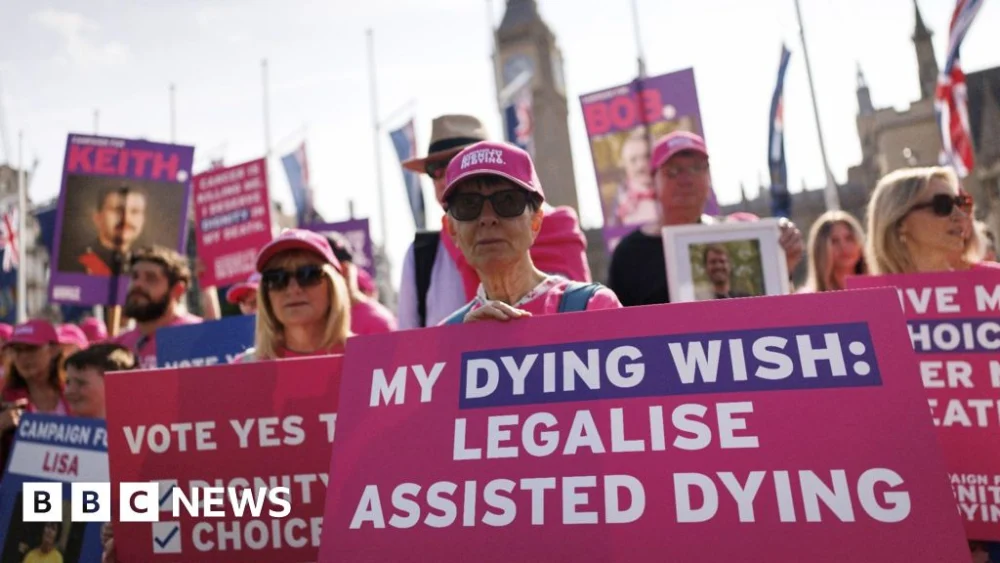
The current proposed legislation, which seeks to legalise assisted dying in England and Wales, is a Private Member’s Bill. Such bills are introduced by individual MPs or Peers, rather than by the government, and typically face significant hurdles to become law. They must navigate all parliamentary stages – including readings, committee stages, and votes in both the House of Commons and the House of Lords – before the end of each parliamentary session, which generally spans one to two years. If a bill fails to complete these stages within the session, it "runs out of time" and effectively collapses.
Supporters of the bill now believe it is "effectively impossible" for the legislation to pass before the current parliamentary session concludes, which is anticipated in May. This pessimistic assessment stems largely from a strategic bottleneck in the House of Lords, where an overwhelming number of amendments – over 1,200 in total – have been tabled. These amendments, primarily introduced by opponents of the legislation, have served to deliberately slow down and complicate the bill’s progress. With only three of the fourteen allocated days for debate in the Lords remaining, approximately half of these amendments are yet to be thoroughly discussed, let alone voted upon. This tactic is widely understood as a form of legislative filibustering, designed to exhaust the available parliamentary time.
Opponents of the assisted dying bill remain resolute in their resistance, arguing that the current draft is inherently flawed and poses significant risks. Labour MP Jess Asato, a vocal critic, articulated these concerns, stating, "The sponsor of the bill has rejected 99% of suggested improvements and amendments in the House of Lords and so it still contains all the same faults and issues." She further warned that "Any MP that voted to push this bill through would do so knowing that it is unsafe and would harm vulnerable people."
The core of the opposition’s argument revolves around the perceived inadequacy of safeguards within the bill. Critics often highlight fears that such legislation, even with stringent conditions, could lead to a "slippery slope" where eligibility criteria might broaden over time, or where vulnerable individuals – including the elderly, disabled, or those suffering from mental health issues – might feel subtle or overt pressure to end their lives. Concerns are frequently raised about the potential for coercion, the difficulty in accurately assessing a patient’s capacity and voluntariness, and the paramount importance of enhancing palliative care services as an alternative to assisted dying.
A source closely associated with Labour MPs opposing the bill echoed these sentiments, expressing frustration: "For Labour MPs to continue to agitate for this unsafe, badly written and divisive bill rather than focus on the reasons people voted for us at the election is madness." This source underscored a desire for the party to concentrate on its manifesto commitments and the broader responsibilities of governing, rather than expending political capital on what they deem "contentious arguments about assisted dying." This perspective suggests a strategic calculation that pursuing this bill might distract from Labour’s core policy agenda and potentially alienate voters who hold strong moral or ethical objections.
Despite this robust opposition, the momentum for change remains strong among a significant faction of Labour MPs and cross-party colleagues. Over 100 Labour MPs, alongside additional parliamentarians from other parties, have formally written to the Prime Minister. These letters, totaling around 150 signatories, collectively urge Sir Keir Starmer to guarantee that "time will be found for Parliament to come to a decision in the next session." This concerted effort underscores the widespread conviction among proponents that the issue demands a definitive parliamentary resolution.
Dr. Peter Prinsley, a consultant doctor and MP for Bury St Edmunds and Stowmarket, was instrumental in organizing the Labour letter. In his communication, he emphasised the democratic imperative at stake: "While we fully respect the government’s neutrality on the principle of assisted dying, we are confident that you would agree with us that we cannot be neutral on the fundamental democratic principle that it is for the elected House of Commons to decide on this matter." Dr. Prinsley’s argument posits that regardless of the government’s official stance, Parliament, as the representative body, has a duty to debate and vote on issues of such profound public interest.
He further elaborated on the potential ramifications of inaction, stating, "We believe this is a matter of great importance that threatens to undermine public trust in our ability as politicians to deliver on their priorities." This statement reflects a growing concern that public opinion, which polls often suggest leans towards supporting assisted dying, is being ignored by a Parliament perceived as unable or unwilling to address difficult ethical questions. Failing to bring the matter to a vote, even if it ultimately fails, could foster cynicism about the democratic process itself.
The cross-party nature of the appeal to the Prime Minister highlights the broad parliamentary interest in the issue. Alongside Dr. Prinsley’s efforts for Labour, similar letters have been coordinated by prominent figures from across the political spectrum: Kit Malthouse for the Conservatives, Christine Jardine for the Liberal Democrats, Richard Tice for Reform UK, and Ellie Chowns of the Green party. This collective pressure from approximately 150 MPs from various parties undeniably intensifies the scrutiny on Sir Keir Starmer and his government.
Sir Keir Starmer’s personal stance on assisted dying is publicly known; he voted in favour of the change in the Commons when the opportunity last arose. However, as Prime Minister, he has consistently maintained that the government will remain neutral on the matter. This position is in line with parliamentary convention for "conscience issues," which are typically considered matters for individual MPs to decide based on their own moral and ethical judgments, rather than party lines or government policy. In such instances, MPs are usually granted a "free vote."
When previously questioned about the bill’s potential return in a future session, the Prime Minister’s spokesperson reiterated the government’s official stance: "The government is neutral on the matter of assisted dying and the passage of the bill. It is for parliament to decide on any changes to the law." This carefully worded response underscores the delicate balance the government attempts to strike, acknowledging the issue’s importance while deferring the responsibility for legislative action to individual parliamentarians.
The conventional route for backbench MPs to propose changes in the law is through the Private Members’ Bill ballot, held at the beginning of each parliamentary session. However, the vast majority of bills introduced via this method never become law, primarily due to insufficient parliamentary time. Only those MPs drawn in the top few positions in the ballot typically have any realistic chance of their chosen legislation being debated, let alone progressing through all stages.
Dr. Prinsley’s request, therefore, goes beyond merely hoping for a favourable ballot draw. He is explicitly asking for the government to proactively create parliamentary time for a decision on assisted dying, regardless of whether a supporter of the change is successful in the Private Members’ Bill ballot. His letter clarifies: "Our ask is simple… That, whether or not the bill returns through the private members’ bill ballot after the King’s Speech, time will be found for Parliament to come to a decision in the next session." He further stressed that such an allocation of time "would remain a conscience issue for MPs, the government’s neutrality would be maintained, and it need not take up time reserved for government business." This suggests a model where specific days or half-days could be set aside for the debate and voting on this singular issue, without impinging on the government’s core legislative agenda.
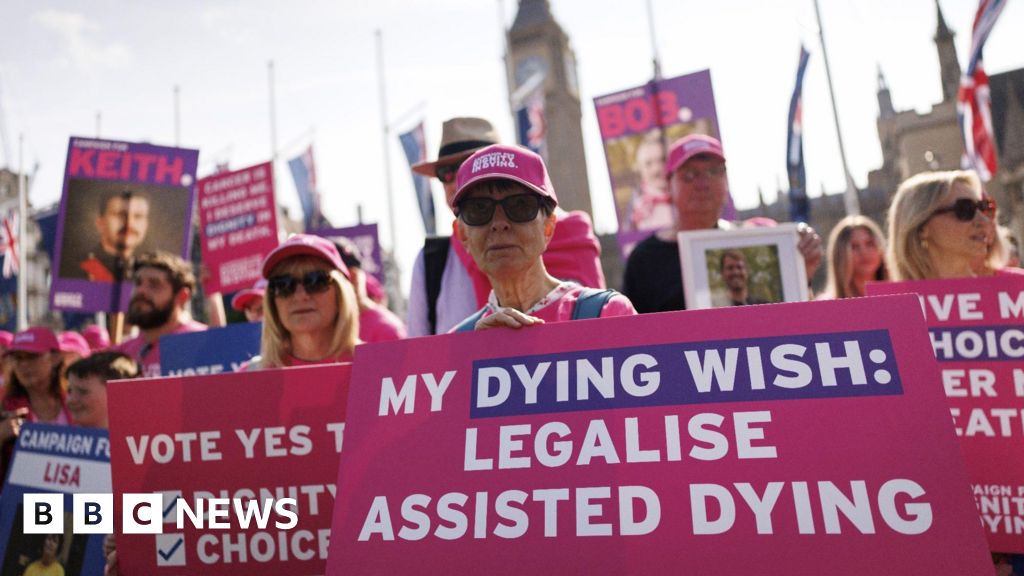
The debate around assisted dying in the UK has a long and often emotionally charged history. Numerous attempts to introduce similar legislation have been made over decades, with previous bills by figures like Lord Falconer generating extensive public and parliamentary discussion. The current legal framework in the UK categorises assisting a suicide as a criminal offence, punishable by up to 14 years imprisonment. This stands in contrast to a growing number of jurisdictions globally, including several US states, Canada, Belgium, and the Netherlands, where various forms of assisted dying or euthanasia are legal under strict conditions. These international examples often serve as both inspiration for proponents and cautionary tales for opponents, depending on the perspective.
The ethical considerations at the heart of this debate are profound, touching upon individual autonomy, the sanctity of life, the role of medical professionals, and societal obligations to protect the vulnerable. For supporters, the right to choose the timing and manner of one’s death, particularly when facing unbearable suffering from an incurable illness, is a fundamental aspect of personal liberty and dignity. For opponents, the absolute prohibition on assisted dying is seen as a cornerstone of a compassionate society, safeguarding life and preventing potential abuses.
As the current parliamentary session draws to a close, the pressure on Sir Keir Starmer to address this highly sensitive and deeply divisive issue is intensifying. The cross-party chorus of MPs, including a significant bloc from his own party, presents a formidable challenge to the government’s stated neutrality. Whether Parliament will ultimately find the time and political will to reach a definitive decision on assisted dying remains uncertain, but the call for action from within its own ranks makes the issue increasingly difficult for the Prime Minister to ignore.
Panorama: Assisted Dying – What Next?
Will assisted dying ever happen in the UK, and how would it work if it did? The BBC’s medical editor, Fergus Walsh, talks to leading supporters and opponents.
Watch on BBC One on Monday 16 March at 20:00 GMT in England, Scotland and Wales, at 20:30 in Northern Ireland, or on BBC iPlayer.



 Roy Suryo
 Nakalama John
 atisusanti