George Anjay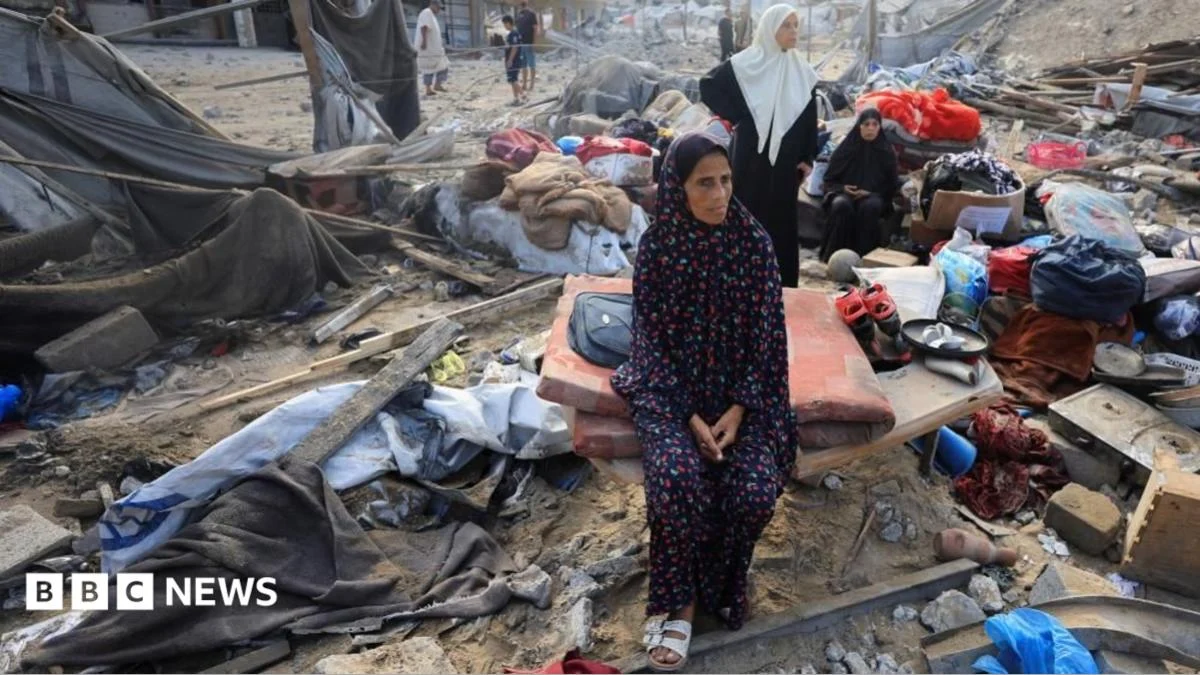
In a dramatic development that could reshape the future of Gaza and the broader Israeli-Palestinian conflict, U.S. President Donald Trump announced on Tuesday that the newly formed "Board of Peace" has successfully brokered an agreement for the "complete disarmament" of Hamas and other armed factions operating within the Gaza Strip. The announcement, made via a post on his social media platform Truth Social, marks a significant, albeit still unconfirmed by all parties, stride forward in a long and arduous peace process that has seen numerous setbacks.
A senior Hamas official, speaking to the BBC under the condition of anonymity, corroborated Trump’s assertion, stating that the organization has indeed agreed to the Board of Peace’s comprehensive disarmament plan for Gaza. The official indicated that a formal statement detailing the agreement would be released imminently, suggesting a coordinated communication strategy. However, as of the time of reporting, Israel had yet to issue an official comment on the breakthrough, leaving a critical element of the equation unaddressed and raising questions about the full extent of its commitment.
President Trump further elaborated on the terms of the agreement, revealing that Israel would commence its withdrawal from Gaza "as disarmament is completed." He characterized this accord as "a critical step towards Gaza finally being governed by a new Palestinian government," signaling a potential shift in the political landscape of the besieged territory. This phased approach to Israeli withdrawal, contingent on the verifiable disarmament of militant groups, aligns with the second phase of a U.S.-brokered Gaza ceasefire plan, which also explicitly includes the vital component of reconstruction for the war-ravaged enclave.
The detailed outline provided by Trump on Truth Social painted a picture of a meticulously planned initiative. He described the agreement as "a major milestone in the implementation of the Trump 20-Point Plan," underscoring his administration’s deep involvement in shaping this particular peace framework. The plan, according to Trump, will be executed in "carefully structured phases." Crucially, he stated that "As disarmament is completed, Israeli forces will withdraw, and the International Stabilization Force will work with a new Palestinian police force to take responsibility for Gaza being safe for its residents and its neighbors." This suggests a robust international and Palestinian security presence to ensure stability post-disarmament.
President Trump also took the opportunity to express his gratitude to the key regional mediators who played a pivotal role in facilitating these delicate negotiations. He specifically thanked Egypt, Qatar, and Turkey, acknowledging their indispensable contributions to bringing the warring parties to a consensus. The significance of these diplomatic efforts was further highlighted by reports from Agence France-Presse, citing Egyptian state media, which indicated that Cairo would be hosting a Gaza mediator meeting focused on the second phase of the ceasefire plan. This meeting, likely to be attended by representatives from the mediating countries and potentially Hamas, would serve as a crucial venue for solidifying the agreement and ironing out any remaining logistical details.
Earlier in the day, prior to Trump’s public announcement, Reuters had reported on the back-channel discussions, citing unnamed sources who suggested that talks between mediators and Hamas leaders in Cairo had achieved "rare progress." However, these reports were tempered by an Israeli official who, at the time, stated that the proposed terms were not satisfactory to Jerusalem, indicating potential points of contention that may have been resolved in the subsequent hours or remain areas of delicate negotiation.
Following Trump’s definitive announcement, The Times of Israel, referencing an unnamed source, reported that the agreement had indeed been signed by negotiators representing Hamas, the Board of Peace, and the mediating countries. This report appeared to confirm the breakthrough. However, a subsequent statement from "an Israeli office," also attributed to an unnamed source, indicated that the disarmament proposal "did not meet Jerusalem’s demands." This creates a confusing and potentially concerning divergence, raising doubts about the unified stance of the Israeli government and the true readiness of all parties to fully commit to the agreement. Earlier reporting from Israeli media had also indicated Israel’s opposition to a deal being discussed with Hamas, further complicating the narrative.
This latest development comes after a period of significant political shifts within Hamas and previous rejections of disarmament proposals. In April of this year, a top figure involved in Trump’s Gaza peace efforts disclosed to the BBC that Hamas had rejected a disarmament plan. More recently, earlier this month, Hamas elected Khalil al-Hayya as its new leader. Al-Hayya succeeded Yahya Sinwar, who was killed by the Israeli military in Gaza in October 2024. As Hamas’s chief negotiator, Al-Hayya has been at the forefront of the group’s delegations in indirect ceasefire talks, engaging with mediators in Egypt and Qatar. His leadership and involvement in these negotiations are seen as a critical factor in the current progress.
The "Board of Peace," the entity credited with brokering this agreement, has been a subject of considerable speculation and analysis. Earlier this year, the BBC reported that the board was initially understood to be focused on ending the war between Israel and Hamas in Gaza and overseeing reconstruction efforts. However, its proposed charter has been noted for its conspicuous absence of any direct mention of the Palestinian territory itself, leading to speculation that it was designed to potentially supplant or operate in parallel with the functions of the United Nations in the region. The exact mandate and operational framework of the Board of Peace remain somewhat opaque, adding another layer of complexity to the unfolding situation.
The context for these negotiations is the devastating conflict that began on October 7, 2023, when Hamas launched an unprecedented attack on Israel. During that assault, 1,200 people were killed, and 251 individuals were taken hostage. Israel responded with a massive military campaign in Gaza, which, according to the territory’s Hamas-run health ministry, has resulted in the deaths of over 73,290 people, including 21,280 children. The humanitarian crisis in Gaza has been severe, with widespread destruction of infrastructure and a critical shortage of essential resources. The potential for a disarmament agreement, if fully realized and implemented, could offer a glimmer of hope for an end to this prolonged period of violence and suffering, and pave the way for reconstruction and a more stable future for the people of Gaza. The world now watches with bated breath to see if this announcement translates into tangible peace and security.



 Nakalama John
 Ramos Leo
 Nana Banana