
 Ramos Leo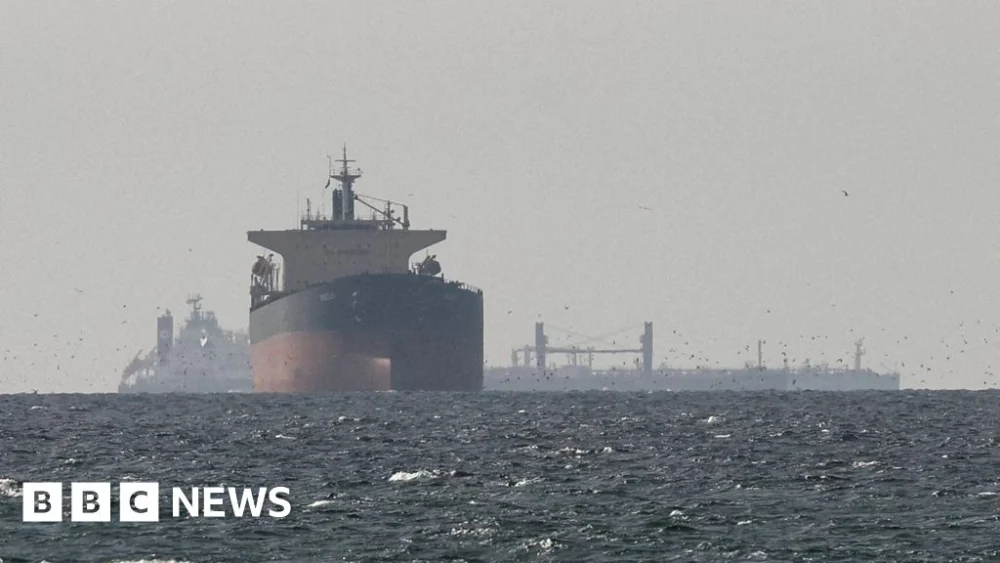
The Strait of Hormuz, a narrow passage connecting the Persian Gulf with the Arabian Sea and the broader Indian Ocean, is arguably the world’s most strategically important oil chokepoint. Approximately 20% of the world’s total petroleum consumption, and roughly one-third of all seaborne oil, passes through this strait daily. Any disruption to this flow has immediate and severe repercussions for global energy markets and economies. The current crisis, marked by what the UK Maritime Trade Operations (UKMTO) reported as 16 attacks on ships in and around the strait since the war began on February 28, has heightened fears of a broader conflict and a potential halt to shipping.
In a series of posts on his Truth Social platform on Saturday, Trump explicitly named China, France, Japan, South Korea, and the UK, expressing his hope that these nations, all significantly reliant on oil transported through the strait, would contribute naval forces. His rationale was to help keep the waterway "open and safe" from Iranian interference. He made the audacious claim that "100% of Iran’s military capability" had already been destroyed by the US and Israeli offensive. However, he cautioned that Tehran retained the capacity to "send a drone or two, drop a mine, or deliver a close-range missile somewhere along, or in, this waterway," posing an ongoing threat to international shipping.
Trump’s rhetoric escalated further, stating, "Hopefully China, France, Japan, South Korea, the UK, and others, that are affected by this artificial constraint will send ships to the area so that the Hormuz Strait will no longer be a threat by a nation that has been totally decapitated." He then issued a direct threat: "In the meantime, the United States will be bombing the hell out of the shoreline, and continually shooting Iranian Boats and Ships out of the water. One way or the other, we will soon get the Hormuz Strait OPEN, SAFE, and FREE!" This aggressive posture, promising unilateral US action, was later tempered slightly by an extension of his appeal to "all the Countries of the World that receive Oil through the Hormuz Strait," with an assurance that the US would provide "a lot" of support to those who participated in a multinational effort.
The genesis of this "war against Iran" as stated in the original article, while not fully detailed, likely refers to a series of escalating military actions and economic pressures. For several years, tensions have simmered between the US and Iran, particularly since the US withdrawal from the Joint Comprehensive Plan of Action (JCPOA) nuclear deal and the imposition of crippling sanctions. The current "war" could refer to recent punitive strikes by the US and Israel in response to perceived Iranian aggression, proxy activities, or threats to regional stability. This context is crucial for understanding the immediate backdrop to the attacks in the Strait of Hormuz.
The United Kingdom’s Ministry of Defence (MoD) responded cautiously to Trump’s call, stating it was actively discussing "a range of options to ensure the security of shipping in the region" with its allies. This measured reply highlights the delicate diplomatic balancing act facing London. Domestically, the potential deployment of British warships has become a politically charged issue. Liberal Democrat leader Sir Ed Davey seized on the situation, urging Labour leader Sir Keir Starmer to "rule out deploying British ships just because Trump tells him to." Davey’s comments underscored the political sensitivity, reminding the public that "Last week, Trump said he didn’t need Britain’s help because he’d already won this war. So we mustn’t let him push the UK around now. Any decision on the deployment of our armed forces should be made in the UK’s national interest and subject to a vote in Parliament."
This latest demand from Trump also follows his previous criticisms of Sir Keir Starmer. Trump had earlier lambasted Starmer for not immediately joining the initial strikes against Iran and for his initial reluctance to allow the US to use UK bases for its joint offensive with Israel, famously calling him "no Winston Churchill." Starmer, however, later approved "defensive" US actions from RAF Fairford in Gloucestershire and Diego Garcia in the Indian Ocean, justifying the move by stating that Iran’s response had become a direct threat to Britain.
The Royal Navy’s current capabilities in the region are also a point of concern. While the UK’s first and only warship designated for the region, the Type 45 destroyer HMS Dragon, departed for Cyprus on Tuesday to bolster RAF Akrotiri (itself a target of drone strikes), its mission profile is primarily focused on air defense and force protection rather than extensive convoy escort duties. Furthermore, the Royal Navy no longer maintains the continuous minesweeper presence it once did in Bahrain, a capability it withdrew with HMS Middleton. This raises questions about the UK’s ability to effectively contribute to a large-scale escort mission or counter potential mining operations in the strait, a tactic Iran has historically been accused of employing.
Iran, for its part, has maintained an unyielding stance. Tehran has vowed to keep the strait blocked, asserting its right to control the vital waterway in response to what it views as US and Israeli aggression. The Islamic Republic has issued its own potent threats, stating that any oil and energy infrastructure belonging to firms working with the US on its Kharg Island – a key Iranian oil export terminal – would be "immediately destroyed" should it be attacked. Iran has also warned that any tanker bound for the US, Israel, or their partners is now considered a legitimate target, a significant escalation in its response strategy. These threats follow a pattern of "stepping up such attacks on energy targets" in the Gulf, which have become a central element of Iran’s strategy to retaliate against US and Israeli strikes, demonstrating its capacity and willingness to disrupt global energy flows.
Trump’s fluctuating rhetoric regarding allied contributions has also drawn attention. His earlier declaration that he "couldn’t care less" whether allies could do more to assist with the war, paired with his dismissive comment that "It’s a little bit late to be sending ships, right? A little bit late," stands in stark contrast to his current fervent appeal. This perceived inconsistency highlights the challenge for allies in deciphering US foreign policy intentions and committing resources to a potentially volatile region under such leadership.
The broader international community’s response remains largely cautious. France’s President Emmanuel Macron had previously indicated a willingness to send warships to the Gulf for "purely an escort mission," but critically, only once the most "intense phase of the conflict" had ended. This conditional approach underscores a general reluctance among European allies to be drawn into a direct military confrontation with Iran, especially one instigated by US policy. China, Japan, and South Korea, while heavily reliant on Gulf oil, typically prioritize economic stability and diplomatic solutions over military intervention, and would likely be wary of engaging in a conflict that could further destabilize their energy supplies and regional trade.
The situation in the Strait of Hormuz represents a dangerous inflection point. The strategic importance of the waterway, coupled with aggressive rhetoric from both sides and a series of documented attacks, raises the specter of a full-blown regional conflict with devastating global consequences. The call for a multinational naval deployment, while aiming to secure shipping, also carries the inherent risk of further escalation, potentially drawing more nations into a confrontation. The effectiveness of such a coalition, particularly under the shadow of Trump’s past dismissiveness and current demands, remains to be seen, as do the ultimate diplomatic and military pathways to de-escalation in this increasingly perilous geopolitical flashpoint.




 Roy Suryo

 Nakalama John
 atisusanti
