George Anjay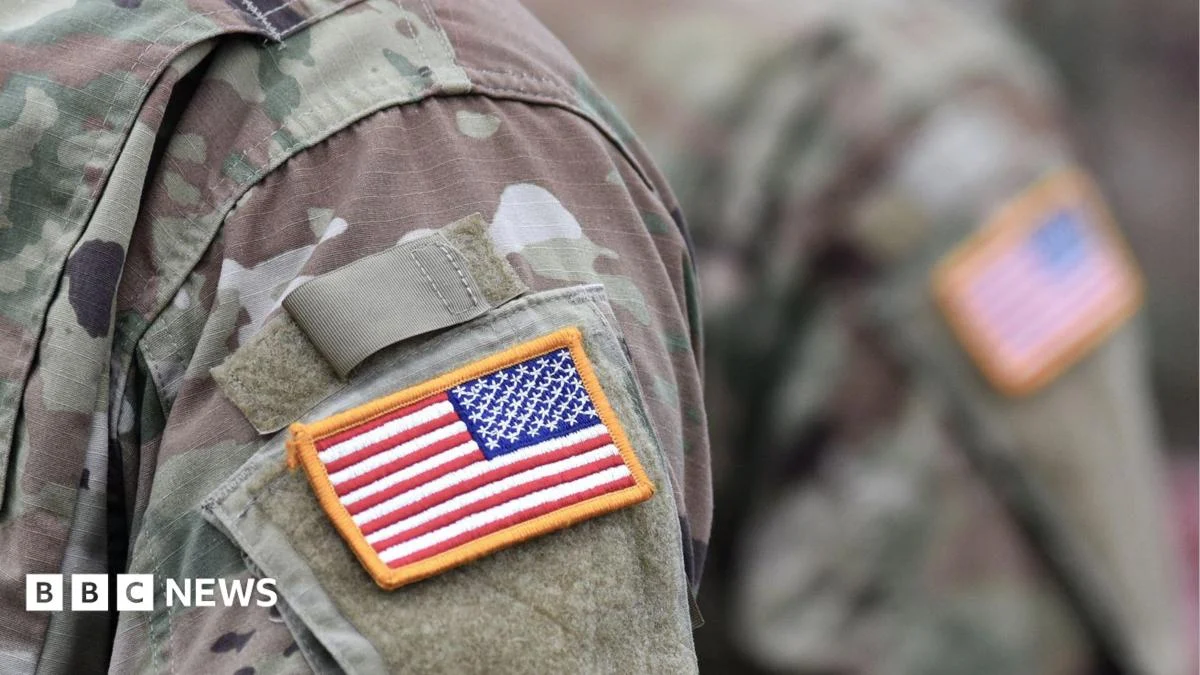
Tragedy struck on Friday as two United States service members lost their lives and a third remains unaccounted for following a barrage of Iranian ballistic missile and drone attacks in Jordan, military officials confirmed. The U.S. Central Command (Centcom) reported that four other service members required medical evacuation to Jordanian hospitals, but have since been discharged, with others who sustained minor injuries already returned to duty. The identities of the fallen and further details surrounding the precise location and circumstances of the devastating assault remain undisclosed by U.S. military authorities out of respect for the grieving families.
This grim incident unfolds against a backdrop of escalating hostilities between the U.S. and Iran, a week marked by Washington’s reimposition of its blockade on Iranian ports and Tehran’s assertive declaration of the Strait of Hormuz as closed, signaling a significant breakdown in preliminary ceasefire efforts that had only begun less than a month prior. In a forceful written statement issued late Saturday, Iran’s Supreme Leader, Mojtaba Khamenei, articulated his profound disillusionment with American commitments, asserting that the U.S.’s "repeated breaches" of the agreement had "laid bare a fundamental truth: the signature of the U.S. president is utterly worthless and devoid of credibility." Khamenei, whose public appearances have been limited since the loss of his father at the outset of the conflict, further accused the United States of actively seeking to "escalate the conflict," ominously warning that Iran harbored "unforgettable lessons in store for it."
Earlier, Jordan’s military had reported successfully intercepting ten Iranian missiles launched into its airspace overnight, stating that no damage had been sustained. The U.S. death toll in the broader conflict has tragically climbed to sixteen with the recent declaration of death for an American Navy pilot who had been missing earlier in the month, marking the second increase in casualties this week alone.
Centcom’s official statement on Saturday meticulously detailed the events: "Two US service members in Jordan were killed in action as US Central Command (Centcom) and partner forces defended against Iranian ballistic missile and drone attacks. Additionally, one service member is currently missing." The command reiterated its policy of withholding further information, including the identities of the fallen warriors, until 24 hours after the next of kin have been notified, emphasizing a commitment to honoring the families’ privacy during this profoundly difficult time.
In response to the devastating news, U.S. Defense Secretary Pete Hegseth took to X, formerly Twitter, to express his profound sorrow and unwavering resolve: "Godspeed, heroes. Their sacrifice only stiffens our resolve." This sentiment reflects the broader determination within the U.S. military to confront and overcome such acts of aggression.
Adding a layer of complexity to the narrative, Iran’s Islamic Revolutionary Guard Corps (IRGC) claimed, according to Iranian state media, to have destroyed at least two U.S. fighter aircraft early on Saturday at the Al-Azraq base in Jordan. When approached by the BBC for comment on this specific report, Centcom declined to provide further details, maintaining a cautious approach to disseminating information.
In a separate development on Saturday, the U.S. Department of State issued a global travel advisory, urging American citizens worldwide, with a particular emphasis on those in the Middle East, to exercise "increased caution." The advisory highlighted the volatile security environment in the region, stating, "Due to heightened tensions in the Middle East, the security environment remains complex with the potential for unforeseen escalation." It strongly advised individuals in the affected areas to "monitor the news for breaking developments."
The situation had been significantly inflamed earlier in the week when former President Donald Trump had issued a stark warning on Tuesday, threatening to strike Iran’s bridges and power plants imminently if the country did not re-engage in talks. This threat loomed large as the Gulf Cooperation Council (GCC) issued a strong condemnation, accusing Tehran of deliberately targeting civilian infrastructure across the region. Following Iran’s assertion that it had retaliated against U.S. strikes by targeting American allies in the Gulf on Saturday, Kuwait reported that both a power plant and a water distillation plant had been impacted.
Jasem Mohamed Albudaiwi, the Secretary General of the GCC, which represents Saudi Arabia, Kuwait, Qatar, Bahrain, the United Arab Emirates, and Oman, declared such actions to be tantamount to "war crimes." Under the established tenets of international law, the deliberate targeting of civilians or civilian areas is strictly prohibited. However, the legal protections afforded to civilian objects, such as bridges or power plants, can be revoked under specific circumstances if these assets are demonstrably being used to support an adversary’s war effort.
This week’s events also saw the reinstatement of the U.S. blockade on Iranian ports, a move that Centcom reported had resulted in the "redirection" of five commercial vessels and the disabling of one by Saturday. In response, Iran had declared the Strait of Hormuz closed, effectively halting all maritime traffic through this critically important shipping channel, through which approximately one-fifth of the world’s oil and liquefied natural gas typically flows. Earlier in the week, on Monday, Trump had initially proposed a controversial 20% fee for all vessels transiting the strait, including those belonging to U.S. allies, a proposal he subsequently abandoned on Tuesday, stating it would be replaced by bilateral trade deals with Gulf allies. The escalating cycle of action and reaction, punctuated by tragic loss of life, underscores the precarious state of regional security and the profound implications of continued geopolitical friction.



 Nakalama John
 Ramos Leo
 Nana Banana