
 George Anjay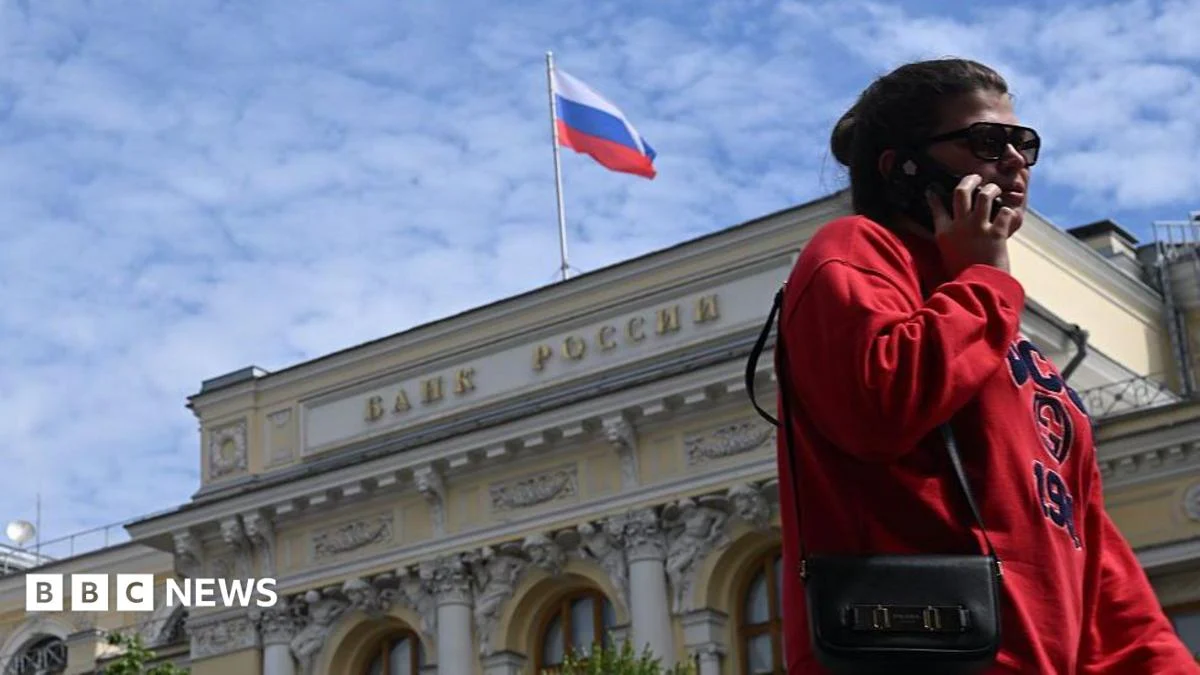
The latest surge in cash withdrawals, a trend that has become a recurring feature of Russia’s wartime economy, underscores a growing unease among citizens and businesses alike, creating significant headwinds for the Kremlin’s fiscal objectives. This pattern of increased demand for physical currency first became pronounced following President Vladimir Putin’s announcement of partial mobilization in September 2022, a period marked by widespread anxiety and a desire for tangible financial security. A subsequent spike occurred during the brief but dramatic mutiny by the Wagner mercenary group in June 2023, further amplifying the sense of uncertainty and prompting a flight to perceived safety in cash.
Now, this widespread shift towards holding physical currency is directly impeding the state’s ability to collect vital tax revenues. This comes at a critical juncture when Russia faces a widening budget deficit, exacerbated by the escalating costs of its ongoing military campaign in Ukraine, making every available rouble indispensable for financing the conflict. While the nation’s crucial oil and gas sector, which contributes approximately a quarter of state revenues, has experienced a recent boon from rising oil prices, partly influenced by geopolitical tensions surrounding the Iran war, the broader Russian economy is demonstrably slowing.
The gravity of this economic deceleration was underscored in May when the Russian economy ministry significantly revised its GDP growth forecast downwards to a mere 0.4% for 2026. This projection places the country on a trajectory for its weakest economic performance since the turmoil of 2022, a stark indicator of underlying structural weaknesses and the pervasive impact of international sanctions and domestic policies.
In a bid to bolster state coffers, the Kremlin implemented a substantial increase in the Value Added Tax (VAT) in January, raising it from 20% to 22%. Furthermore, the threshold at which small and medium-sized businesses are required to pay VAT was lowered, a move that has pushed many already struggling enterprises to the precipice of financial collapse. With profit margins being squeezed by these increased tax burdens and the general economic slowdown, businesses across various sectors, including pharmacies, restaurants, beauty salons, and small corner shops, are increasingly incentivizing customers to opt for cash payments. This strategy allows them to keep a larger portion of their income off the official books, thereby circumventing stricter tax scrutiny and attempting to preserve some level of profitability.
The repercussions of this economic pressure are palpable on the ground. A proprietor of a small clothing shop at a market in the western city of Pskov shared a grim assessment of the situation. "Stalls at our market have been closing one after another because it’s no longer profitable to stay open," she stated, her voice tinged with resignation. "Most of those still trading ask customers to pay in cash whenever they can, so less money goes through the till." This sentiment reflects a growing desperation among small business owners to maintain some semblance of viability in an increasingly challenging economic environment.
The implications of this cash preference extend to the formal economy, raising concerns about the integrity of labor markets. Taras Skvortsov, chief financial officer of Sberbank, Russia’s largest lender, issued a stark warning last month, highlighting "very serious signs" that an increasing number of businesses are resorting to paying wages "in envelopes" – a colloquial term for under-the-table, untaxed payments. His observations painted a worrying picture: "This is a very worrying moment… We are not seeing cash return to the banking system through cash collection, ATMs or self-service terminals," Skvortsov elaborated, his comments as cited by the state news agency Interfax. "It is staying in people’s hands." This indicates a significant drain of liquidity from the formal financial system, a trend that hampers monetary policy effectiveness and obscures the true state of economic activity.
Further evidence of businesses seeking to navigate the new tax landscape through informal means emerged from a May survey conducted by Opora Russia, the country’s largest association for small and medium-sized enterprises. The survey revealed that approximately 6% of entrepreneurs admitted to turning to "grey schemes" to cope with the enhanced tax burden. These schemes often involve deliberate efforts to avoid issuing official cash-register receipts, a direct method for understating turnover and remaining below the VAT threshold. Similarly, the practice of paying wages in cash allows businesses to evade payroll taxes, further contributing to the expansion of the shadow economy.
The Kremlin’s awareness of this burgeoning shadow economy is evident in its stated goal to crack down on such illicit activities. Prior to the VAT increase’s implementation, President Putin himself issued a warning, emphasizing that the new regulations should not inadvertently push businesses into the informal sector and calling for a "radical reduction in illegal employment." However, a disconnect appears to exist between different arms of the government’s strategies. Alexander Kolyandr, a non-resident senior fellow at the Center for European Policy Analysis, articulated this paradox: "One arm of the government is trying to squeeze as much money as possible out of people through higher taxes, fines and other charges," he explained to the BBC. "But another, in trying to counter so-called terrorist threats, is undermining that strategy by making it harder to collect tax," he added, referencing the disruptions caused by mobile internet shutdowns. These shutdowns, often implemented during periods of heightened security, can impede digital transactions and cash withdrawal capabilities, indirectly encouraging the use of physical cash and complicating tax collection efforts.
Despite the allure of competitive interest rates on bank deposits, which have been maintained at high levels by the central bank in its ongoing battle against stubborn, war-fueled inflation, a deeply ingrained Soviet-era instinct to keep money "under the mattress" appears to be resurfacing. For instance, a 100,000-rouble (approximately £950 or $1,280) one-year fixed-term deposit at Sberbank currently yields a respectable 10% interest. Nevertheless, official central bank data reveals a consistent outflow of funds from bank accounts. In May alone, Russians withdrew a staggering 550 billion roubles from their accounts, with a significant portion, 200 billion roubles, being withdrawn from fixed-term deposits – a clear indication that even attractive interest rates are not enough to dissuade individuals from seeking liquidity in cash.
The practical implications of this shift are frequently encountered in everyday transactions. Anton, a copywriter residing in Moscow, recounted an experience at a vinyl record shop where the vendor proactively offered him a discount for paying in cash. "He was upfront about the reason, higher taxes," Anton shared with the BBC, illustrating the direct link between increased taxation and the preference for informal payments. The disruption caused by mobile internet shutdowns, particularly during the heightened security measures surrounding Russia’s Victory Day celebrations in May, further highlighted the practical difficulties associated with a cash-dependent economy. Anton observed firsthand how individuals struggled to access funds during these periods: "There was a woman going from one ATM to another, looking for one that still had banknotes," he recalled, painting a vivid picture of the challenges faced when digital infrastructure falters and physical cash becomes a scarce commodity. This reliance on cash, exacerbated by economic pressures and state policies, creates a fragile ecosystem where the state’s ability to fund its wartime objectives is increasingly compromised by the very citizens it governs.


 Nakalama John
 atisusanti
 Ramos Leo
 Roy Suryo
 Nana Banana