
 Nakalama John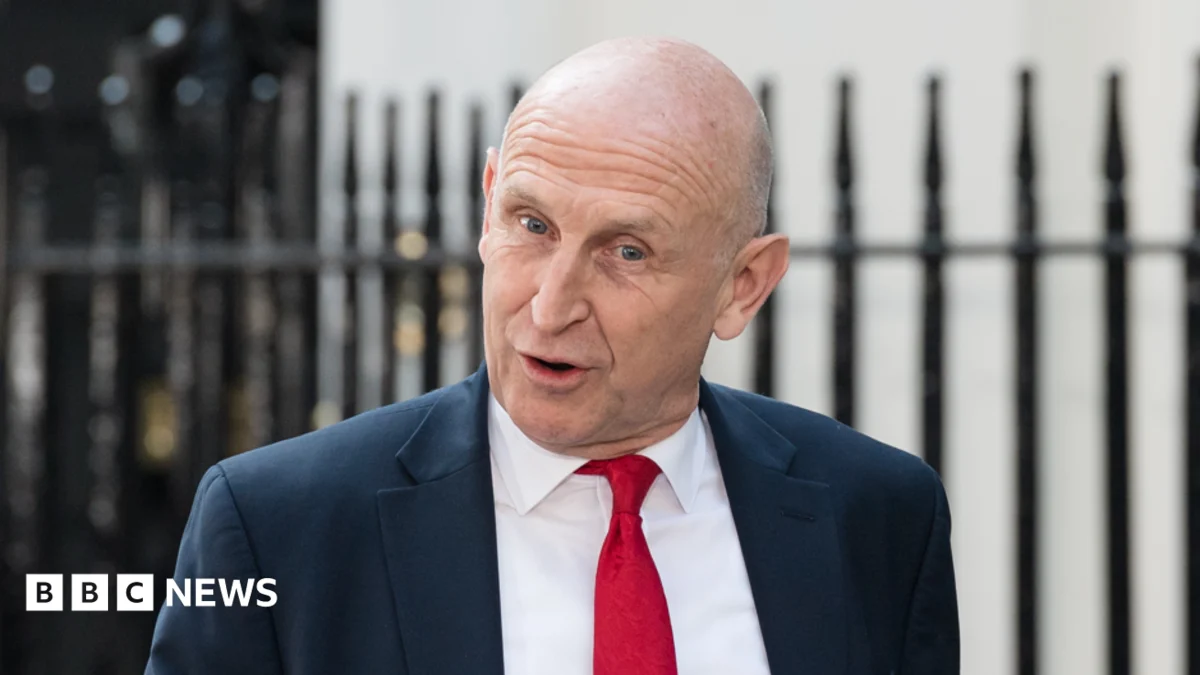
The Office for National Statistics (ONS) reported that public sector net borrowing – the crucial difference between government spending and its income from taxes and other sources – stood at £16 billion in June. This figure represented a substantial decrease of approximately £7.9 billion compared to the same month last year, reflecting a complex interplay of factors affecting both government revenues and expenditures. While economists acknowledged this downturn in monthly borrowing, many swiftly cautioned that it did not signify an end to the UK’s underlying fiscal vulnerabilities, which continue to loom large over the economy.
In parallel with the borrowing data, the ONS also released its latest labour market statistics, indicating that the unemployment rate remained unchanged at 4.9%. The ONS characterised the labour market as "relatively steady," suggesting a degree of stability amidst broader economic uncertainties. However, despite the positive deviation from borrowing forecasts, the ONS underscored that the overall level of public debt remained exceptionally high by historical standards, nearing the annual value of the entire UK economy, a measure known as Gross Domestic Product (GDP). This context tempers any celebratory sentiment, highlighting the scale of the financial mountain the new administration must climb.
June’s borrowing total of £16 billion proved to be marginally lower than the £16.3 billion that had been forecast by the government’s independent official watchdog, the Office for Budget Responsibility (OBR). This small but positive difference offered a rare piece of potentially encouraging news for the freshly appointed leadership team. Ruth Gregory, deputy chief UK economist at Capital Economics, described June’s figure as "a rare piece of good news" for Prime Minister Burnham and his new Chancellor of the Exchequer, John Healey. However, her optimism was carefully qualified: "Overall, there’s no escaping the fact that the public finances are fragile and that there is limited scope for extra borrowing," she warned, pointing to the structural constraints that continue to bind the government’s spending ambitions.
Looking beyond the monthly figures, the broader picture for the current financial year reveals continued strain. So far in the current financial year, borrowing has accumulated to a total of £57.6 billion, according to the ONS. While this represents a decrease of £3.7 billion from the corresponding period last year, it critically stands £2.7 billion above the OBR’s forecast for the year to date. This discrepancy underscores the persistent difficulty in bringing government spending fully under control and highlights the unpredictable nature of economic variables impacting the public purse. James Smith, chief UK economist at ING, speaking on the BBC’s Today programme, reiterated the severity of this situation, stating that the fact borrowing was still running ahead of the OBR’s projections served as "a reminder of the challenges that the new chancellor and the new prime minister face." He further predicted a "difficult picture" awaiting them at the crucial autumn Budget, necessitating "lots of tough choices to be made" as they grapple with competing demands and limited resources.
Both Prime Minister Burnham and Chancellor Healey have publicly committed to adhering to the fiscal rules established by their predecessor, former Chancellor Rachel Reeves. These rules, typically designed to ensure long-term sustainability by requiring debt to fall as a share of GDP and the current budget to be balanced, serve as a framework for responsible economic management. However, in a statement made public on Monday, Prime Minister Burnham indicated a nuanced approach, stating he would utilise "any flexibility within them" to facilitate policy changes aimed at supporting households and businesses. This hint at potential manoeuvring within the existing fiscal parameters immediately caught the attention of financial markets, ever sensitive to perceived shifts in economic policy.
Shortly after Burnham’s comments regarding fiscal flexibility were made public, the yield on 10-year government bonds – effectively the interest rate charged to the UK government for a decade-long loan – saw a notable increase, rising above 5%. This increase in gilt yields signals a higher cost of borrowing for the government and can reflect investor concerns about future fiscal policy or inflation. The yield hit 5.03% late on Monday afternoon, although when trading commenced on Tuesday, the rate slipped back slightly to 5.01%. This immediate market reaction underscores the delicate balance the new government must strike between delivering on its policy promises and maintaining market confidence in its fiscal prudence. In a statement released on Monday, Chancellor Healey directly addressed these concerns, asserting that "fiscal credibility is the bedrock for economic stability and for national security," a clear attempt to reassure investors and the public that financial discipline would remain a cornerstone of his economic strategy.
The new leadership’s first major policy announcement, designed to directly address the cost-of-living crisis, was a commitment to cut Value Added Tax (VAT) on household electricity bills from 5% to zero, effective from the beginning of October. This move, aimed at providing immediate relief to households facing escalating energy costs, was presented by ministers as being funded by savings accrued from the cancellation of the controversial digital ID programme. However, this claim was swiftly challenged by Labour’s Darren Jones, who, having been sacked as chief secretary to the prime minister earlier the same day, accused the government of announcing an unfunded tax cut. This immediate political skirmish over funding highlights the intense scrutiny and inherent difficulties in implementing significant fiscal interventions, especially when public finances are already stretched.
Several factors contributed to June’s improved borrowing figure. Higher revenues from income tax and VAT played a significant role, reflecting perhaps a stronger-than-expected economic activity or more effective tax collection. Crucially, interest payments on inflation-linked debt also fell. The government paid £11.8 billion in debt interest payments in June, which was nearly a third lower than the same point last year. This reduction was primarily due to the unwinding of some of the extreme inflation figures seen in the previous year, which had a direct and often painful impact on the cost of servicing index-linked gilts. However, despite this decrease, the ONS noted that June’s interest payment total was still the fourth highest on record for that particular month, illustrating the enduring burden of the UK’s national debt and the sensitivity of these payments to inflation dynamics.
Public sector net debt, the broadest measure of the government’s outstanding financial obligations, currently stands at nearly £3 trillion. This staggering figure is almost as much as the value of all the goods and services produced in the UK in a year, representing a debt-to-GDP ratio close to 100%. Such a high ratio raises concerns about the long-term sustainability of public finances and the government’s capacity to absorb future economic shocks. Furthermore, in the October 2024 Budget, former Chancellor Reeves changed the definition of debt that the government would use in its fiscal rules to a broader measure called public sector net financial liabilities (PSNFL). Under this redefined measure, total debt was £2.7 trillion at the end of June 2026, the equivalent of 84.5% of GDP. This shift in definition, while potentially offering more flexibility in meeting fiscal targets, also introduces complexity and can be seen by some as an attempt to manage perceptions rather than fundamentally address the debt challenge.
Meanwhile, the latest survey of the labour market presented a mixed picture. While the unemployment rate remained unchanged at 4.9%, suggesting a degree of stability, underlying trends indicated emerging weaknesses. Growth in regular earnings, which excludes volatile bonuses, remained unchanged, rising at an annual pace of 3.4% in the March to May period. However, a more granular analysis by the ONS revealed that regular wage growth in the private sector fell below 3% for the first time since 2020. This deceleration in private sector wage growth, often a key indicator of inflationary pressures, suggests that employers are facing less pressure to increase pay, potentially due to a softening in demand for labour or increased economic uncertainty.
Yael Selfin, chief economist at KPMG, highlighted the implications of this "subdued" wage growth for monetary policy. She suggested that it made it more likely that the Bank of England would keep interest rates on hold at 3.75% when its Monetary Policy Committee meets next week. This decision would reflect a balancing act for the Bank, weighing the need to curb inflation against the risk of stifling economic growth. "Weak hiring activity is continuing to weigh on workers’ bargaining power, limiting upward pressure on wages," Selfin added, painting a picture of a labour market where employees have less leverage to demand higher pay. Her outlook also warned of renewed hardship for households: "Workers are also set to see a renewed squeeze on living standards during the second half of the year as higher energy costs feed through to household bills," she cautioned, indicating that despite the government’s VAT cut, broader inflationary pressures, particularly from energy, would continue to erode purchasing power. This grim forecast underscores the monumental task facing Prime Minister Burnham and Chancellor Healey as they navigate a challenging economic landscape, attempting to stabilise public finances while simultaneously striving to improve the daily lives of millions of Britons.




 Roy Suryo

 atisusanti
 Ramos Leo
