Nana Banana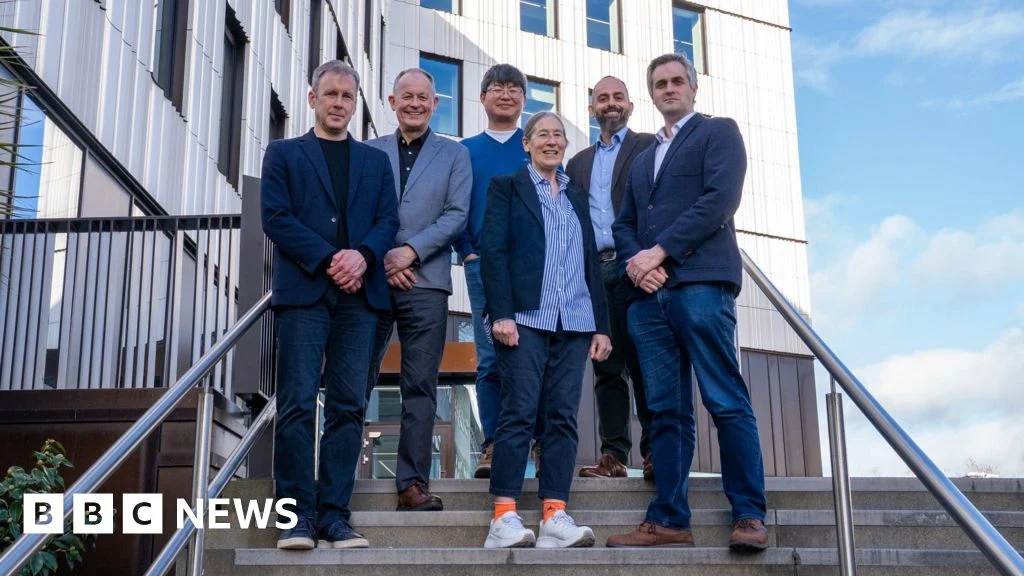
The University of Southampton has formally launched its new Southampton Space Institute, a strategic initiative poised to cement the Hampshire city’s position at the forefront of the burgeoning UK space industry. This ambitious venture, which brings together a wealth of world-renowned research groups and state-of-the-art facilities, is designed to actively support and accelerate government plans aimed at developing Britain’s fast-growing space sector, an industry now valued at an impressive £17 billion annually. The Institute’s establishment marks a significant milestone, integrating decades of academic excellence with cutting-edge innovation to drive advancements in new space technology, shape critical policy discussions, and champion the imperative of space sustainability for future generations.
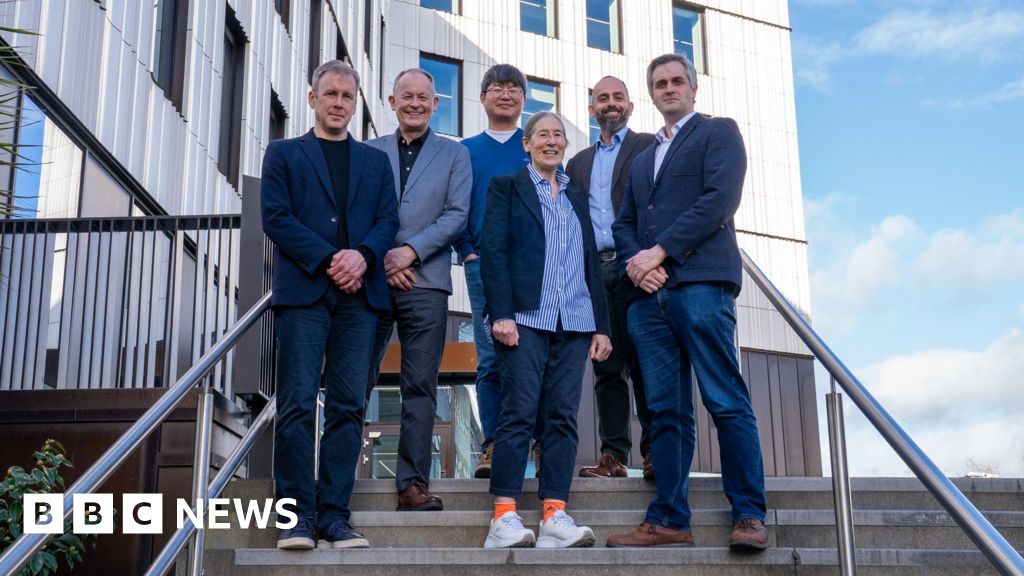
Inaugural director Professor Matt Middleton underscored the university’s profound legacy in the field, stating that the institution "has taught thousands of students about aircraft and satellite design since 1959." This rich heritage provides a formidable foundation for the Institute’s ambitious goals. The Southampton Space Institute is not merely an academic department; it is conceived as a dynamic hub that will foster interdisciplinary collaboration across engineering, physical sciences, computer science, and environmental disciplines. By pooling diverse expertise, the Institute aims to tackle complex challenges ranging from the development of advanced materials for spacecraft to the ethical considerations of space resource utilization, all while contributing significantly to the UK’s national space strategy.
A core focus of the Institute is the development of pioneering space technology. This includes advancements in propulsion systems, satellite miniaturization, advanced robotics for in-orbit servicing and manufacturing, and sophisticated data analytics for Earth observation. Researchers will explore novel concepts such as reconfigurable satellites, resilient communication networks, and artificial intelligence applications for autonomous space missions. The goal is to move beyond incremental improvements, fostering disruptive technologies that can lower the cost of space access, extend mission lifespans, and enable entirely new capabilities in space exploration and utilization. The Institute’s commitment to innovation is further demonstrated by its recent success in securing over a million pounds through the UK Space Agency’s (UKSA) national space innovation programme. This crucial funding will be directed towards two pivotal projects: the development of a plasma torch system designed to simulate the extreme thermal conditions spacecraft encounter during atmospheric re-entry, and the creation of a sustainable water-based propulsion system for satellites. The plasma torch research is vital for testing and validating new heat-shield materials and designs, ensuring the safety and longevity of spacecraft, while the water-based propulsion system offers an environmentally friendly and cost-effective alternative to traditional propellants, with significant implications for the growing small satellite and CubeSat markets.
Beyond technological innovation, the Southampton Space Institute is dedicated to influencing space policy and promoting space sustainability. As orbital congestion and space debris become increasingly critical issues, the Institute will serve as a thought leader, contributing to national and international dialogues on responsible space operations. This involves researching new methods for active debris removal, developing guidelines for satellite design and end-of-life disposal, and advocating for policies that ensure the long-term viability of the space environment. The Institute’s expertise will also extend to the legal and ethical frameworks governing space activities, addressing questions of international cooperation, national security in space, and the equitable access to space resources. This holistic approach recognizes that technological prowess must be coupled with sound governance to secure humanity’s future in space.
The Institute’s strategic importance is amplified by its close collaboration with Space South Central, the UK’s largest regional space cluster. This partnership is instrumental in connecting the university’s cutting-edge research with over 130 space-related businesses spread across Hampshire, Surrey, and the Isle of Wight. This synergistic relationship facilitates the rapid transfer of knowledge from academia to industry, fostering a vibrant ecosystem of innovation and economic growth. By providing a pipeline of highly skilled graduates and breakthrough technologies, the Institute will directly contribute to the expansion of these businesses, from established aerospace giants to agile start-ups in areas like satellite applications, data services, and advanced manufacturing. This regional cluster model is crucial for the UK’s overall space strategy, creating localized centers of excellence that can compete on a global stage.
The University of Southampton’s deep roots in space science are a testament to its enduring commitment. Building on its "65-year heritage of education and research in space science, aeronautics and astronautics," the university has consistently produced pioneers in the field. This legacy encompasses contributions to early rocket technology, satellite design, and fundamental astrophysical research. The establishment of the Southampton Space Institute represents an evolution of this heritage, adapting it to the demands of the 21st-century space age. It acknowledges that the industry "needs the expertise of a university like Southampton to train the next generation, create new jobs and companies, and ensure that space is sustainable in the long term," as Professor Middleton emphasized. This commitment extends to developing new undergraduate and postgraduate programmes, offering interdisciplinary PhD opportunities, and attracting top talent from around the world to study and research in Southampton.
Professor Middleton further elaborated on the diverse expertise the Institute will leverage, stating, "We will be drawing on our expertise in electronics, fundamental science, astronautics, artificial intelligence and many others, to enrich the UK space industry and support the national space strategy." This cross-disciplinary approach is vital. For instance, the Department of Electronics and Computer Science brings unparalleled expertise in satellite communications, sensor technology, and embedded systems, while the School of Physics and Astronomy contributes foundational research in astrophysics, space weather, and detector technology. The engineering faculties, particularly Aeronautics and Astronautics, offer deep knowledge in spacecraft design, propulsion, and orbital mechanics. The integration of Artificial Intelligence and machine learning is also critical for processing vast amounts of satellite data, enabling autonomous operations, and developing predictive models for space phenomena.
The vision for the Southampton Space Institute was meticulously crafted with the guidance of UK space policy expert and former UKSA chief executive Professor David Parker, who worked closely with Professor Middleton to bring the Institute to fruition. Professor Parker articulated a clear and ambitious objective: "to drive sustainable, local and national economic growth by becoming one of the top UK universities for space education, novel space science, technology, and applications of space data here on Earth." This vision encapsulates the Institute’s dual mandate: pushing the boundaries of scientific discovery and technological innovation while simultaneously ensuring that these advancements translate into tangible economic and societal benefits. This includes leveraging space data for terrestrial applications such as climate monitoring, disaster management, precision agriculture, and improved telecommunications, thereby demonstrating the profound impact of space endeavors on daily life.
The launch of the Southampton Space Institute is more than just the creation of a new academic unit; it signifies a strategic alignment with national priorities and a bold commitment to securing the UK’s future in the global space race. By fostering a collaborative environment, investing in cutting-edge research, and nurturing the next generation of space professionals, the University of Southampton is not only contributing to the £17 billion UK space sector but is also positioning itself as a pivotal player in shaping the future of space exploration and sustainable utilization for decades to come. Its influence will undoubtedly extend from the development of groundbreaking technologies to the formulation of policies that ensure the cosmos remains a frontier of opportunity, not a repository of challenges.



 Roy Suryo
 George Anjay
 Ramos Leo