
 atisusanti
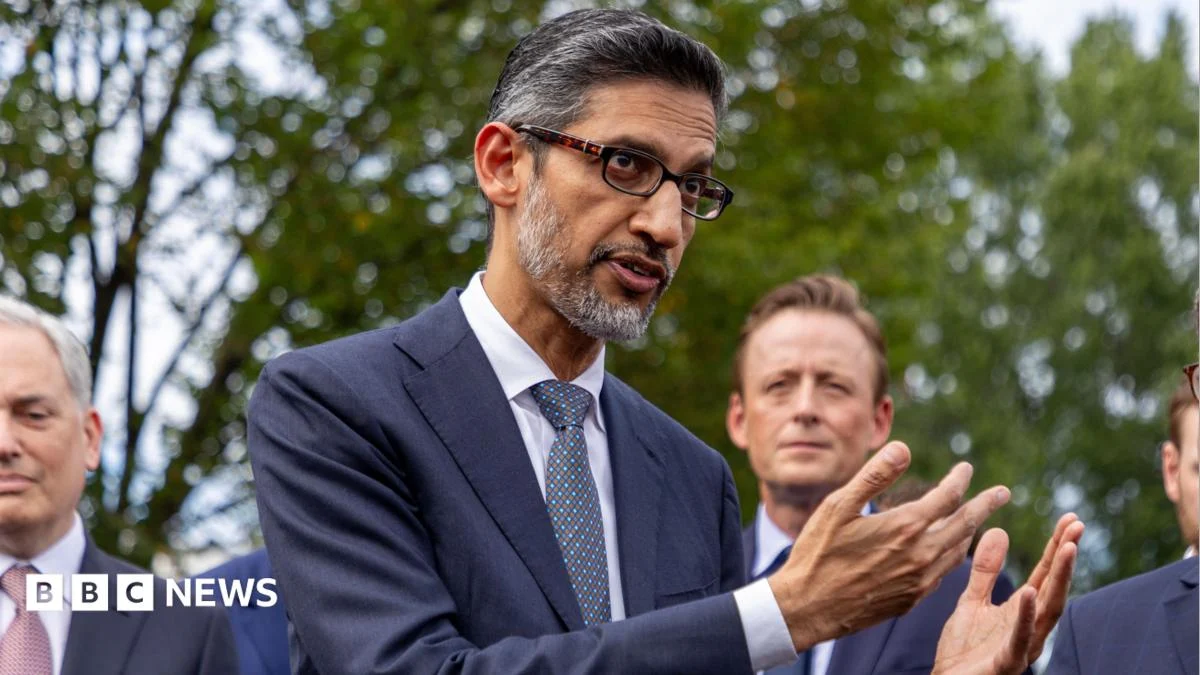
The financial landscape of Big Tech experienced a seismic shift this week as investors grappled with the burgeoning costs and uncertain returns of artificial intelligence, leading to a dramatic $500 billion collapse in the market valuation of Google’s parent company, Alphabet. While Alphabet’s latest quarterly results presented a seemingly robust top line, a deeper dive revealed a stark reality: the company is now pouring unprecedented resources into its AI ambitions, leading to a significant dip in profits and a concerning negative free cash flow, sparking widespread investor apprehension and sending shockwaves through Wall Street.
At first glance, the quarterly results of Alphabet, the parent company of Google, were not at all bad. Total revenue grew an impressive 25% compared to the same period last year, reaching a substantial $127.6 billion. This growth was significantly buoyed by the continued stellar performance of Google Cloud, which saw its revenue skyrocket by a remarkable 103% to nearly $31 billion. This segment has become a critical engine for Alphabet’s financial success, showcasing its ability to compete effectively in the lucrative cloud computing market.
However, beneath this veneer of strong revenue growth lay a more disquieting picture. Profits at the company experienced a considerable decline of 25% during the quarter. More alarmingly, for only the second time in its history as a publicly traded entity, Alphabet reported negative free cash flow, with the deficit exceeding a staggering $9 billion. This figure represents a nearly twofold increase in cash outflow compared to the previous three-month period, signaling a substantial acceleration in spending.
Cash flow, a crucial metric representing the money a company retains after accounting for operational expenses and investments, indicates that Alphabet is currently spending more money than it is bringing in. This new, elevated level of spending is almost entirely dedicated to Google’s ambitious and ever-expanding AI investments. The company is heavily investing in research and development, infrastructure, and the talent needed to maintain its competitive edge in the rapidly evolving AI landscape. This strategic pivot towards AI, while promising for future innovation, is imposing a significant short-term financial burden.
The immediate market reaction was swift and severe. By the end of Thursday’s trading session, Alphabet’s total stock market value had plummeted to $3.46 trillion, a stark drop from $3.97 trillion recorded just the day before, representing a loss of approximately $510 billion. This dramatic decline underscores the market’s current anxiety surrounding the financial sustainability of aggressive AI development.
The impact of these AI investments was also evident in Alphabet’s core advertising business. Google’s ubiquitous search engine has begun to default to AI-generated summaries of user queries, a feature aimed at providing quicker answers but which appears to have negatively affected the number of advertisements it was able to sell during the quarter. The sale of ads that appear alongside Google Search results constitutes the vast majority of Alphabet’s business, making any disruption in this segment particularly impactful.
Tracy Woo, a principal analyst at Forrester, encapsulated the prevailing sentiment, stating that Alphabet’s disappointing search business results "highlights the challenge of funding massive AI investments while maintaining the strength of established businesses." This statement points to the delicate balancing act tech giants face: nurturing their current revenue streams while simultaneously investing heavily in the potentially transformative, but also costly, technologies of tomorrow.
Despite assurances from Phillip Schindler, Google’s chief business officer, who expressed optimism about the "trajectory" of an AI-focused version of the search engine on Wednesday, the company’s stock price reflected the market’s skepticism. Alphabet’s shares fell by almost 13% on Thursday, marking its second-lowest performance of the year. This substantial drop indicates that investor confidence has been shaken, and the market is demanding clearer evidence of a sustainable path to profitability from AI initiatives.
The unease extended beyond Alphabet, with Amazon’s stock also taking a significant hit on Thursday following the release of its quarterly results, which similarly disappointed investors. Shares of the e-commerce behemoth fell by 6% in after-hours trading. Alongside a respectable quarterly sales growth of 11%, which reached $201 billion, Amazon disclosed a staggering cash flow figure of negative $42 billion. This indicates that Amazon is not only spending more money than it is generating but that this expenditure has increased sixfold over the span of just three months.
Amazon’s Chief Executive Andy Jassy attributed this aggressive spending to the company’s pursuit of what he described as not one, but two businesses that could potentially generate $1 trillion for Amazon in the future. While Jassy did not explicitly identify these two ventures, during a call with financial analysts, he repeatedly highlighted the significant financial opportunities presented by Amazon’s efforts in developing and selling its own custom computer chips, as well as its AI developer platform, Bedrock. Bedrock offers paying users access to a wide array of major AI models and tools, positioning Amazon as a key player in the AI infrastructure space.
Jassy articulated a long-term vision, stating, "One of the lessons we’ve learned over 20-plus years is that there is not one tool to rule the world. People always assume whatever is in the lead early on will be the only thing that people use – it’s never true." This perspective suggests a strategy of diversification and investment in multiple AI-related avenues, recognizing the dynamic nature of technological adoption.
When pressed multiple times by analysts to explain the company’s substantial spending, Jassy candidly admitted that it "would be more convenient" if the expenses were spread over the next 25 years, but acknowledged, "That’s not the world we live in." He expressed confidence in Amazon’s ability to fund its current plan, asserting, "I think it will forever change the size, the revenue, the free cash flow of Amazon." This bold statement signals a commitment to a transformative strategy, even if it entails significant short-term financial strain.
In contrast, Wall Street reacted with less pronounced concern to Microsoft’s financial update, with its shares experiencing a more modest decline of less than 1% on Thursday. Microsoft, a significant investor in OpenAI, reported spending approximately $5 billion less on AI-dedicated investments compared to its peers. Furthermore, the company had earlier announced plans to cut thousands of workers, a move expected to further reduce its operational costs.
Microsoft’s revenue saw a healthy 19% year-over-year increase, reaching $92.3 billion for the quarter. Its critical cloud business demonstrated robust growth, expanding by 30% to $63 billion. Chief Executive Satya Nadella highlighted the strong adoption of Copilot, Microsoft’s AI chatbot and productivity tool, noting that "automated tasks nearly double since July" with daily users growing by an impressive 500% from the previous year.
Ordinarily, lower spending coupled with growing sales would elicit a positive response from investors. However, Tracy Woo from Forrester suggested that Wall Street is increasingly adopting a more forward-looking perspective, scrutinizing which businesses are truly poised to deliver on their ambitious AI promises. "Microsoft’s results reinforce that enterprise demand for AI remains strong, but they also highlight a much bigger question facing the technology industry, where AI value will ultimately be captured," Woo commented. This indicates that while AI adoption is evident, the market is still trying to determine the most profitable and sustainable business models for its integration and monetization. The significant market valuation adjustments seen in Alphabet and Amazon underscore the current uncertainty and the heightened investor scrutiny applied to the long-term financial viability of their AI-driven strategies.




 Ramos Leo

 Roy Suryo

 George Anjay

 Nakalama John
