
 George Anjay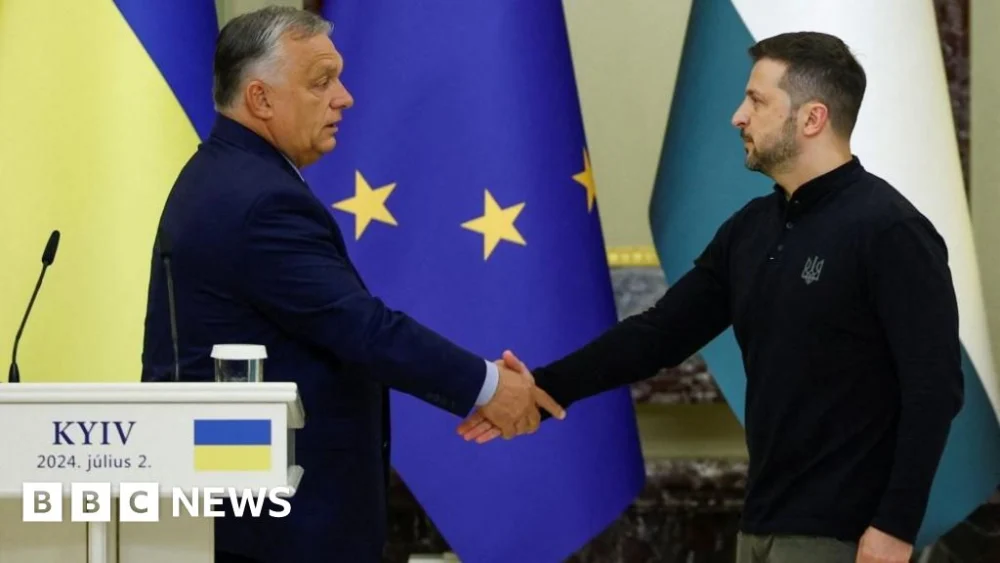
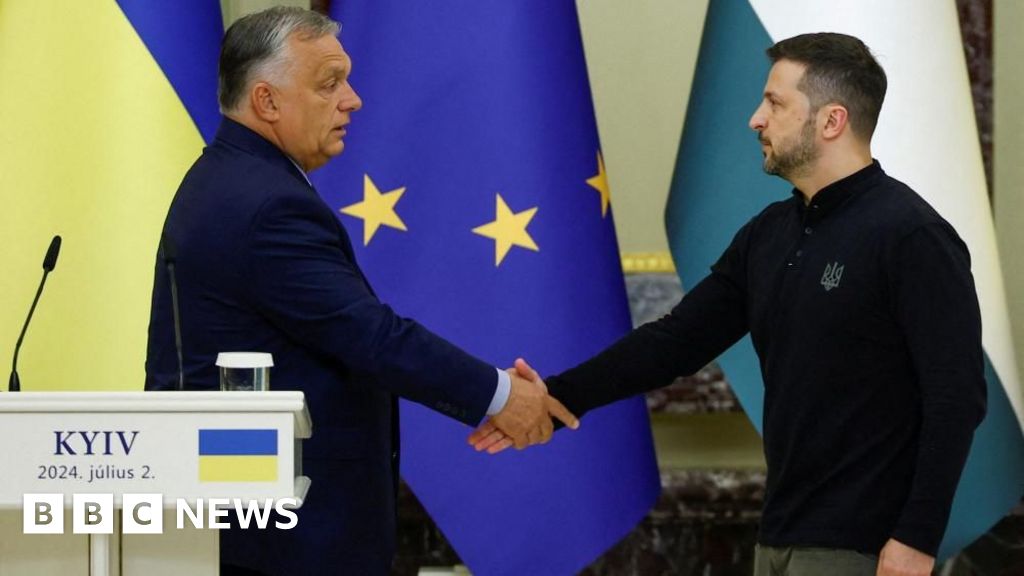
The Hungarian government has accused war-torn Ukraine of plotting to prevent Prime Minister Viktor Orbán and his Fidesz party from winning the upcoming elections, alleging preparations for physical violence against the prime minister and his family, alongside attacks or sabotage of key energy installations. In response, the Ukrainian government has leveled accusations of a smear campaign orchestrated by Budapest to manipulate Hungarian voters into supporting Fidesz. Lurking in the background of this escalating diplomatic dispute is Russia, with the Financial Times reporting that the Kremlin-linked Social Design Agency is gearing up for a substantial disinformation campaign in Hungary aimed at bolstering Orbán and undermining the opposition Tisza Party and its leader, Péter Magyar.
With the Hungarian parliamentary election now just 30 days away, some analysts suggest that the government’s fervent anti-Ukraine rhetoric signals panic in the face of potential defeat, as current polls show Orbán’s Fidesz party trailing Péter Magyar’s Tisza party by a significant margin (39% to 50%). Conversely, others argue that Orbán, deeply attuned to his electorate, believes that by cultivating an atmosphere of existential threat, he can secure a remarkable fifth consecutive term on April 12th.
At the heart of this diplomatic entanglement lies the disruption of the Druzhba (Friendship) pipeline, a vital artery for Hungarian and Hungarian-managed Slovak refineries. Oil deliveries via this pipeline ceased on January 27th following a Russian drone strike that ignited a fire at the Brody oil hub in western Ukraine. Since then, Hungary has received no oil shipments. Prime Minister Orbán recently presented satellite imagery, asserting it demonstrated the pipeline’s structural integrity and accusing Ukraine of deliberately delaying repairs to engineer a fuel shortage and negatively impact his re-election prospects.
However, András Rácz, a security analyst at the German Council on Foreign Relations, informed the BBC that the Hungarian government’s claims of no technical impediments to restarting oil flow are not entirely accurate. Rácz explained that a January 27th Russian attack damaged an oil tank at Brody, containing approximately 75 million liters of crude oil. To salvage this oil and avert an environmental catastrophe, it was pumped into the pipeline for storage. The presence of this stored oil, coupled with other technical damage sustained from both the initial and a subsequent Russian attack, is preventing the resumption of supply. Ukraine estimates that repairs could take up to six weeks.
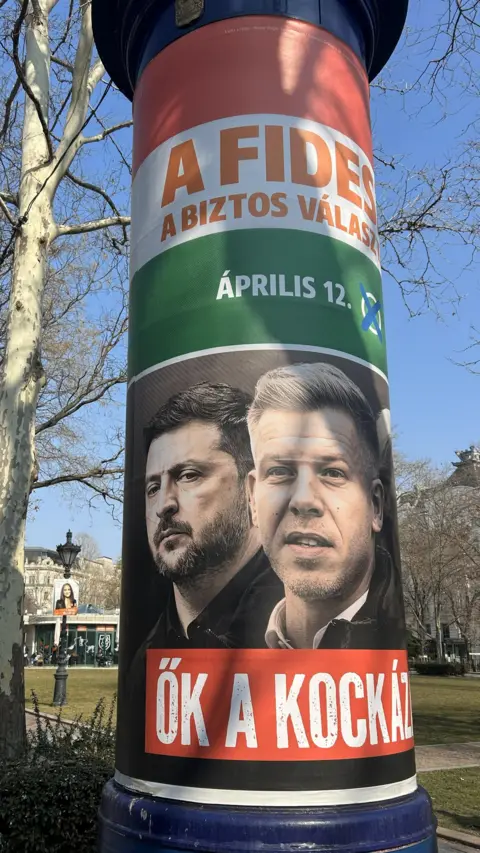
The "Ukraine hysteria" permeating Hungarian public discourse manifests in various forms. Extensive billboards and illuminated city advertisements across the country depict Ukrainian President Volodymyr Zelensky soliciting funds from EU leaders. Other displays create a visual parallel between Zelensky and Péter Magyar, with the Tisza party being accused of intending to drag Hungary into the Ukraine war by aligning with the "pro-war lobby" in Brussels—an accusation Magyar vehemently refutes, proclaiming his party as the "real party of peace." Orbán and his ministers are actively touring the country, addressing gatherings they term "anti-war" assemblies of Fidesz supporters.
Perhaps the most alarming element of this campaign is an artificial intelligence-generated video produced by Fidesz. The disturbing advertisement depicts a young girl asking her weeping mother when her father will return, cutting to a scene where the blindfolded father is about to be executed by a firing squad. The implication is that such a fate awaits Hungarians if they vote for Tisza. Facebook has reportedly declined to remove the advertisement, despite complaints that it violates its policies on political content and violence. In an unusual peacetime measure, the Hungarian army has been deployed to patrol critical energy installations, framed by Fidesz as a public reassurance against hybrid threats, while Tisza interprets it as a tactic to intimidate voters.
In the eastern city of Debrecen, Defense Minister Kristóf Szalay-Bobrovniczky cautioned that the city could be a target for "hybrid operations" such as sabotage. The dominant pro-government media landscape largely amplifies the government’s narrative, creating an echo chamber of its messaging. Tamás Polgár Tóth, a journalist at the independent Debreciner news portal, shared with the BBC that citizens are questioning why the government isn’t providing information on air-raid shelters if the threat of attack is indeed real. The Fidesz mayor of Debrecen, László Papp, later indicated that such measures were under consideration.
On February 21st, Orbán vetoed the delivery of an EU loan until oil flow through the Druzhba pipeline was restored. This move forced Ukraine to seek a €1.5 billion loan from the International Monetary Fund to manage its immediate financial needs during the dispute. The situation escalated further on March 4th when President Zelensky appeared to intensify the standoff, stating, "We hope that no-one in the European Union will block the €90 billion [approximately £78 billion] [of EU aid, currently vetoed by Hungary]. Otherwise, we will give that person’s address to our armed forces so they can call on him and speak to him in their own language." While Orbán was not explicitly named, his administration perceived the remark as a direct threat.
Orbán responded on state radio on March 6th, asserting, "They want to get rid of us, with threats if possible, because if nice words don’t work, then with threats and blackmail." The diplomatic friction intensified the following day when two vehicles belonging to the Ukrainian state savings bank, Oschadbank, were seized as they crossed into Hungary. The TEK anti-terror troops involved in the operation were depicted on the cover of the independent HVG weekly as Viktor Orbán’s "private army" handling gold bars, juxtaposed with the symbol of the Tisza party. Pro-government media outlets have alleged that one of the lawyers representing the Ukrainian bank in its efforts to reclaim its money and vehicles is a staunch Tisza supporter.
Adding another layer to the escalating tensions, a government decree issued on Monday mandated prosecutors to investigate "whether Hungarian criminal organizations, terrorist organizations or political organizations present in Hungary may have benefited from the transported assets." On Wednesday, several members of a Hungarian government-established "fact-finding mission" entered Ukraine by car, ostensibly to assess the condition of the Druzhba pipeline. Deputy Energy Minister Gábor Czepek stated in a Facebook post that their objective was "to assess the status of the pipeline and create conditions for its restart."
However, Ukraine maintained that the group was being treated as tourists. A statement from Ukraine’s foreign ministry declared, "This group of individuals holds no official status, nor do they have any scheduled official meetings; therefore, it is fundamentally incorrect to refer to them as a delegation." The ensuing diplomatic exchange was sharp. Hungary’s Foreign Minister Péter Szijjártó accused Zelensky of lying after the Ukrainian president claimed he was "not aware" of a Hungarian delegation’s arrival in Ukraine, presenting an official note from the Hungarian embassy in Kyiv as proof. Ukraine, in its response, asserted that it had already informed the Hungarians that the proposed dates for the visit were "not acceptable for the Ukrainian side."



 Roy Suryo

 Nakalama John
 atisusanti
 Ramos Leo
