
 George Anjay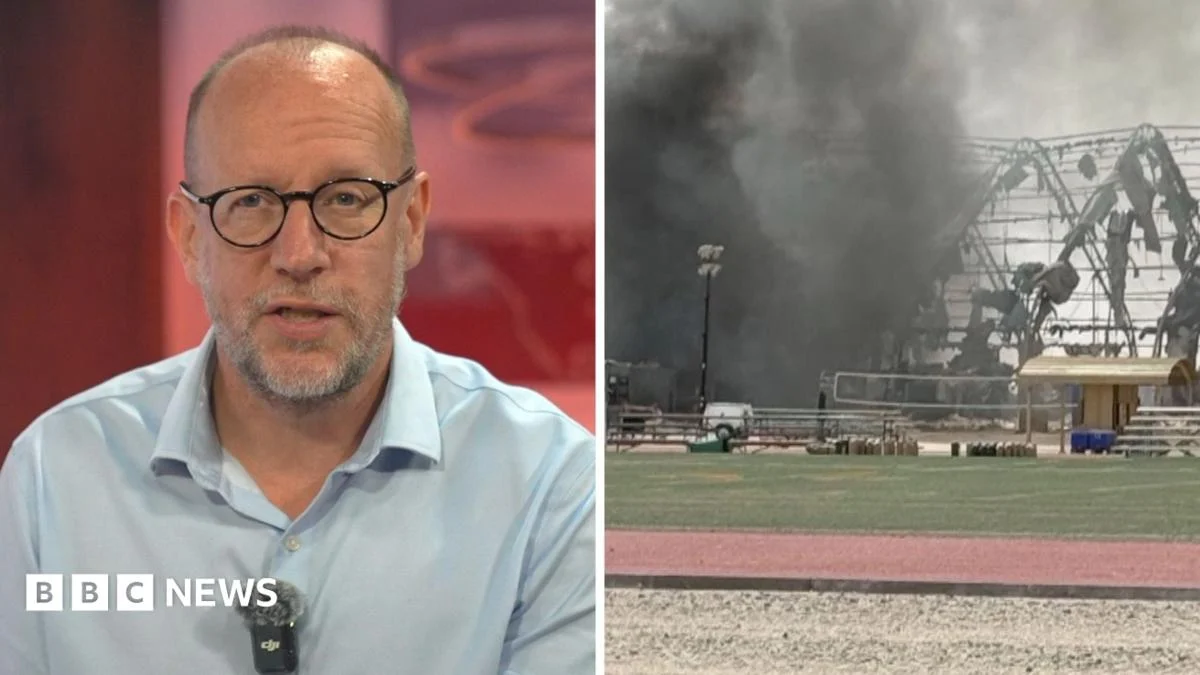
The photographs themselves offer a visceral and undeniable testament to the destructive force unleashed. They depict a scene of considerable devastation, leaving no room for ambiguity. Among the most striking images is that of a severed radar jet, its once-functional components brutally torn apart, rendering it utterly useless and a potent symbol of the compromised air defense capabilities. This particular visual suggests a direct and successful targeting of critical intelligence, surveillance, and reconnaissance assets, which are vital for maintaining situational awareness and operational effectiveness in a complex and often volatile theater. The sheer force required to sever such a substantial piece of military hardware underscores the potency of the munitions employed.
Beyond the dramatic image of the damaged aircraft, the leaked collection includes numerous photographs illustrating flattened trailers, the mobile living and working quarters for many service members, now reduced to mere debris. These scenes evoke a sense of personal loss and disruption, highlighting the direct impact on the daily lives and safety of those stationed at these bases. The destruction of such infrastructure signifies not only a material loss but also a significant blow to morale and the logistical capabilities of the units affected. The rapid deployment and reliance on such modular structures are a hallmark of modern military operations, and their wholesale destruction points to a comprehensive and deliberate attack.
Furthermore, the images document severely damaged buildings, some appearing to be administrative centers, barracks, or storage facilities. The structural integrity of these buildings has been compromised, with visible signs of collapse, fragmentation, and scorching. The extent of this damage suggests that the strikes were not merely superficial but penetrated deep into the operational heart of these bases. The loss of these structures could translate into a substantial rebuilding effort, requiring significant financial investment and diverting resources that could otherwise be allocated to ongoing operations or readiness. The visual evidence challenges any narrative that might suggest minimal or containable damage.
The BBC’s State Department correspondent, Tom Bateman, a seasoned reporter with extensive experience covering foreign policy and international affairs, has undertaken the crucial task of dissecting and contextualizing these powerful images. His analysis, intended to provide a clearer understanding of the implications of this leaked information, is vital for bridging the gap between the raw visual evidence and its broader geopolitical significance. Bateman’s role in articulating the specific details captured in the photographs, identifying the types of damage, and potentially speculating on the nature of the weapons used, is essential for informing the public and policymakers alike. His reporting will likely delve into the strategic implications of the damage, assessing how it might affect US military posture, operational readiness, and its ability to project power in the region.
The anonymous military source’s assertion that this "major damage" has not been communicated to the American public raises serious questions about transparency and the official narrative surrounding the conflict. In times of heightened international tension, public trust in government and military institutions is paramount. The deliberate withholding or downplaying of information regarding significant military damage can lead to public skepticism and erode confidence. This leak, therefore, serves not only as a revelation of physical destruction but also as a potential catalyst for a broader discussion about information control and accountability within the military and political spheres. The source’s motivation, whether driven by a desire for truth, concern for fellow service members, or a perceived lack of preparedness, is a significant element in understanding the context of this leak.
The geographical scope of the damage, affecting "multiple US military sites in the Middle East," suggests a coordinated and widespread offensive rather than isolated incidents. This implies a sophisticated planning and execution process by the perpetrators of the strikes, aiming to maximize disruption and inflict significant damage across a broad front. The Middle East remains a complex and volatile region, with numerous actors and intersecting interests. The targeting of US bases here has profound implications for regional stability, the ongoing fight against extremist groups, and the broader strategic objectives of the United States in the area. The exact locations and the specific impact on each base would require further investigation, but the overarching message is one of significant and widespread disruption.
The economic ramifications of such extensive damage are also considerable. The cost of repairing or replacing damaged infrastructure, aircraft, and equipment will undoubtedly run into millions, if not billions, of dollars. This financial burden will fall upon the American taxpayer, underscoring the tangible costs of conflict and geopolitical confrontation. Furthermore, the disruption to military operations and the potential need to reallocate resources to address the damage could have downstream effects on readiness and the ability to respond to other emerging threats. The long-term implications for defense spending and strategic planning will likely be debated in the wake of these revelations.
The political implications of this leak are equally profound. It could embolden adversaries, potentially signaling a perception of US vulnerability or a miscalculation of its defensive capabilities. Conversely, it could galvanize domestic support for a stronger response, or conversely, fuel calls for de-escalation and a re-evaluation of US foreign policy in the region. The narrative surrounding the conflict will undoubtedly be influenced by this new evidence, forcing a re-examination of strategies and objectives. The timing of the leak, in relation to ongoing diplomatic efforts or military operations, could also be strategically significant.
The video production team, comprised of Madeline Gerber and Jonathan Csapo, with editing by Meiying Wu, plays a crucial role in bringing this story to the public. Their work in compiling the visual evidence, ensuring its clarity and impact, and presenting it in a coherent and digestible format is essential for conveying the gravity of the situation. The careful selection and presentation of the photographs, coupled with Tom Bateman’s expert commentary, will be instrumental in shaping public perception and understanding of this critical development. The visual medium, in this instance, is a powerful tool for revealing truths that might otherwise remain obscured. The impact of these leaked photos extends far beyond the immediate destruction they depict, reaching into the realms of public trust, geopolitical strategy, and the very definition of transparency in times of conflict. The world is now watching, and the questions raised by this leak demand answers.




 atisusanti
 Nana Banana
 Nakalama John
 Ramos Leo