Nana Banana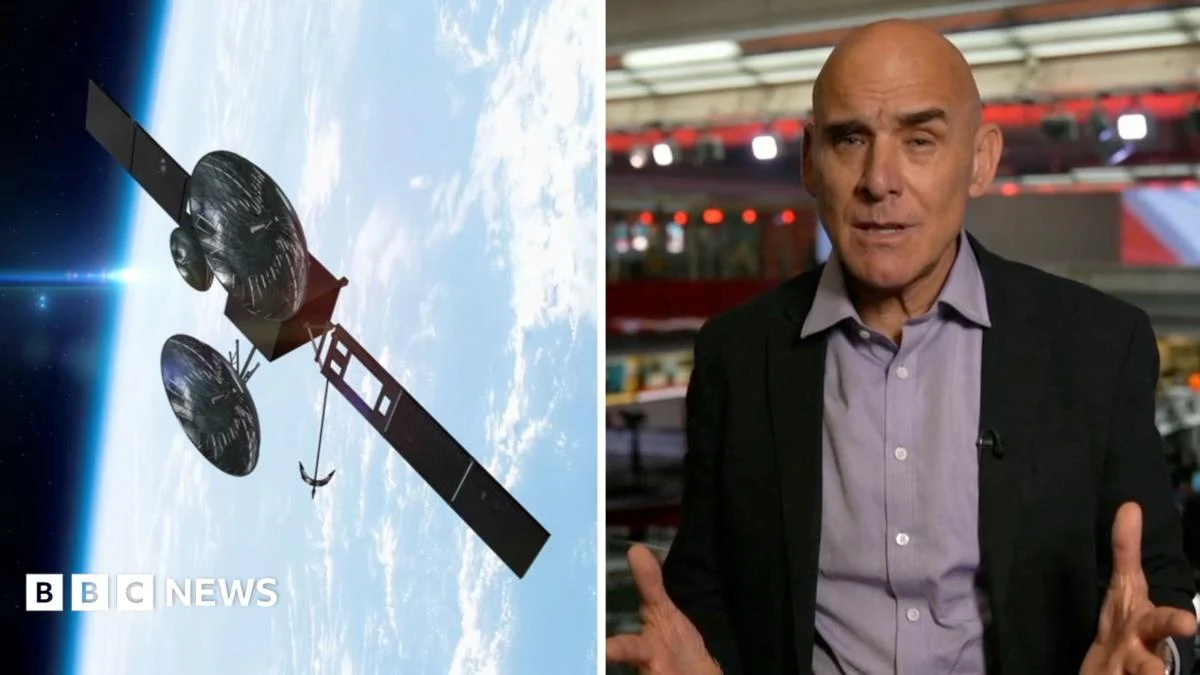
The United States has officially confirmed, for the first time, that it has deployed an offensive space weapon in Earth’s orbit, marking a pivotal moment in the ongoing militarization of the final frontier. This unprecedented acknowledgment of operational offensive capabilities in space has immediately drawn strong reactions from global powers, with Russia and China swiftly issuing warnings of an impending arms race in the cosmos. However, as noted by BBC Defence correspondent Jonathan Beale, the grim reality is that such a race has likely been underway for some time, operating largely in the shadows until this explicit declaration. Details regarding the specific nature and operational parameters of this undisclosed weapon remain tightly guarded by US officials, leaving the international community to speculate on its capabilities and the broader implications for global security and the future of space.
This confirmation by the US represents a significant shift in its public posture regarding space capabilities. While the development of counter-space technologies has been an open secret among major spacefaring nations for decades, explicit acknowledgment of an operational offensive weapon in orbit crosses a new threshold. For years, US strategic documents have emphasized the importance of protecting its vast network of satellites, which are crucial for military operations, intelligence gathering, navigation, and global communications. This defensive stance, however, appears to have evolved into a more proactive posture, signaling a willingness to not only defend its assets but also to project power and potentially neutralize adversary capabilities in space. The timing of this disclosure, amidst heightened geopolitical tensions and an increasingly competitive strategic environment, suggests a deliberate move to send a clear message to rivals about US resolve and technological superiority.
The term "space weapon" itself can encompass a broad spectrum of capabilities, ranging from direct-ascendant anti-satellite (ASAT) missiles launched from Earth, to co-orbital interceptors designed to maneuver close to enemy satellites, to non-kinetic systems like jammers, dazzling lasers, or sophisticated cyber capabilities aimed at disrupting satellite operations or ground control systems. Without specific details from US officials, the exact nature of the deployed weapon remains speculative. However, experts often categorize such technologies into those that cause physical destruction, those that disrupt or degrade functionality, and those that gather intelligence or surveil. A co-orbital weapon, for instance, could masquerade as a satellite servicing vehicle or a debris removal craft, only to reveal its hostile intent by maneuvering to disable or destroy an adversary’s satellite. Such ambiguity inherently complicates efforts at arms control and verification, making it difficult to distinguish between benign and malevolent activities in orbit. The potential for such a weapon to generate dangerous space debris, which could cascade into the "Kessler Syndrome" rendering vast swathes of orbit unusable, is also a profound concern.
Russia and China, both significant space powers with their own robust counter-space programs, were quick to condemn the US announcement. Their warnings of an arms race, while seemingly reactive, also carry an undercurrent of their long-standing rhetoric advocating for the demilitarization of space and the prevention of an arms race in outer space (PAROS) through international treaties. Both nations have previously proposed draft treaties at the UN, aiming to prohibit the placement of weapons in outer space and the threat or use of force against space objects. However, critics often point to their own demonstrated capabilities and actions as undermining these calls. China’s 2007 ASAT test, which destroyed one of its own weather satellites and created thousands of pieces of space debris, was a stark reminder of the destructive potential of such weapons. Similarly, Russia has conducted numerous tests of co-orbital "inspector" satellites and ground-based ASAT missiles, including a 2020 test that targeted one of its own satellites, demonstrating a clear intent to develop and refine its counter-space arsenal. Thus, their warnings, while valid in highlighting the dangers, also underscore the complex and often hypocritical nature of great power competition in space.
Jonathan Beale’s assertion that the arms race is "already happening" resonates deeply with the observations of many defense analysts and space strategists. For years, major powers have been investing heavily in technologies that, while often framed as defensive or dual-use, possess clear offensive applications. The increasing reliance of modern militaries on space assets for everything from precision navigation (GPS) and secure communications to intelligence gathering, surveillance, and reconnaissance (ISR) has transformed space into a critical warfighting domain. Disrupting an adversary’s space capabilities could cripple their ability to conduct modern warfare, making space assets prime targets in any future conflict. This has led to a stealthy, ongoing competition, characterized by the development of sophisticated jamming systems, cyber capabilities targeting satellite ground stations, and technologies designed for "rendezvous and proximity operations" (RPO) which, while useful for satellite servicing or debris removal, can also be weaponized. The ambiguity surrounding these technologies has allowed nations to advance their capabilities without overtly violating existing international treaties like the 1967 Outer Space Treaty, which prohibits the placement of weapons of mass destruction in orbit but is silent on conventional weapons.
The geopolitical implications of this overt militarization of space are profound and far-reaching. The confirmation of an orbital weapon raises the specter of an escalating cycle of development and deployment, increasing the risk of miscalculation and accidental conflict. A conflict in space, even a limited one, could have devastating consequences not only for military operations but also for civilian infrastructure that relies heavily on satellites, such as weather forecasting, financial transactions, and internet connectivity. The potential for the generation of space debris, creating a self-perpetuating hazard, poses an existential threat to all space operations, regardless of nationality. This grim scenario underscores the urgent need for internationally recognized norms of behavior in space and potentially new arms control frameworks that address the unique challenges of verifying and enforcing agreements in this domain.
From the US perspective, the deployment of such a weapon likely stems from a combination of strategic imperatives. Protecting its own vast and increasingly vulnerable space infrastructure is paramount. With adversaries actively developing capabilities to disrupt or destroy US satellites, a credible offensive deterrent might be seen as necessary to ensure the continued access and use of space. Furthermore, the US Space Force, established in 2019, has consistently articulated a doctrine that moves beyond simply protecting assets to actively ensuring space superiority and deterring aggression in the domain. This shift implies a willingness to engage in "space control" – the ability to ensure one’s own freedom of action in space while denying it to an adversary. The confirmation of an orbital weapon, therefore, aligns with this evolving strategic outlook, signaling a proactive approach to maintaining its edge in a domain that is increasingly critical to national security and economic prosperity.
Looking ahead, the US confirmation marks a critical juncture. It could trigger an accelerated arms race, with other nations feeling compelled to match or counter US capabilities. This could lead to further opacity, with nations developing and deploying advanced systems in secret, further complicating efforts to foster transparency and build trust. The absence of specific details about the US weapon further fuels speculation and distrust, making it harder to establish clear red lines or de-escalation mechanisms. The international community faces a stark choice: either succumb to an unregulated military competition in space, with all its inherent dangers, or urgently pursue diplomatic pathways to establish binding norms, verifiable arms control treaties, and mechanisms for peaceful coexistence in orbit. The future of space, once seen as a realm for scientific exploration and human endeavor, is now unequivocally tied to the complex dynamics of terrestrial power politics, demanding immediate and sustained attention to prevent it from becoming the next major battleground.




 Roy Suryo

 George Anjay
 Nakalama John
 Ramos Leo