
 George Anjay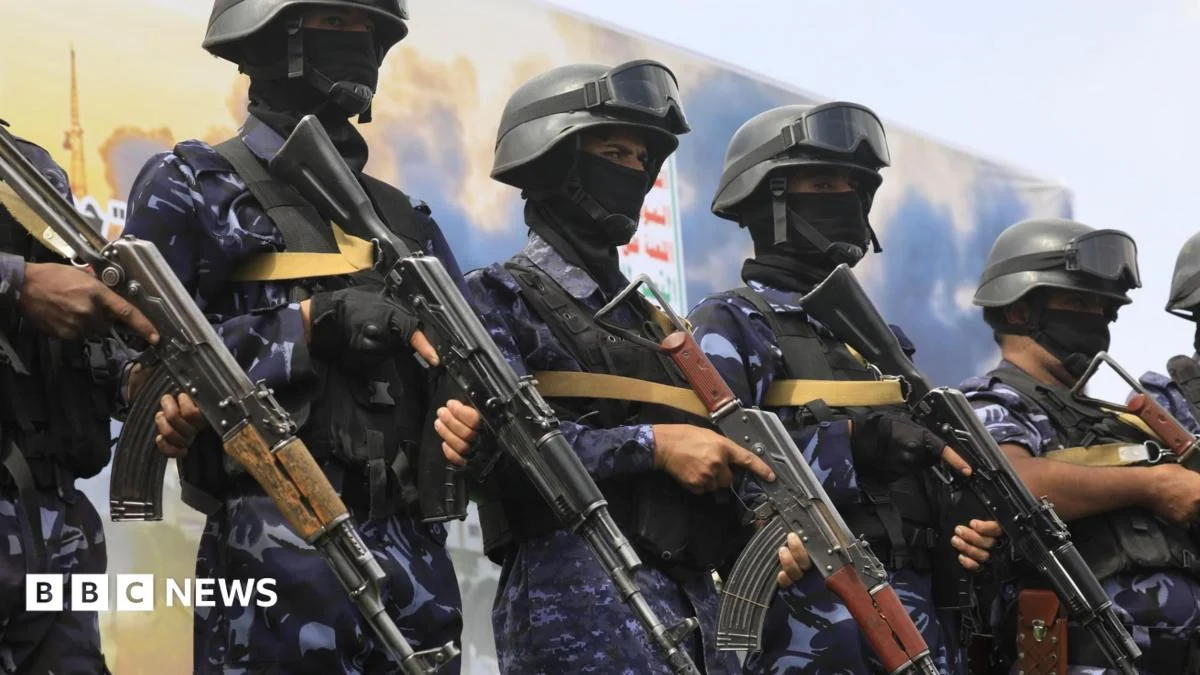
The Red Sea has become a critical artery for oil shipments emanating from Saudi Arabia, particularly in the context of the ongoing US-Israeli conflict with Iran, which has effectively rendered the Strait of Hormuz in the Persian Gulf impassable. This strategic shift in maritime routes underscores the escalating tensions and the broadening geopolitical implications of regional conflicts. The Houthi declaration of a "maritime embargo" against the Kingdom of Saudi Arabia marks a significant escalation, occurring precisely one week after the most substantial flare-up in the largely dormant conflict between the Houthi movement and Saudi Arabia since an informal truce took hold in 2022. This recent surge in hostilities is directly linked to reciprocal attacks, with the Houthis claiming responsibility for launching missiles at Abha airport in southwestern Saudi Arabia, an action they asserted was a direct reprisal for air strikes on Sanaa’s airport, which they unequivocally blamed on the Saudi regime.
The air strikes on Sanaa’s airport were subsequently claimed by the Saudi-backed Yemeni government. Their justification for these strikes was rooted in an alleged attempt to prevent an unauthorized landing of an Iranian aircraft in the capital. This incident highlights the intricate web of alliances and proxy conflicts that characterize the Yemeni civil war, a devastating conflict that has ravaged the nation since 2014. The war’s origins lie in the Houthi ousting of the internationally recognized government from Sanaa, a move that triggered a broader regional intervention in 2015 when a Saudi-led coalition of Arab states intervened with the stated objective of restoring the government’s authority. The human cost of this protracted conflict is staggering, with reports indicating that over 150,000 people have lost their lives. Furthermore, Yemen is currently grappling with one of the world’s most severe humanitarian crises, with the United Nations estimating that more than 22 million individuals are in desperate need of some form of humanitarian assistance.
In this charged atmosphere, Houthi military spokesman Yahya Sarea delivered a stark pronouncement on Monday, articulating the group’s rationale for their latest actions. He detailed the "unjust and oppressive siege on our dear people for nearly 12 years," accusing Saudi Arabia of "plundering our resources and imposing a comprehensive blockade on our ports and airports by land, sea, and air." In direct response to this perceived aggression and protracted blockade, Sarea declared that the Houthi movement had resolved to retaliate by instituting a "maritime embargo against the criminal Saudi enemy, based on the equation of ‘an eye for an eye’." He further issued a stern warning, stating, "Any foolish act committed by the reckless Saudi enemy through all escalation will be met with a comprehensive and decisive escalation."
While Sarea refrained from providing specific details regarding the scope and implementation of this declared embargo, the deputy head of the Houthi media office, Nasruddin Amer, offered a crucial clarification on the social media platform X. Amer explicitly stated that the group’s forces were "closing Bab al-Mandab to Saudi enemy ships." This assertion points directly to the strategic importance of the Bab al-Mandab Strait, a narrow 32-kilometer (20-mile) waterway situated between the southwestern coast of Yemen and the Horn of Africa. This vital chokepoint serves as a crucial connector, linking the Gulf of Aden to the Red Sea, which in turn, through the Suez Canal, provides access to the Mediterranean Sea. The deliberate targeting of this strait underscores the Houthis’ intent to inflict maximum economic and strategic pressure on Saudi Arabia.
The recent declaration of a maritime embargo by the Houthis is not an isolated incident but rather a continuation and escalation of a pattern of behavior that began shortly after the commencement of the Gaza war in October 2023. During this period, the Houthis initiated a series of attacks against merchant vessels traversing the Red Sea and the Gulf of Aden. These assaults, carried out using a combination of missiles, drones, and small boats, were explicitly framed by the Houthis as acts of solidarity and support for the Palestinian people. The impact of these attacks has been profound. Four ships have been sunk, resulting in the tragic loss of nine crew members. Consequently, commercial traffic through the Bab al-Mandab Strait plummeted to record lows, forcing shipping companies to reroute their vessels around the southern tip of Africa, a significantly longer and more costly alternative.
Despite a temporary pause in Houthi attacks, reportedly in response to a ceasefire agreement related to the Gaza conflict last October, maritime data reveals that transiting numbers through the strait have yet to recover to their pre-attack levels, according to information compiled by the International Monetary Fund. This lingering disruption highlights the persistent vulnerability of this critical maritime corridor. In response to the ongoing security concerns and the effective closure of the Strait of Hormuz, Saudi Arabia has significantly altered its oil export strategy. The Kingdom has rerouted more than 70% of its crude exports to the Red Sea port of Yanbu. In recent weeks, approximately 4 million barrels per day (bpd) have been shipped from Yanbu, a dramatic increase compared to the roughly 973,000 bpd recorded a year earlier, as evidenced by data from Kpler and Signal Ocean.
The strategic significance of the Bab al-Mandab Strait is further underscored by the sheer volume of petroleum products that transit through it. In June, total petroleum volumes passing through the strait surged to 7.4 million bpd, representing approximately 7% of global oil output. This makes any disruption in this waterway particularly impactful on the international energy market. Mohammed Albasha, a principal analyst at the US-based risk advisory firm Basha Report, offered a measured perspective on the implications of the Houthi announcement. He noted that it remains unclear whether the Houthis will translate their verbal threats into direct targeting of vessels bound for Saudi Arabia. "Even if no ships are attacked, the announcement alone is likely to disrupt shipping and create uncertainty for Saudi ports," Albasha told Reuters news agency. He emphasized that "Whether the Houthis move from threats to direct action remains the critical issue," highlighting the volatile nature of the current situation and the potential for further escalation. The declared "maritime embargo" therefore represents a significant development in the ongoing regional power struggle, with potentially far-reaching consequences for global shipping and energy markets.




 Roy Suryo

 Nakalama John
 atisusanti
 Ramos Leo
