
 Roy Suryo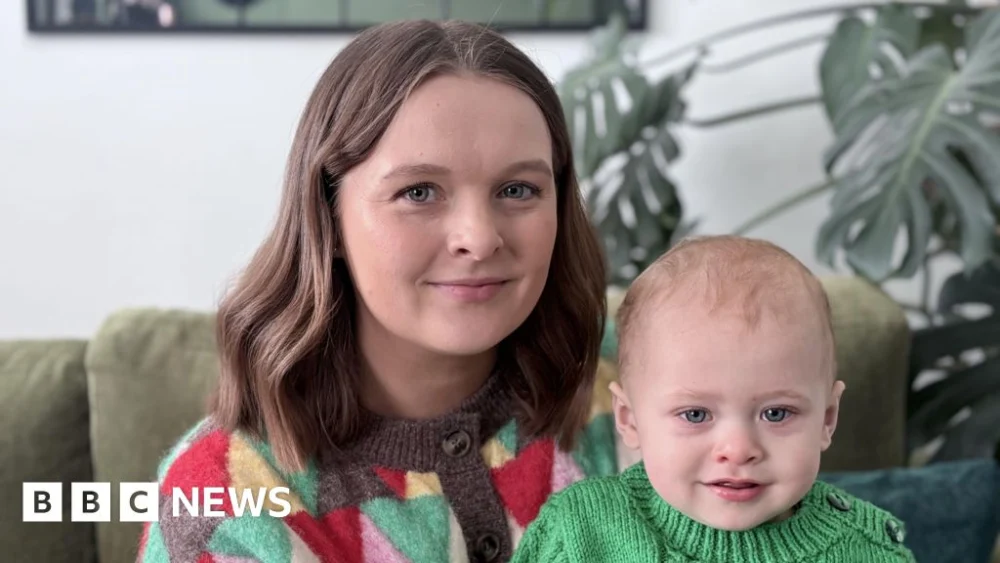
Sent 90 Miles for Critical Postpartum Care Amidst Severe Mental Health Crisis
A harrowing account of a new mother, Lizzy Berryman, being forced to travel 90 miles for essential mental health treatment after childbirth has ignited urgent calls for increased capacity and accessibility of specialist Mother and Baby Units (MBUs). Berryman, 30, experienced a severe episode of postpartum psychosis just four days after giving birth to her son, Patrick. This potentially life-threatening condition, characterized by hallucinations, severe insomnia, and paranoia, led to her being sectioned and transported from York to Derby in a distressing state, reportedly "soaked in urine." The incident highlights a critical gap in specialist mental health provision for new mothers, with some women in Yorkshire being sent as far as London for care due to a severe lack of local beds.
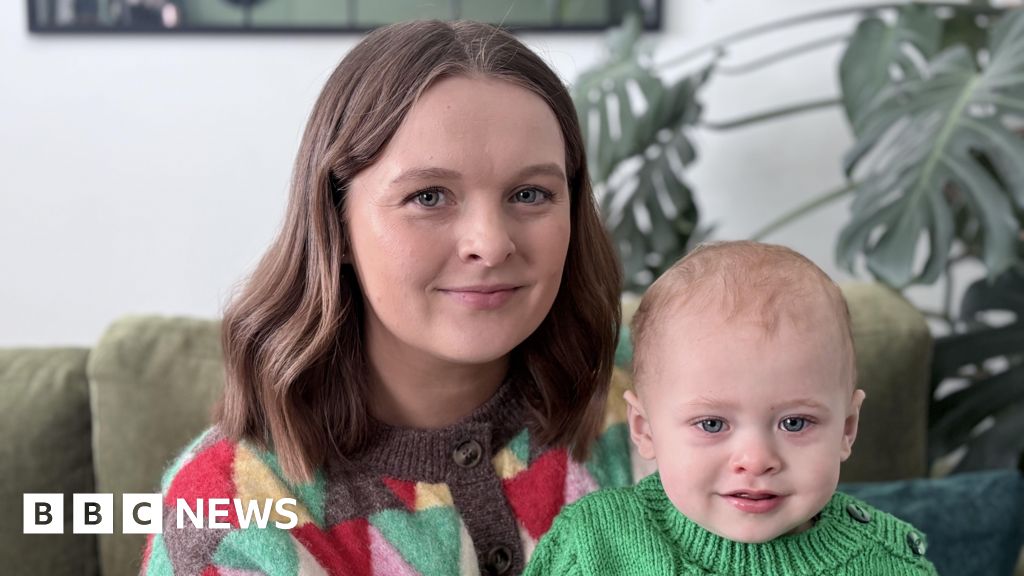
"It’s lit a fire in me to get the word out there that this is a problem and that it is so needed, because there are so many families torn apart," Lizzy stated, emphasizing the profound impact of these systemic failures on families. Her journey into psychosis began shortly after a traumatic birth in 2024. The inability to sleep, coupled with the immense stress of new motherhood, rapidly exacerbated her mental state. "I was getting increasingly anxious and confused. I couldn’t make a cup of tea or change Patrick’s nappy," she recounted, painting a vivid picture of her disorientation and distress. "I started screaming, I ran at the windows. I thrashed about on the floor for hours and I thought I was in hell."
In a desperate attempt to manage her escalating symptoms, Lizzy’s family restrained her at home for two hours while awaiting an ambulance. Upon arrival at York Hospital’s emergency department, she was sectioned under the Mental Health Act. Tragically, her family was informed that no beds were available at the only MBU in Yorkshire, located in Leeds. This meant Lizzy had to be transferred to the nearest available unit capable of treating her severe postpartum psychosis and depression, which was in Derby, a significant distance away.
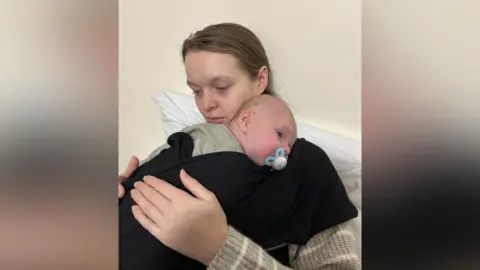
The journey itself was fraught with indignity. Lizzy described the experience of being transported in a hospital car while "soaked in my own urine because I’d been pushing as if I was giving birth again every time I was in psychosis." This initial indignity underscored the lack of immediate, appropriate care. She subsequently spent eight weeks undergoing intensive treatment in Derby. The prolonged separation from her home and support system had a profound impact. Her husband, Adam, faced significant financial strain, spending thousands of pounds on accommodation near the unit to maintain contact. However, his paternity leave eventually ended, forcing him to cease his daily visits.
"I felt really lonely," Lizzy recalled, her voice tinged with the lingering pain of that isolation. "I didn’t have my home comforts around me and I needed Adam, he was missing out on a lot. There were a lot of firsts that Adam was missing out on, and I needed him as well – I was in a depression." The absence of her primary support system during such a vulnerable period undoubtedly prolonged her recovery. Lizzy gradually stabilized, and her section was eventually lifted. However, she firmly believes that being so far from home significantly hindered her healing process. "I was so vulnerable at that time and I needed to be somewhere I could feel safe," she asserted. "If I’d been near York I could have seen friends and family and started integrating back into real life."
Despite the immense challenges, Lizzy has since made a full recovery and returned to work. She credits the MBU staff in Derby with "saving" her life but remains a passionate advocate for the expansion of MBUs nationwide. Her experience is not an isolated incident. A BBC Freedom of Information request revealed that approximately 100 women from across Yorkshire have been sent to MBUs outside their local area over the past five years, with some facing journeys to Birmingham and even London.
Laura Kyrke-Smith, Aylesbury MP and a vocal campaigner for improved perinatal mental health services, described the current situation as a "postcode lottery," with some regions being "complete deserts" for accessible care. She highlighted the devastating statistic that suicide remains the leading cause of death for women between six weeks and one year after giving birth. "The statistics sadly remain that suicide is the leading cause of death for women from six weeks to a year after giving birth, which is shocking and appalling," she stated. "MBUs are the right model of care and any woman who needs it should be able access it."
The MBU in Leeds, the sole facility for Yorkshire, currently has only eight beds, although plans are underway to expand this to 14 in the coming months. Dr. Jessica Heron, chief executive officer of the Action on Postpartum Psychosis charity, emphasized the critical inappropriateness of admitting mothers with severe perinatal mental health conditions to general psychiatric units. "In places where people can’t access MBUs we know they’re likely to be admitted to a general psychiatric unit and that’s totally inappropriate for newly delivered mothers," Dr. Heron explained. "We hear of families very often who are travelling two or three hours for that specialist care. The risks are that women and families turn down that care."
In response to these concerns, a spokesperson for the Department of Health and Social Care stated that women experiencing severe mental illness after childbirth should receive "compassionate, specialist care as quickly as possible, close to home." While acknowledging that decisions on MBU locations are made by local trusts, they pointed to the availability of a "wide range of support" and expansion of mental health services, including an additional £688 million this financial year, the hiring of nearly 8,000 mental health workers, and the expansion of NHS talking therapies.
A spokesperson for NHS England in North East and Yorkshire explained that MBUs are commissioned as specialized services, with concentrated clinical expertise fostered by operating from single, well-resourced units like the one in Leeds. This model, they stated, supports consistent, safe, and high-quality care across the region. They further noted that this "provider collaborative model" promotes collaboration across all Yorkshire and Humber integrated care boards, recognizing the geographical challenges and the necessity of joint working to overcome access barriers.
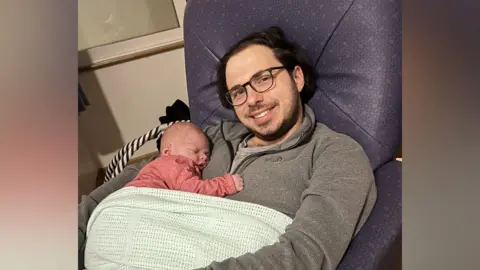
The harrowing experience of Lizzy Berryman serves as a stark reminder of the critical need to address the deficit in specialist mother and baby units. Without increased investment and strategic planning, countless new mothers and their families will continue to face prolonged suffering and potentially tragic outcomes due to a lack of timely and accessible care.




 Nakalama John
 atisusanti
 Ramos Leo
