
 Roy Suryo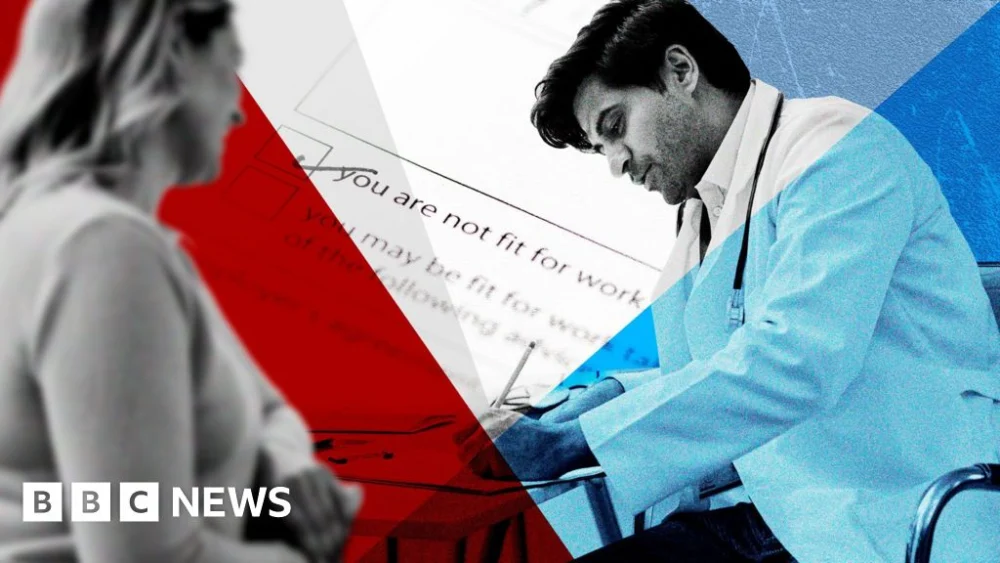
London, UK – In a significant revelation, hundreds of General Practitioners (GPs) across England have informed the BBC that they have never denied a sick note, commonly referred to as a "fit note," to a patient presenting with mental health concerns. This finding emerges from a comprehensive questionnaire distributed by BBC News to over 5,000 GPs, seeking their experiences with issuing these crucial documents for mental well-being.
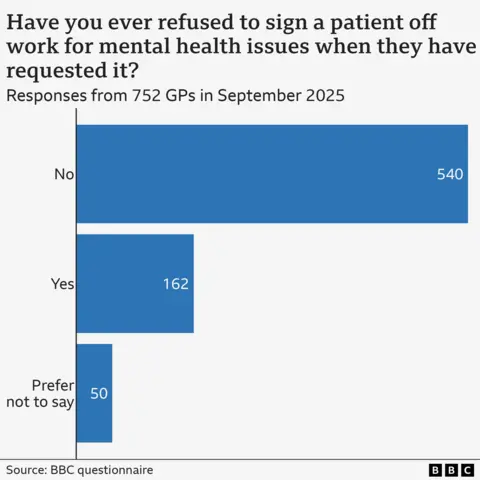
The survey, which garnered responses from 752 GPs, paints a stark picture: a substantial majority, 540 practitioners, reported never having refused a sick note request stemming from mental health issues. Conversely, 162 GPs admitted to having declined at least one such request, while a further 50 opted to withhold their answer. The data underscores a consistent pattern of support for patients experiencing psychological distress.
However, the survey also illuminated a deep-seated frustration among some GPs regarding the current system. Many voiced their belief that the responsibility of issuing fit notes should be removed from their professional remit, arguing that it places them in an untenable position. This sentiment is amplified by instances where patients have exhibited aggressive behaviour when their requests for sick notes were not immediately granted. One particularly concerning anecdote detailed a patient who refused to leave a GP practice until a fit note was issued.
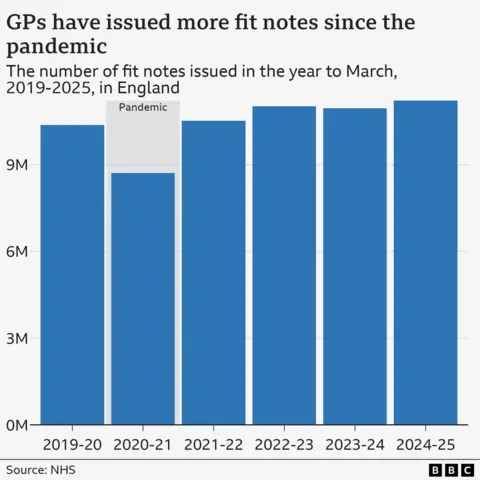
It is important to note that while the BBC’s survey provides valuable insights, the participating GPs may not be entirely representative of the entire GP population in England. Nevertheless, the findings arrive at a time when the issuance of fit notes has seen a consistent upward trend. Official figures reveal that over 11.2 million fit notes were approved by GP practices in England last year alone, an increase of nearly 850,000 over the past six years.

The fit note system is designed to certify a patient’s unfitness for work for periods exceeding seven days. Crucially, these notes do not mandate the specification of the underlying medical reason. In fact, a significant 72% of all issued fit notes omit any explicit reason for absence. Despite this, mental health and behavioural disorders stand out as the most frequently cited reason for absence, accounting for over 956,000 fit notes issued last year, far surpassing any other category of illness.
While GPs are the primary signatories of fit notes, other healthcare professionals, including nurses, pharmacists, physiotherapists, and occupational therapists, are also empowered to issue them. These notes serve a vital function by advising on how a patient’s health condition impacts their capacity to work, and can be instrumental in accessing certain benefits and statutory sick pay. Patients can be certified as "not fit for work" or "maybe fit for work" with recommended adjustments, though the majority of notes result in complete absence from employment.
The qualitative data from the GP questionnaire revealed a recurring theme: the inherent difficulty and perceived unfairness of tasking GPs with determining a patient’s fitness for work. Many expressed the challenge of balancing their role as a healthcare provider with that of an arbiter of employment eligibility, with one GP succinctly stating, "It is hard to be patient’s advocate and a judge."
The current system, according to the GPs, is often perceived as detrimental to the doctor-patient relationship. Patients seek support and understanding, not dismissal, and the role of GPs as "gatekeepers of fitness to work" is seen as an imposition. Some practitioners described the task as "a dirty job" and felt it was not their place to "police the sick note system."
A common practice among many doctors is to issue fit notes for shorter durations than initially requested by patients. This approach is often coupled with explanations to patients about the potential benefits of returning to work for their mental well-being.
The responses also highlighted a discernible spectrum of attitudes towards patients’ requests. While some GPs expressed unwavering trust in their patients’ honesty, many found it particularly challenging to refuse time off for mental health complaints. The inherent subjectivity of mental health conditions poses a dilemma; as one GP articulated, "Who am I to say I don’t believe that someone is struggling with their mental health? It’s not like a chest infection where there is definite proof of illness."
Conversely, a more cynical perspective was also present, with some GPs questioning the authenticity of patients’ claims, accusing them of "milking the system" or being "not genuine." While fit note data does not segment by age, several GPs indicated a perception that younger adults are more inclined to request time off work, with one observing, "We sign off legions of young patients with anxiety and depression who are quite clearly not ill."
A pragmatic approach adopted by some GPs involves signing fit notes only when deemed "medically appropriate." However, others admitted to prioritizing expediency and avoiding conflict, finding it "not worth the grief" or "the hassle" to challenge patients’ requests. The ease and speed of issuing a sick note were often cited as preferable to dealing with potential complaints arising from refusal.
Instances of aggressive patient behaviour were also reported, with one doctor stating, "They argue and fight, we end up having to give in for our own safety." Another echoed this sentiment, remarking, "It would be insane to challenge the patient." This highlights a concerning dynamic where patient pressure can influence medical decisions.
The challenges associated with the current fit note system have not gone unnoticed by governmental bodies. A government-commissioned report from last year, focusing on the role of employers in health and disability, described fit notes as "often problematic." The "Keep Britain Working" review pointed out that GPs frequently lack the requisite time or occupational health training to conduct thorough assessments of an individual’s fitness for work. The report underscored the critical correlation between the duration of absence and the likelihood of returning to work, noting a steep decline in return-to-work rates after just 4-6 weeks of absence.
The Royal College of GPs (RCGP) has acknowledged that GPs may not always be the "most appropriate professionals" for providing long-term support to facilitate a return to work. Professor Victoria Tzortziou Brown, Chair of the RCGP, suggested that GPs should continue to approve fit notes for up to three weeks, but expressed openness to exploring alternative arrangements for longer-term fit note responsibilities.
In response to these challenges, the government has stated its clear intention to reform the current fit note system and is actively piloting new approaches. A spokesperson emphasized the need to "build a system that works for everyone."
Further understanding of these pilot programs reveals that government officials are exploring options such as "stay in/return to work" plans developed in collaboration with businesses and occupational health professionals. The precise nature of these reforms, whether they aim to modify the existing fit note system or replace it entirely, remains to be clarified.
Jaguar Land Rover (JLR) is among the 60 companies actively engaged with officials to explore these innovative solutions. JLR has established six "centres of wellbeing" across the UK, offering a dual focus on preventative care, including exercise classes and health checks, and support for employees requiring physiotherapy, counselling, and occupational health services. Dr. Richard Peters, JLR’s Chief Medical Officer, highlighted the crucial role of businesses in supporting employees with health conditions, stating, "It’s the right thing to do because if we have a healthier staff, then we have a more productive workforce."
However, concerns persist regarding the scalability of such initiatives, particularly for small businesses. The Federation of Small Businesses has voiced apprehension about the potential financial and administrative burdens associated with proposals for small businesses to fund occupational health advice and fit note provision. Tina McKenzie of the Federation stated, "Proposals to make small businesses pay for a service to provide occupational health advice, as well as fit notes, would add to these costs as well as piling on extra bureaucracy."
From the perspective of mental health charities, a cautious approach to any systemic changes is paramount. Tom Pollard, head of policy and campaigns at the mental health charity Mind, stressed the importance of building new systems around "trusting and compassionate relationships," adding, "It is essential that people do not feel they are being forced to work when they don’t feel able to."
Additional reporting by Vicki Loader and Amy Jackson.
Correction 12 March: A previous version of this article stated that occupational health therapists are able to issue fit notes. This has been changed to say occupational therapist.




 Nakalama John
 atisusanti
 Ramos Leo
