
 Roy Suryo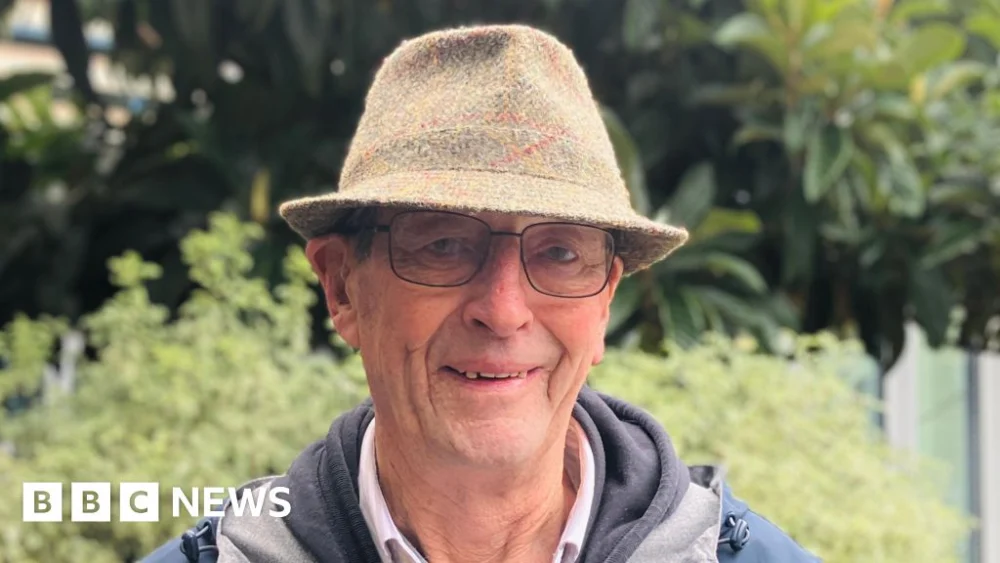
A groundbreaking clinical trial utilising advanced proton beam therapy is offering a beacon of "realistic hope" to patients battling mesothelioma, a devastating cancer primarily caused by asbestos exposure. While a cure for this aggressive disease remains elusive, the innovative treatment aims to significantly improve both the longevity and quality of life for those affected. The North East of England, with its rich industrial heritage, particularly in shipbuilding, bears a disproportionate burden of mesothelioma cases, making this trial particularly poignant for the region.

Ray Turnbull, a resident of Washington, eloquently articulated the deep personal cost of this disease. He has witnessed firsthand the tragic toll of mesothelioma, having lost four beloved family members, including his wife Jean, who was exposed to asbestos as a child. He described the region’s pride in its industrial past, yet acknowledged the "terrible cost" that the cancer has exacted. Annually, approximately 2,700 individuals in the UK are diagnosed with mesothelioma, with the primary culprit being the inhalation of microscopic asbestos fibres.
Dr. Crispin Hiley of University College London Hospitals (UCLH), who is spearheading the trial in collaboration with University College London, underscored the formidable challenge presented by mesothelioma. He explained that conventional radiotherapy poses significant risks, potentially damaging vital organs such as the heart. In contrast, proton beam therapy offers a paradigm shift by delivering a highly precise, high-dose radiation beam directly to the tumour site, minimising collateral damage to surrounding healthy tissues. The trial’s ambitious objective is to elevate two-year survival rates from the current 30% to an encouraging 50%. "If successful," Dr. Hiley stated, "it could fundamentally change how mesothelioma is treated in the UK."
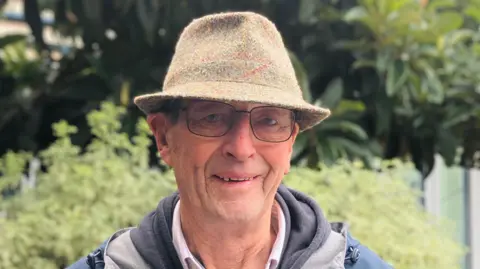
Ray Turnbull’s personal connection to the devastating impact of asbestos exposure is profound. His wife, Jean, passed away in 2009 at the age of 62. Her exposure occurred decades earlier when, as a young girl, she walked past large piles of asbestos material that reminded her of "the white cliffs of Dover." The insidious nature of asbestos-related diseases means that cancer can take many years to develop after initial exposure. Ray’s mother succumbed to the disease in 1979 at 72, and his brother and uncle also tragically lost their lives to mesothelioma. These devastating losses stemmed from their work at the Turner & Newall factory in Washington, a facility that manufactured products containing asbestos.
Ray has become a dedicated advocate for those afflicted by this disease, supporting numerous individuals and bearing witness to the deaths of over 20 others from mesothelioma. Dr. Helen Turnbull, a consultant clinical oncologist at the Northern Centre for Cancer Care at Newcastle’s Freeman Hospital, highlighted that the North East region experiences the highest mortality rate from mesothelioma in the UK, largely attributed to its historical shipbuilding industry. Asbestos, once hailed as a wonder material for its fireproofing, insulation, and strengthening properties, was later discovered to be lethally hazardous when its microscopic fibres were inhaled. The widespread use of asbestos in construction was finally banned in 1999, but the long latency period of mesothelioma means its impact continues to be felt.

Reflecting on the region’s past, Ray recalled the "proud time" when newly built ships would sail down the River Tyne. However, he poignantly added, "But there was a cost, and we are finding out the costs." He shared harrowing anecdotes, such as apprentices engaging in "snowball" fights with asbestos, and the tragic cases of two women who likely inhaled lethal particles while washing their husbands’ contaminated work clothes. Since the 1980s, over 70,000 lives have been lost across Britain due to mesothelioma, with the North East accounting for more than 5,000 of these devastating fatalities.
Dr. Turnbull expressed her profound excitement at being able to offer eligible patients the opportunity to participate in this pioneering trial. To date, approximately 50 patients from across England and Wales have been recruited. The trial aims to enlist a total of 148 individuals from 23 NHS centres. Participants undergo daily proton beam therapy, Monday through Friday, for a period of five weeks. Treatment is administered at either UCLH in London or The Christie NHS Foundation Trust in Manchester. These state-of-the-art proton beam therapy centres were established following the Department of Health and Treasury’s approval of the national NHS Proton Beam Therapy programme in 2015, with an investment of £260 million.
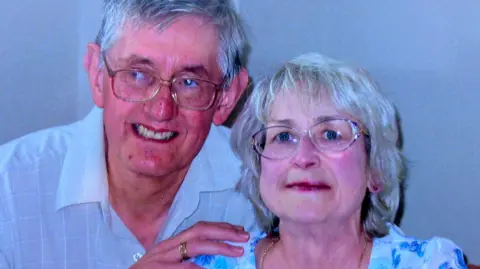
Among the first patients to benefit from this revolutionary trial is 83-year-old Peter Littlefield from Portsmouth. He was diagnosed after experiencing increasing breathlessness and a persistent cough. Doctors informed him that neither chemotherapy nor conventional radiotherapy were suitable treatment options, primarily because the tumour was situated too close to his heart. Peter described his inclusion in the trial as "really unbelievable," emphasizing the profound significance of having the chance to live longer and spend more precious time with his family. "Life is the most precious thing," he stated, "you can’t buy it."
The proton beam centre in London is a marvel of modern medical engineering. Dr. Hiley described it as a "phenomenal piece of infrastructure," featuring a colossal cyclotron buried five stories underground, capable of powering the proton beam continuously, 24 hours a day. While various clinical trials involving proton beam therapy have been conducted and are ongoing, its application for NHS patients has historically been limited to specific types of cancers, particularly those located near vital organs, such as brain tumours, and for younger patients. The NHS reports that the proton beam therapy programme has, to date, provided care for over 5,000 patients.

Dr. Samantha Walker, director of research at Asthma + Lung UK, emphasized the critical importance of this research for addressing what she termed a "devastating condition." Liz Darlison, chief executive of Mesothelioma UK, voiced the nation’s shame at having the highest incidence of mesothelioma globally and stressed the urgent need for continued research. For individuals like Ray Turnbull, whose family has been profoundly impacted by this disease, the trial represents more than just medical advancement; it offers "realistic hope."




 Nakalama John
 atisusanti
 Ramos Leo
