
 Ramos Leo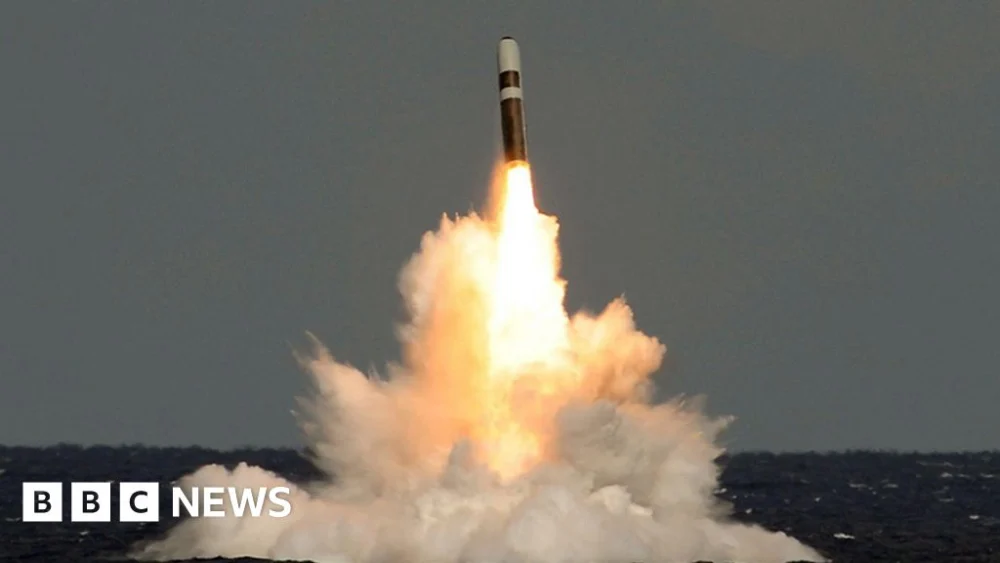
Currently, the UK operates its nuclear deterrent under a unique arrangement with the United States. While Britain proudly designs and manufactures its own nuclear warheads, and maintains full operational control over its arsenal, the delivery mechanism – the Trident D5 ballistic missiles – are procured, maintained, and serviced by the US under a technology-sharing agreement dating back to the 1960s. This partnership underpins the UK’s Continuous At-Sea Deterrence (CASD), where at least one Vanguard-class submarine, armed with these missiles, is always on patrol, providing a credible and robust deterrent. However, this deep integration means that any disruption to the US supply chain or a shift in American foreign policy could theoretically compromise the UK’s ultimate defence capability.
Sir Ed Davey explicitly linked his proposal to concerns over the potential unreliability of future US administrations, particularly referencing former President Donald Trump. He argued that the political shifts seen in Washington have highlighted the vulnerability of depending on another nation, even a close ally, for such a critical aspect of national defence. "Trump has proven we can’t rely on America as a dependable ally," Sir Ed stated, underscoring the urgency for Britain to forge its own path. This sentiment reflects broader anxieties across Europe regarding the future direction of US foreign policy and its commitment to alliances like NATO, especially in a multipolar world where geopolitical certainties are eroding.
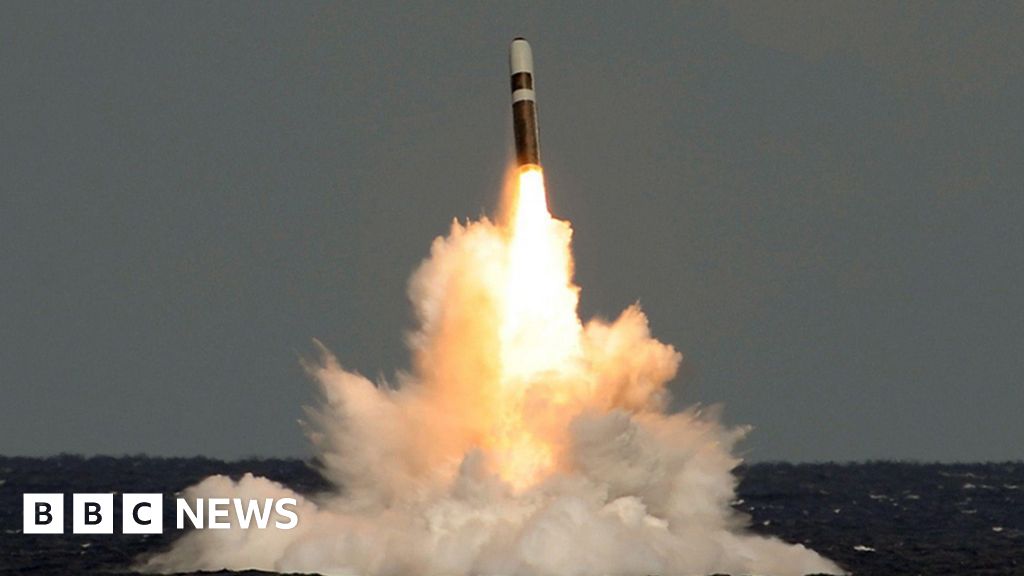
The Liberal Democrat leader proposes a two-stage approach to achieving this full independence. The immediate focus would be on developing the domestic capability to maintain the existing Trident weapons system. This would involve significant investment in UK-based research, engineering, and manufacturing to produce the necessary components and expertise currently supplied by the US. The longer-term objective, coinciding with the planned replacement of the current Trident system in the 2040s, would be the complete design and manufacture of a wholly British-made ballistic missile. Sir Ed emphasized that the UK possesses the necessary intellectual capital and industrial prowess. "Britain has the best scientists, the best engineers, the best builders in the world. So let’s get building our own, truly independent nuclear deterrent here in the UK," he declared, framing it as an opportunity to bolster domestic industry and high-skilled employment.
The historical trajectory of Britain’s nuclear programme illustrates a gradual shift towards this reliance. The UK was the third nation globally to develop nuclear weapons, detonating its first atomic bomb in 1952. Initially, its deterrent was air-launched via V-bombers. However, the escalating costs and technological complexities of missile development led Britain to seek collaboration with the US. The 1962 Nassau Agreement cemented the deal for the UK to acquire Polaris submarine-launched ballistic missiles, later replaced by the more advanced Trident D5 system in the 1990s. This arrangement offered a cost-effective solution, leveraging US technological advancements while retaining the UK’s independent right to fire its warheads. While the Prime Minister holds the ultimate authority to launch the missiles, Britain’s nuclear arsenal also contributes to NATO’s overall defence posture, reflecting its dual role as a sovereign deterrent and an alliance asset.
However, the path to a fully independent deterrent is fraught with significant challenges, primarily financial. The Liberal Democrats have not yet provided a detailed cost estimate for their proposal, acknowledging only that it would "far exceed the billions being spent on the planned replacement for Trident." The current Dreadnought-class submarine programme, which will carry the existing Trident missiles, is already projected to cost well over £30 billion, with lifetime costs estimated to be much higher. Developing a new, indigenous ballistic missile system from scratch would necessitate colossal investments in advanced materials research, propulsion systems, guidance technology, and extensive testing facilities – costs that could run into hundreds of billions over several decades. Such an undertaking would represent one of the largest and most complex defence procurement projects in British history, potentially diverting substantial resources from other pressing public services or conventional defence capabilities.
The proposal draws inspiration from France, the only other European nation possessing nuclear weapons, which has steadfastly maintained a fully independent system. France’s "Force de Frappe" (strike force) consists of both submarine-launched ballistic missiles and air-launched cruise missiles, all indigenously developed and manufactured. This sovereign capability has long been a cornerstone of French strategic autonomy and national pride. The Lib Dems argue that France’s example proves that a fully sovereign British capability is achievable, despite the considerable financial and technical hurdles. However, critics might point to France’s differing defence industrial base, its historical commitment to strategic independence, and the immense cumulative investment made over decades, questioning the feasibility for the UK to replicate this without severe economic strain.
The government has predictably pushed back against Sir Ed Davey’s call, emphasizing the strength and reliability of the existing Anglo-American defence relationship. A Ministry of Defence spokesperson reiterated: "Our independent nuclear deterrent protects us every minute of every day and is the ultimate guarantee of our national security." They further highlighted that the "deep and longstanding relationship with the US" plays a crucial part in the security of NATO. The government maintains that the current arrangement is robust, cost-effective, and ensures interoperability with its closest ally. The 2021 Integrated Review of Security, Defence, Development and Foreign Policy (which the original article misidentified as the 2025 Strategic Defence Review) explicitly reaffirmed that a modernised nuclear deterrent, delivered through the existing framework, "will remain the cornerstone of the UK’s defence, and our commitment to Nato and global security."
The Liberal Democrats’ stance marks a notable evolution for a party traditionally associated with multilateral disarmament. Historically, significant factions within the party have advocated for the abolition of nuclear weapons altogether. While party sources insist that the long-term goal of multilateral disarmament remains, they acknowledge the necessity to "reflect the reality of the global situation." This pragmatic shift suggests an adaptation to the current geopolitical climate, where Russia’s aggression in Ukraine, China’s military expansion, and the proliferation of nuclear technology have heightened concerns about global stability. By advocating for an independent deterrent, the Lib Dems seek to present themselves as a serious party of national security, capable of pragmatic and robust policy-making in an uncertain world, while also carving out a distinctive position from both the Conservatives and Labour on a fundamental defence issue. This proposal will undoubtedly spark extensive debate on the future of Britain’s defence posture, its strategic alliances, and the immense financial implications of true nuclear independence.




 Roy Suryo

 Nakalama John
 atisusanti
