Ramos Leo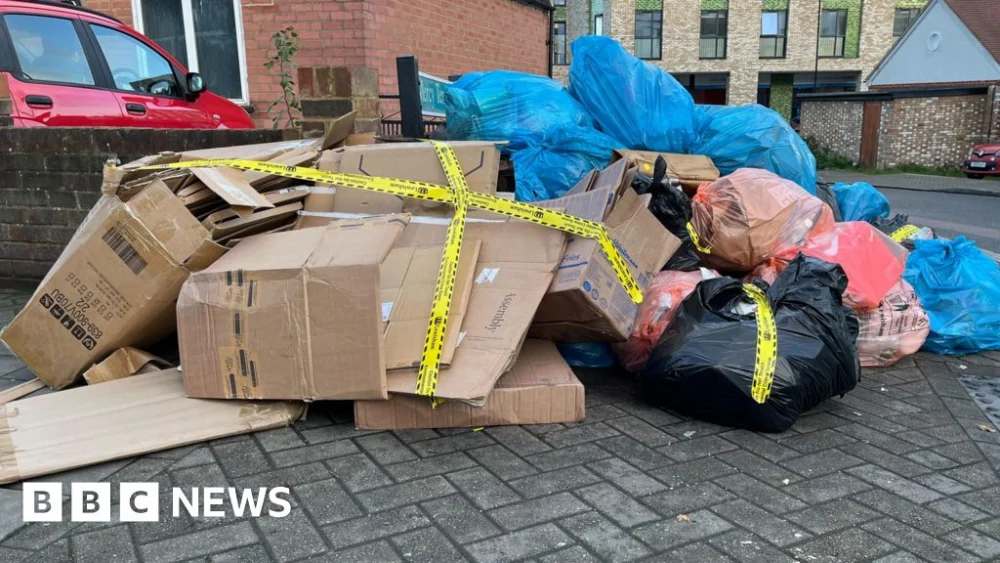
Environment Secretary Emma Reynolds articulated that these new measures are designed to "empower local authorities to deal with fly-tipping" more effectively. Her statement underscores a governmental push to give local councils enhanced tools to combat a pervasive issue that blights communities and drains public resources. The proposal forms a central pillar of the Department for Environment, Food and Rural Affairs’ (Defra) new "Waste Crime Action Plan," a comprehensive strategy announced with the stated ambition to "restore pride in Britain’s neighbourhoods" by tackling waste crime head-on. This plan acknowledges that fly-tipping is not merely an aesthetic problem but a serious environmental and economic one that demands robust and innovative enforcement.
The sheer scale of fly-tipping incidents across the country highlights the urgent need for more stringent measures. Government figures for the year 2024 to 2025 reveal that councils in England alone had to contend with a staggering 1.26 million fly-tipping incidents. A significant proportion of these, 62%, involved household waste, ranging from discarded furniture and appliances to bags of general refuse, dumped illegally on streets, rural lanes, and public land. This staggering number translates into a substantial financial burden for local authorities, who bear the responsibility and cost of clearing up the mess. The Environmental Services Association (ESA) estimates that the overall cost to the UK economy for tackling waste crime, including fly-tipping, runs to an alarming £1 billion each year in England alone. This figure encompasses not just the direct cleanup expenses but also associated costs such as investigation, prosecution, and the broader environmental damage.
Currently, fly-tipping is designated as a criminal offence under the Environmental Protection Act 1990. The legislation provides courts with a range of powers to penalise offenders, including unlimited fines and even imprisonment for serious cases. However, despite these existing deterrents, the problem persists and, in some areas, appears to be escalating. A report published by the House of Lords in October underscored this challenge, finding that efforts to tackle serious waste crime have been "critically under-prioritised." This suggests a systemic issue where enforcement resources or judicial focus may not have been adequately aligned with the gravity and prevalence of the crime. The introduction of penalty points aims to bridge this gap by offering a more immediate and tangible consequence that could be more consistently applied and understood by potential offenders.
The concept of penalty points for fly-tipping integrates this environmental crime with the established framework of driving offences, which is a system widely understood by the public. For many individuals, the threat of losing their driving licence can be a far more significant deterrent than a monetary fine, particularly if they rely on their vehicle for work or daily life. The mechanics would likely involve local authorities or environmental enforcement officers gathering evidence, identifying the vehicle used in the offence, and then issuing points through a process similar to how speeding tickets or other driving infractions are handled. This would require close collaboration between local councils, police forces, and the Driver and Vehicle Licensing Agency (DVLA) to ensure smooth implementation and record-keeping.
The impact of fly-tipping extends far beyond the financial cost of cleanup. Environmentally, it can lead to soil and water contamination, harm to wildlife, and the degradation of natural habitats. Aesthetically, it creates unsightly landscapes that diminish the quality of life for residents and deter tourism. Socially, it can foster a sense of neglect and disorder, potentially attracting further anti-social behaviour. The environmental charity Keep Britain Tidy defines fly-tipping as the illegal deposit of any waste onto land that does not possess a licence to accept it. This definition encompasses everything from a single bin bag left by the roadside to vast quantities of commercial or industrial waste.
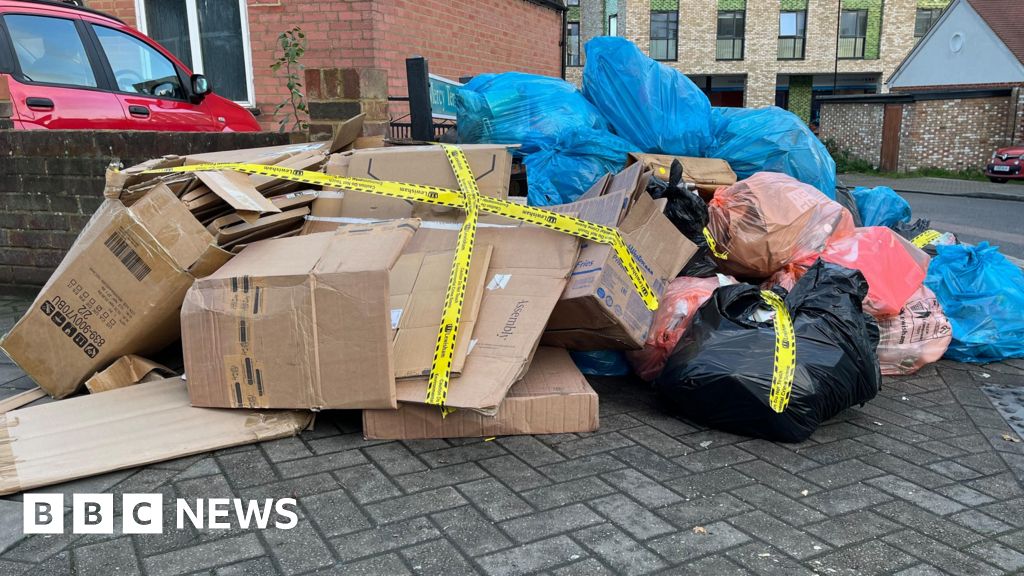
A particularly egregious example that highlighted the severity of the issue and garnered national attention occurred in November, when a "mountain" of fly-tipped waste in Oxfordshire made headlines. The sheer scale of the illegal dumping prompted significant public outcry and even drew comment from political leaders. The Prime Minister at the time was questioned about the incident by Liberal Democrat leader Sir Ed Davey, underscoring the political pressure to address the problem. Separately, then-Leader of the Opposition, Sir Keir Starmer, had stated at the time that "all available powers" would be utilised to ensure those responsible for the Oxfordshire waste paid for its clean-up. This incident served as a stark reminder of the challenge and the public’s demand for decisive action.
Reacting to the government’s proposals, Tim Farron MP, the Liberal Democrats’ environment spokesperson, welcomed the attention but argued that the government must go further. Farron emphasised the need to clamp down "on criminal gangs who make millions in illegal earnings for industrial fly-tipping." He suggested that while individual penalty points are a step, they might not be sufficient to tackle the organised criminal enterprises that profit from large-scale waste dumping. The Liberal Democrats have previously called for an independent review of the entire waste crime system and for the National Crime Agency (NCA) to take over investigations from the Environment Agency in the most serious cases, believing this would bring a higher level of investigative power and resource to combat sophisticated criminal networks.
The debate surrounding fly-tipping solutions often revolves around a multi-pronged approach: prevention, deterrence, and effective enforcement. Prevention includes public awareness campaigns, accessible and affordable waste disposal options, and stricter regulations for waste carriers. Deterrence involves visible enforcement, such as CCTV cameras in known hotspots, and robust penalties. Effective enforcement requires adequate resources for local authorities and environmental agencies to investigate, gather evidence, and prosecute offenders. The introduction of penalty points on driving licences is a significant step in enhancing the deterrence aspect, making the consequences for individuals more personal and impactful.
However, the success of these new measures will hinge on several factors. Local authorities will need sufficient resources, training, and clear guidelines to implement the penalty point system fairly and consistently. There will also be a need for public education to ensure that drivers are fully aware of the new risks associated with fly-tipping. Furthermore, while penalty points might deter individual acts of dumping, the government will still need to address the broader issue of organised waste crime, as highlighted by the Liberal Democrats. This could involve strengthening intelligence gathering, enhancing cross-agency collaboration, and potentially increasing the powers of environmental agencies to tackle complex criminal operations.
Ultimately, the proposal to introduce penalty points for fly-tipping marks a notable shift in the government’s strategy. By directly linking environmental crime to driving privileges, it aims to create a more potent deterrent and reinforce the message that illegal waste disposal will not be tolerated. While it represents a step forward, its true effectiveness will be measured by its ability to reduce the staggering number of fly-tipping incidents, alleviate the burden on local councils, and genuinely restore pride in Britain’s neighbourhoods.




 Roy Suryo

 Nakalama John
 atisusanti