
 Ramos Leo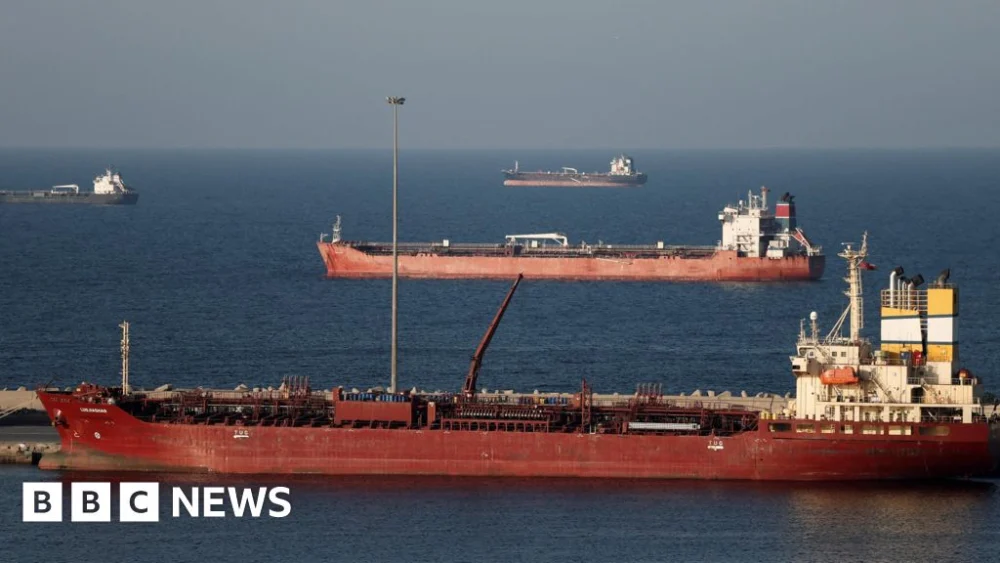
The urgency of the situation was significantly amplified by US President Donald Trump’s unequivocal statement on Saturday, where he threatened to force the channel open "one way or another." Trump further called upon key international partners, including the UK, China, and France, to dispatch warships to the contested waterway. His remarks underscored a growing frustration within Washington over the perceived lack of sufficient international support in confronting Iranian aggression and securing a passage vital to the global economy. The US stance reflects a determination to maintain freedom of navigation, a principle it views as non-negotiable in international waters.
Speaking on BBC One’s "Sunday with Laura Kuenssberg programme," Miliband articulated that reopening the Strait of Hormuz was a "priority" not just for the UK, but for the entire world. He confirmed that "different ways we can contribute" were under active review, explicitly mentioning the potential deployment of "mine-hunting drones." When pressed by interviewers about whether the UK was contemplating sending naval vessels or these specialized drones to the region, Miliband maintained a cautious diplomatic posture. "You can rest assured that any options that can help to get the strait reopened are being looked at in concert with our allies," he reiterated, deliberately avoiding any operational specifics. His emphasis on allied cooperation signals a desire for a multilateral approach rather than unilateral action, reflecting the complex and sensitive nature of the region.
The escalating crisis stems from a broader, more entrenched conflict between the US and Israel on one side, and Iran on the other, now entering its third week. According to a statement attributed to Iran’s new Supreme Leader, Mojtaba Khamenei, Tehran is resolute in its decision to maintain the blockade of the strait. This move is intended as a potent form of political and economic leverage against the United States, designed to exert maximum pressure in response to sanctions and military actions. The Iranian leadership views the strait as a strategic asset, capable of disrupting global energy markets and forcing international powers to reconsider their policies towards the Islamic Republic.
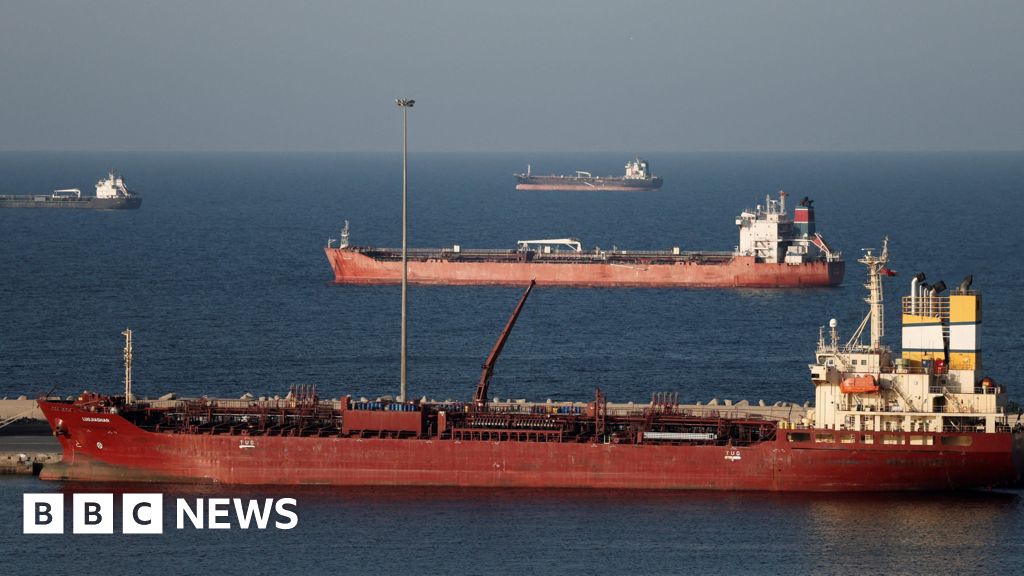
Reports from the region indicate a perilous environment for shipping. A number of vessels have reportedly come under attack while attempting to navigate the narrow maritime passage. Compounding these dangers are grave concerns that Iran has strategically placed naval mines within the strait, an aggressive tactic aimed at further hindering and deterring international shipping. These actions pose a direct threat to the approximately 20% of the world’s oil supply that typically transits through this vital chokepoint. The disruption of such a significant volume of energy trade, estimated by the US Energy Information Administration to be around 20 million barrels per day in 2025 – translating to nearly $600 billion (£447 billion) worth of energy trade annually – would have profound and immediate repercussions for global energy prices, supply chains, and economic stability. Major economies heavily reliant on Middle Eastern oil, such as China, Japan, India, and various European nations, would face severe economic headwinds, potentially triggering a global recession.
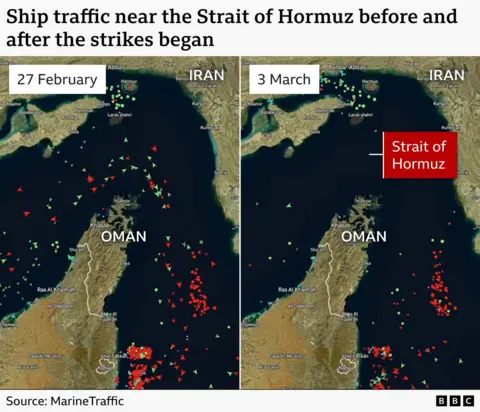
Visual evidence from maritime tracking services like MarineTraffic underscores the severity of the situation. Satellite imagery comparing ship traffic near the Strait of Hormuz on February 27th and March 3rd revealed a stark and concerning decline. The earlier map displayed dense clusters of commercial vessels on both sides of the strait, indicative of bustling trade. However, the subsequent map, just days later, showed noticeably fewer vessels, particularly near the critical chokepoint. This dramatic reduction in traffic serves as a clear indicator of the increasing apprehension among shipping companies and insurance providers, many of whom are either rerouting vessels, delaying passages, or ceasing operations in the area altogether due to the perceived threat.
Beyond immediate military considerations, Miliband firmly reiterated that "ending the conflict is the best and surest way to get the strait reopened." This statement highlights the UK government’s underlying preference for a diplomatic resolution to the wider US-Israeli-Iranian conflict, recognizing that sustained military intervention to secure the strait without addressing the root causes of the tension would be an unsustainable long-term strategy. The UK appears to be walking a tightrope, balancing its commitment to international maritime law and its alliance with the US, with a desire to de-escalate regional tensions and avoid getting drawn deeper into a protracted conflict.
The unfolding crisis has also ignited a spirited debate within the UK’s domestic political arena, exposing divergent views on the appropriate British response. Speaking later on the same BBC programme, Claire Coutinho, the Shadow Energy Secretary for the Conservative party, offered a contrasting perspective to Miliband’s more cautious stance. Coutinho asserted that the UK should indeed explore sending ships or drones to the Middle East if such actions were deemed to be in the national interest. She emphasized that it was unequivocally in the UK’s strategic interest to ensure the reopening of international shipping lanes and to protect British military assets stationed abroad. Critiquing the Labour government’s initial handling of the wider conflict, Coutinho added that the Conservative party would have allowed its US allies to utilize UK military bases much more swiftly than the Labour administration had. This criticism underscores a perceived hesitancy by Labour in fully supporting US operations, contrasting with the Conservatives’ historical alignment with Washington.
In stark opposition, Sir Ed Davey, the leader of the Liberal Democrats, vehemently argued against sending UK ships to help secure the strait. Instead, Sir Ed called for the UK to concentrate its efforts on "de-escalating" the ongoing war, which he described as "illegal and damaging." He launched a scathing attack on President Trump, branding his actions as "very reckless" and asserting that the American president "does not seem to know what he is doing." Sir Ed’s position reflects a deep skepticism about the efficacy and morality of military intervention, particularly when it aligns with a US foreign policy that he views as erratic and destabilizing. He contended that Britain should not become a pawn "at the beck and call of an American president" whose judgment he questioned, advocating for an independent British foreign policy focused on diplomatic solutions and peace.
The UK’s involvement in the broader conflict has been a source of internal political contention and external diplomatic friction. After initially showing reluctance to allow the US to use UK bases for offensive operations against Iran, Prime Minister Sir Keir Starmer eventually granted permission for "defensive" US actions from RAF Fairford in Gloucestershire and Diego Garcia in the Indian Ocean. This concession was made while Starmer publicly maintained that the UK did not believe in "regime change from the skies," attempting to delineate a specific, limited scope for British support. However, this nuanced approach did not escape criticism from Washington. President Trump had previously branded Sir Keir "no Winston Churchill" over his cautious approach to the conflict, and just the week prior, he had openly stated that the US did not require the UK to send aircraft carriers to the region, accusing the prime minister of seeking to "join wars after we’ve already won." These remarks highlighted a strain in the traditionally close "special relationship" between the two nations, with Trump appearing to question the UK’s commitment and strategic value.
Adding a tangible military dimension to the ongoing developments, two US B-1 Lancer bombers were observed taking off from RAF Fairford on Sunday. These formidable aircraft, renowned as the fastest bombers in the US Air Force according to Boeing, are capable of carrying the largest payload of weapons among the three large strategic US Air Force bombers deployed in the war (the others being the B-52 and the B-2 stealth aircraft). The B-1s are typically armed with powerful "bunker buster" bombs and an array of cruise missiles, signifying their capacity for significant strike operations. The bombers were expected to undertake a mission involving approximately seven to eight hours of flight time to reach Iranian airspace, culminating in a total mission duration of around 15 hours. The deployment of such advanced and destructive assets from a UK base underscores the gravity of the situation and the depth of the US military’s resolve, while also highlighting the UK’s continued, albeit carefully managed, role in supporting its principal ally in a volatile and increasingly dangerous region. The unfolding situation in the Strait of Hormuz remains a critical test of international diplomacy, military strategy, and global energy security.




 Roy Suryo

 Nakalama John
 atisusanti
