Nana Banana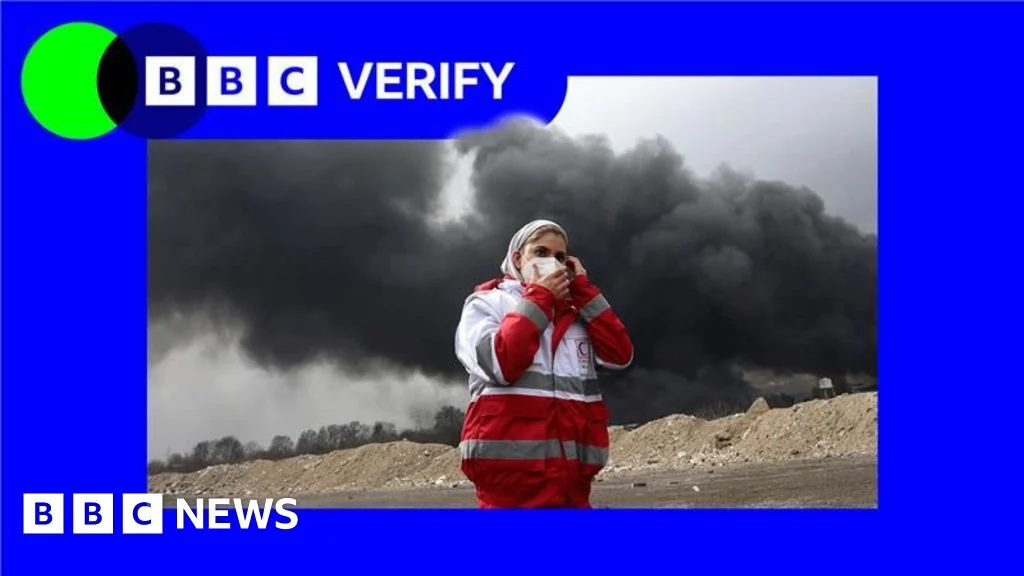
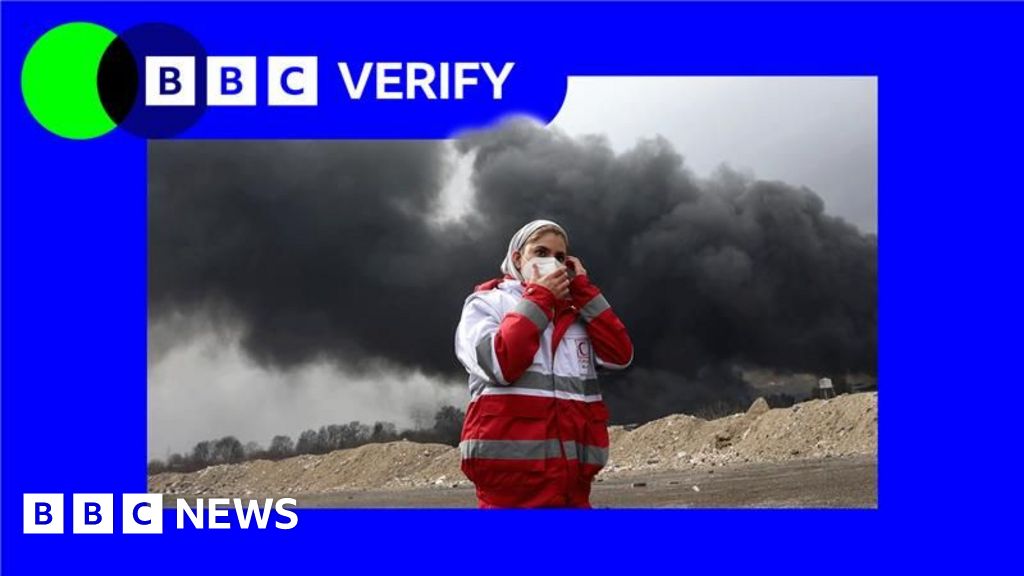
Smoke plumes, thick and dark, caused by devastating oil depot and refinery strikes, drifted ominously across Tehran on Monday, transforming the city’s sky into a canvas of grey and black. Satellite images confirmed the widespread aerial contamination, arriving as the World Health Organization (WHO) issued a stark warning that these relentless attacks on critical oil infrastructure posed severe and unprecedented health risks to the densely populated capital and its residents.
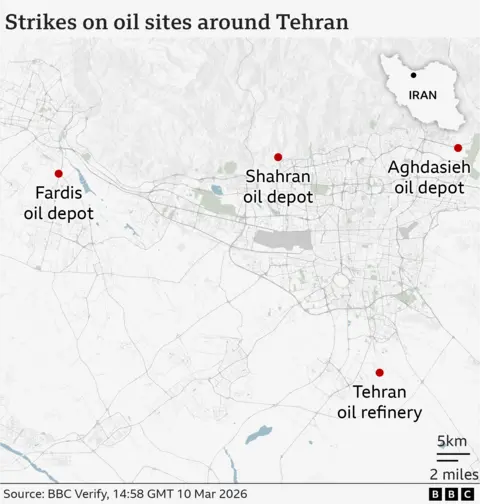
Since a series of US-Israeli attacks on Iran commenced on February 28, BBC Verify has meticulously confirmed strikes on at least four distinct oil facilities strategically located around Tehran. These include the Fardis oil depot, Shahran oil depot, Aghdasieh facility in the northern parts of the city, and the sprawling Tehran oil refinery in the south-east. The cumulative impact of these assaults has been immediately palpable. Residents reported an oppressive smog and pollution so dense it obscured the sun, plunging parts of the city into an unnatural gloom. A pervasive, acrid smell of burning hydrocarbons hung heavy in the air, a constant reminder of the ongoing catastrophe. Experts, analyzing the scale and nature of the released pollutants, cautioned that the environmental fallout could be "unprecedented" in its scope and complexity.
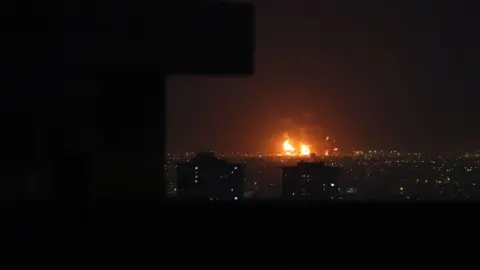
The surge in air pollution is demonstrably concentrated near the damaged oil sites, directly impacting Tehran, a metropolis home to nearly 10 million people, with millions more residing in its immediate surrounding areas. Latest satellite pictures, captured on March 9 and rigorously reviewed by BBC Verify, showed two major oil facilities around Tehran still ablaze, days after reported air strikes overnight on Saturday. These images specifically highlighted persistent smoke emanating from the Shahran depot in the north-west of the Iranian capital and the Tehran oil refinery in the south-east. Verified video footage captured in the immediate aftermath of Saturday’s strike vividly depicted colossal fireballs erupting and illuminating the night sky at the refinery, a terrifying spectacle for those living nearby.
The combination of natural cloud cover and the immense smoke plumes billowing from the ongoing fires has, as yet, prevented a comprehensive assessment of the full extent of the damage at either oil facility hit over the weekend. However, ground-level images taken at Shahran on Sunday morning offered a grim picture: emergency workers navigating through the wreckage, inspecting burned-out oil tankers, sifting through blackened buildings, and battling fiercely blazing fires that continued to rage. The Israel Defense Forces (IDF) had claimed responsibility for hitting "fuel depots" near Tehran in a post on X on March 7, even including a photograph purporting to show damage to the Tehran oil refinery. When BBC Verify provided the precise coordinates of this facility, alongside three other identified locations, to both the IDF and the Pentagon for comment, the Pentagon offered no reply. The IDF, however, responded by stating there were "no IDF strikes at those sites," prompting BBC Verify to seek further clarification on the conflicting statements.
The deliberate targeting of oil refineries carries the potential for catastrophic air pollution due to the sheer diversity and volume of chemicals they process and store. When oil and its derivatives undergo incomplete combustion – a scenario common in fires where oxygen supply is limited – the burning process releases not just carbon dioxide and water, but a dangerous cocktail of carbon monoxide, dense soot particles, and unburnt hydrocarbons. Moreover, these fires can unleash significant quantities of sulphur and nitrogen oxides into the atmosphere. These gases, when dissolved in rainwater, can form potent acids, contributing to acid rain. Beyond these, a myriad of other harmful hydrocarbons, various metallic compounds, and fine droplets of oil are aerosolized, creating a toxic plume that spreads far and wide.
The immediate impact on the city’s inhabitants has been profound and distressing. A Tehran woman in her 20s, speaking to BBC Persian on Saturday, described her ordeal: "I can smell the burning caused by the attacks on oil facilities. I can’t see the Sun. There is horrible smoke. It’s still there. I’m very tired." This sentiment resonates with countless others experiencing compromised visibility, respiratory discomfort, and a pervasive sense of unease.
Accurate, real-time assessment of the air pollution’s precise composition and concentration remains challenging. Ground-based measurements are scarce or non-existent, and satellite data, while indicative, is notoriously difficult to interpret precisely due to dynamic factors like shifting winds, varying cloud cover, and the complex interplay of different atmospheric conditions. Nevertheless, given the unparalleled mix of chemicals almost certainly released from the damaged oil sites, scientists harbor little doubt that the resultant pollution is both exceptionally harmful and extreme. It represents a stark departure from the more commonly understood urban smog often seen in megacities like Beijing or Delhi, which typically consists of industrial emissions and vehicular exhaust.
Dr. Akshay Deoras, a research scientist at the University of Reading, underscored the unique nature of the crisis: "What has happened [in Iran] is definitely unprecedented because it’s all coming in from missiles dropping in and airstrikes on oil refineries." He highlighted that while many conflicts generate high levels of dust and general particulate pollution, the specific "basket" of different chemicals released in this instance is "definitely unusual." Professor Eloise Marais, an expert in atmospheric chemistry and air quality at University College London, concurred, stating that such a complex and severe pollution event would typically only be witnessed during "a very, very severe industrial accident where an entire refinery explodes."
Adding another layer of environmental concern, Tehran residents reported widespread downpours of "black rain" on Sunday. This informal, yet vividly descriptive, term refers to rainfall that has become heavily contaminated with pollutants, acquiring a dark, often inky, hue. While it is a natural atmospheric process for airborne pollutants to be "washed out" of the air by precipitation, black rain is a rare phenomenon, signaling exceptionally high concentrations of soot and other airborne particulate matter, as scientists explained to BBC Verify. "The raindrops acted like little sponges or magnets, collecting whatever was in the air as they fell, which is why residents observed what’s being described as ‘black rain’," elaborated Dr. Deoras. It is also plausible that some larger, heavier particles may have simply fallen out of the air, settling on surfaces even without the aid of rain.
The implications for public health are profound. The head of the WHO, Dr. Tedros Adhanom Ghebreyesus, has already voiced "great concerns" regarding the wide-ranging health impacts of the ongoing conflict. He specifically warned that damage to oil facilities "risks contaminating food, water and air – hazards that can have severe health impacts especially on children, older people, and people with pre-existing medical conditions."
These "very intense exposures of particulates have immediate impacts on the lungs," explained Anna Hansell, professor of environmental epidemiology at the University of Leicester. She further cautioned that "they can also have quite long lasting effects over many years afterwards, on both respiratory systems and increasing cancer risk." Acute symptoms can include severe coughing, shortness of breath, exacerbation of asthma and other respiratory conditions, and irritation of the eyes and skin. Long-term exposure to the cocktail of heavy metals, volatile organic compounds (VOCs), and polycyclic aromatic hydrocarbons (PAHs) released from burning oil can lead to chronic obstructive pulmonary disease (COPD), cardiovascular diseases, and various forms of cancer.
Doug Weir, director of the Conflict and Environment Observatory, highlighted a critical aspect of this crisis: "What’s unusual about Tehran is we haven’t observed these attacks in such a densely populated area before." Unlike many oil field sites that are often situated in remote countryside locations, the strikes near Tehran directly expose millions of people to a "huge range of substances in this black rain – not just oil." This proximity dramatically escalates the immediate and long-term health risks for a vast urban population.
Looking ahead, BBC Weather forecasts suggest spells of rain for Tuesday and again from Thursday onwards, accompanied by a stronger breeze. While these meteorological conditions are expected to aid in the dispersal and washing away of some airborne pollutants, they do not eliminate the risks entirely. The pollutants, once brought down by rain, can enter rivers, streams, and other waterways, contaminating vital water sources. If they settle on the ground and the surface subsequently dries, winds can easily pick them up again, resuspending them in the air and perpetuating the cycle of exposure. This environmental redistribution means the problem merely shifts from the air to the water and soil, posing ongoing challenges for environmental cleanup and long-term public health.
Additional reporting: Ghoncheh Habibiazad, Paul Brown, Rollo Collins, Shayan Sardarizadeh, Farida Elsebai and Daniel Wainwright



 George Anjay
 Ramos Leo