
 Ramos Leo
The government, represented by a spokesperson, defended the proposed reforms, asserting, "We’re simplifying local government and ending confusing two-tier structures in Essex, so these authorities work better for local people." This statement highlights the core rationale behind the reorganisation: to streamline services, reduce bureaucracy, and enhance accountability by moving from the current two-tier system (comprising a county council and numerous district/borough councils) to a single-tier, unitary model. Proponents argue that such a shift will eliminate duplication of effort, save taxpayer money, and provide a clearer point of contact for residents accessing public services.
Farage’s remarks were made during a campaign visit to Corringham, a town within the Thurrock unitary authority area, ahead of the local elections scheduled for May 7. His presence in Corringham, a location grappling with its own local governance challenges and a proposed merger, underscored the urgency and local impact of the debate. He articulated his concerns passionately, questioning the very premise of the reform: "The idea that you take the county of Essex, you carve it up into a series of unitaries, you then impose a mayor upon it – nobody here has asked for massive local government change." He further stressed, "Nobody here has asked for Essex to have a mayor," reflecting a common sentiment among those wary of top-down administrative impositions.
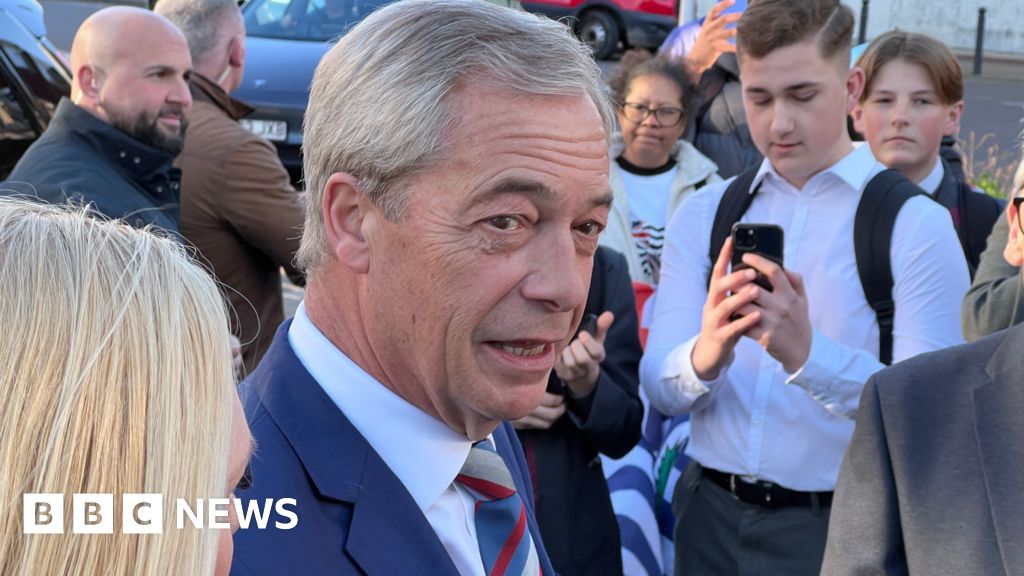
Central to Farage’s argument is the potential erosion of a distinct regional identity. He warned, "I think the danger is that you get rid of the county council… and you begin to lose a sense of what Essex as a county is." For many, the county council embodies the historical and cultural continuity of Essex, overseeing services like education, social care, and highways for a vast, diverse population. Replacing this with a fragmented system of smaller, independent unitary authorities, even if overseen by a regional mayor, risks diluting this shared identity and fostering a sense of disconnection from the broader county. Reform UK, he affirmed, would actively work to prevent these reforms from being implemented.
The current proposals represent the culmination of years of discussions and planning, marking potentially the most significant reshaping of local democracy in Essex in half a century. Various councils and political parties have contributed to these discussions, each with their own vision for the county’s future. The fundamental aim for many is the creation of fewer, larger, all-purpose unitary councils, which are widely expected to deliver significant cost savings through economies of scale and administrative efficiencies. This simplification is also intended to make local government easier for residents to navigate, replacing a sometimes confusing system where responsibilities are split between different tiers.
However, opponents of the unitary model, including Farage, contend that while it might simplify administration, it could simultaneously render local government less "local." They argue that councillors in unitary authorities would represent much larger geographical areas and populations, potentially leading to a diminished connection with their constituents and a less granular understanding of local needs and concerns. This concern resonates deeply with those who value proximity and accessibility in their local representatives, fearing that larger administrative units could lead to a more distant and less responsive form of governance.

The Reform UK leader’s stance, however, has drawn sharp criticism from those deeply involved in the reform process. Deputy county council leader Louise McKinlay, a Conservative, dismissed Farage’s comments, stating, "it just demonstrates Nigel Farage knows nothing about local government." McKinlay, a strong proponent of the three-unitary model for Essex and the Conservative mayoral candidate for Greater Essex, highlighted the pressing challenges faced by the existing two-tier councils. "We know the financial pressures are there. It is only going to get harder," she warned, referencing the ever-increasing demands on public services, particularly in areas like social care. She argued that a "joined approach through the councils coming together we will be in a much stronger place" to address these pressures and "do more for our county."
The debate is further complicated by a lack of consensus even within political parties. While McKinlay and most Conservative council leaders support the three-council option, some Tory MPs have expressed a preference for a five-council model. This five-council option also enjoys wide support among Labour and Liberal Democrat groups, illustrating the cross-party appeal of different reform configurations. Adding another layer of complexity, the Labour-run Thurrock Council has proposed a four-council model, demonstrating the diverse range of opinions on how best to restructure the county.
These internal disagreements prompted the Labour leader of Basildon Borough Council, Gavin Callaghan, to declare in January: "There is now no doubt that LGR in Essex is over." His statement reflected the frustration and perceived impasse among local leaders struggling to unify behind a single plan. However, McKinlay countered this pessimism, emphasizing the significant investment already made in the reform process. She warned that if the plans "unravels it is simply going to mean there’s going to have been a lot of wasted time, effort, energy, money, collaboration and focus which we have all put in cross-party, across the county." Furthermore, she stressed the future implications, stating, "Going forward it will be mean we can’t take advantage of the economies of scale" that the reforms promise.

Intriguingly, Farage’s position on the Essex reorganisation is not universally shared within his own party. Peter Harris, Reform UK’s Greater Essex mayoral candidate and Farage’s election agent in Clacton, has previously voiced support for the reforms. In January, Harris stated, "We need to get behind [local government reform] and make sure that it happens," indicating a nuanced and sometimes conflicting view within Reform UK on this complex issue. This divergence highlights the practical considerations that often clash with broader ideological stances when it comes to the intricate details of local governance.
A spokesperson for the Department for Housing, Communities & Local Government reiterated the government’s commitment to the reforms, stating, "Our plans will make public services better and deliver positive change for communities." This reinforces the central government’s vision of creating more efficient, responsive, and financially sustainable local authorities capable of meeting the evolving needs of their populations. The ultimate decision on the future number of councils in Essex is keenly awaited, with expectations that the government could make an announcement as early as next week, bringing a degree of clarity to a debate that has spanned years and sparked passionate arguments from all sides of the political spectrum. The outcome will undoubtedly shape the political and administrative landscape of Essex for decades to come, impacting everything from council tax bills to the delivery of essential public services.



 Roy Suryo

 Nakalama John
 atisusanti
