Roy Suryo
Prime Minister Keir Starmer has issued a stark ultimatum to the British Medical Association (BMA), demanding they call off the planned six-day doctor strike in England immediately following Easter, or risk forfeiting a crucial package of 1,000 additional training places. This decisive move comes after the BMA announced its 15th industrial action in the protracted dispute, a decision the Prime Minister has branded as "reckless" in a strongly worded article published in The Times. The deadline, set at 48 hours, is critical as applications for these vital training posts, scheduled to commence in the summer, are due to open in April. The government argues that any delay beyond Thursday would render the inclusion of these new positions in the system impossible, alongside the significant financial implications of continued industrial action.
The current strike, slated to begin at 07:00 BST on April 7th and conclude at 06:59 BST on April 13th, will be the longest yet in the dispute, matching a previous six-day walkout. Resident doctors, who constitute nearly half of the NHS workforce and with two-thirds being BMA members, have been embroiled in negotiations for over a year. The BMA’s latest strike action was precipitated by their rejection of a proposed deal that included a 3.5% pay rise for the current year, coverage of certain expenses such as exam fees, and an increase in the number of training posts. However, the union contends that this offer falls short of addressing the significant erosion of pay for resident doctors, which they assert has not kept pace with inflation since 2008.
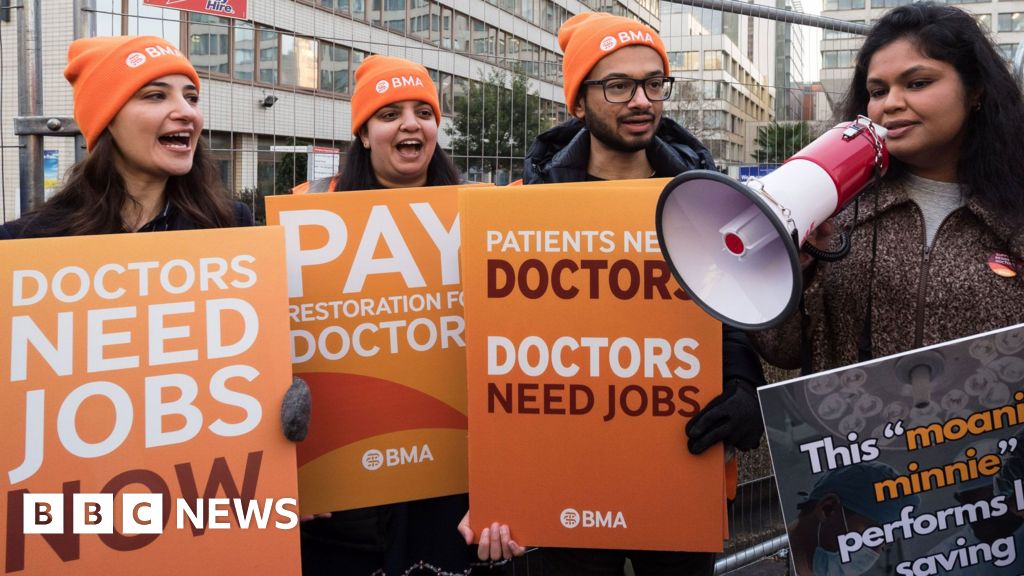
In his Times article, Sir Keir Starmer urged the BMA to present the offer to its members, stating unequivocally, "Walking away from this deal is the wrong decision. It is a reckless decision. And doing so without even giving resident doctors themselves the chance to vote on it makes it even worse. Because the truth is this: no one benefits from rejecting this deal." He highlighted that the proposed package would have seen a total of at least 4,000 extra speciality training posts created over the next three years, with 1,000 of these earmarked for immediate implementation this year. Beyond training opportunities, the deal also encompassed the reimbursement of out-of-pocket expenses, including exam fees, and an acceleration of progression through the five resident doctor pay bands.
The 3.5% pay increase, set to be implemented in April, is distinct from the offer made during the recent talks. This rise was recommended by the independent pay review body and applies to all doctors, irrespective of the ongoing dispute. Health Secretary Wes Streeting has consistently maintained that the government has made significant concessions, pointing out that resident doctors have already received pay increases totalling nearly 30% over the past three years. He detailed that under the proposed deal, the basic pay for the most experienced resident doctors would have risen to £77,348, with average earnings projected to exceed £100,000. Furthermore, new graduates entering the profession would see their annual earnings increase by an average of £12,000 compared to three years ago.
However, Dr. Jack Fletcher, chair of the BMA’s resident doctors’ committee, expressed strong disagreement, accusing the government of manipulating the terms of the proposed deal at the eleventh hour. Speaking on BBC Radio 4’s Today programme, Dr. Fletcher decried the government’s tactic of issuing "threats about withholding jobs from doctors" as detrimental to patients and an unproductive approach to resolving the dispute. He firmly stated that the resolution would ultimately be found in a negotiating room. Dr. Fletcher reiterated the BMA’s core demand: a reversal of decades of pay erosion. He asserted that a "credible" offer from the government could lead to the cancellation of strikes.
When questioned about whether the offer would have been put to members had the terms remained unchanged, Dr. Fletcher revealed a significant shift. "Two weeks ago, the Government took that investment, reduced it, and then stretched it over three years," he explained. "That is a very, very, very different outcome to the one that we were discussing just two weeks ago." He further elaborated that he had personally conveyed to the Health Secretary that the revised proposal did not constitute a "credible offer" and did not go far enough to address the union’s concerns.
The BMA’s argument for substantial pay restoration is rooted in their assertion that, despite recent increases, resident doctors’ pay remains approximately 20% lower than it was in 2008 when adjusted for inflation. A significant point of contention has also been the shortage of jobs available when doctors transition into specialist training, a critical juncture where they must choose their medical specialty. Last summer, approximately 10,000 specialist training jobs were available, attracting around 30,000 applicants, though this figure includes international medical graduates. Consequently, the expansion of training posts has been a central element in the negotiations.
Adding further pressure to the industrial relations landscape, the BMA is also preparing to ballot senior doctors in England, including consultants and specialist doctors, in May regarding potential industrial action. This move stems from dissatisfaction with the progress of pay talks and the latest remuneration award for senior medical staff. The ongoing dispute highlights the deep-seated concerns within the medical profession regarding fair pay, career progression, and the future sustainability of the NHS, with both sides entrenched in their positions, and the public facing further disruption to essential healthcare services. The government’s firm stance, coupled with the BMA’s commitment to fighting for what they perceive as fair compensation, indicates that this protracted industrial action may continue for some time, despite the high stakes involved.



 George Anjay
 Nakalama John
 atisusanti
 Ramos Leo