Roy Suryo
The senior health officer for British Columbia, Dr. Bonnie Henry, emphasized that the four individuals who returned to Canada have had no direct contact with the general public since their arrival. This latest confirmed case brings the total number of infections linked to the MV Hondius to 11, all of whom were passengers on the ship. Tragically, three individuals who traveled on the vessel have died. Of these deaths, two have been officially confirmed as being caused by hantavirus.
Dr. Henry stated that the presumptive positive test result for the Canadian individual was received on Friday. However, she noted that this result still requires confirmation from a national microbiology laboratory. "Clearly, this is not what we hoped for, but it is what we planned for," Dr. Henry commented, as reported by the national broadcaster CBC. She took the opportunity to clarify the nature of hantavirus, distinguishing it from other respiratory viruses. "I want to emphasise that hantavirus is a very different virus than the other respiratory viruses that we’ve been dealing with – like Covid, like influenza, like measles – and it remains one that we do not consider to have pandemic potential," Dr. Henry added.
Of the six Canadians who were aboard the Dutch-flagged ship, two are currently self-isolating in their homes in Ontario. The remaining four Canadians are in isolation on Vancouver Island. Two of these couples are from British Columbia, while the other couple is from Yukon. The individual who tested positive for hantavirus is from Yukon. To date, none of the other five Canadians have tested positive for the virus.
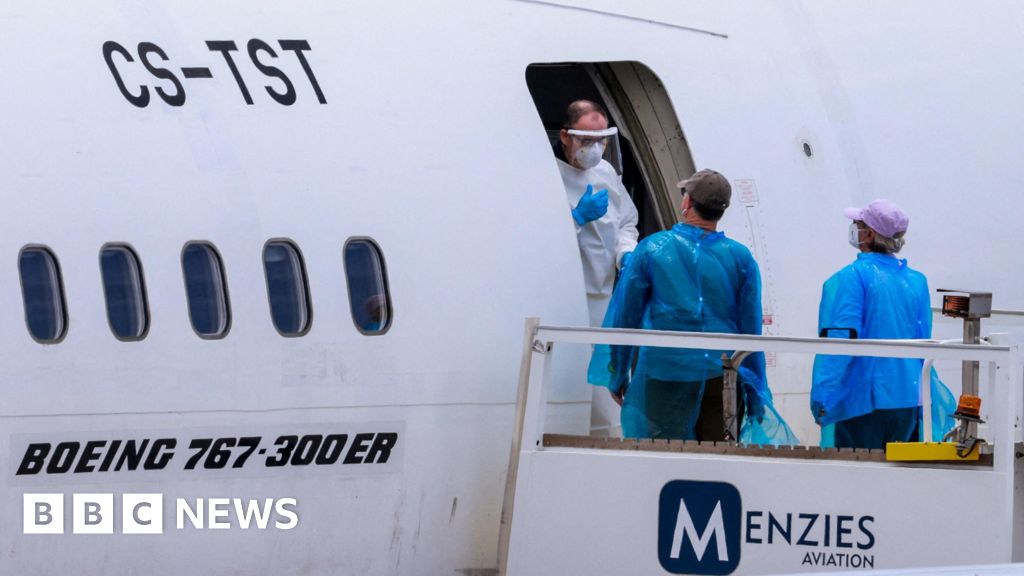
The MV Hondius, an expedition cruise ship, embarked on its journey from Argentina on April 1st. Less than a week prior to this Canadian case being reported, the ship docked in Tenerife, a Spanish island in the Canary Islands. This allowed its passengers, including the Canadians, to disembark and enter isolation protocols. The ship was scheduled to arrive in Rotterdam, Netherlands, on Monday. Oceanwide Expeditions, the owner of the vessel, confirmed that the remaining crew members on board would disembark upon arrival. The company also stated that there were no individuals exhibiting symptoms of hantavirus on board at that time.
The World Health Organization (WHO) has recommended a 42-day isolation period for individuals who have been exposed to hantavirus. The Canadian passengers were initially required to isolate for 21 days. However, Dr. Henry indicated that this timeline might be subject to adjustment in light of the new positive case.
Hantaviruses are a group of viruses that are typically carried by rodents. However, human transmission is possible, particularly with the Andes strain of the virus. The WHO believes that some passengers on the MV Hondius may have contracted this strain while in South America. The symptoms of hantavirus infection can vary but commonly include fever, extreme fatigue, muscle aches, stomach pain, vomiting, diarrhoea, and shortness of breath. Despite the confirmation of a new case, officials maintain that the risk of a widespread outbreak remains very low.
The MV Hondius, designed for polar expeditions, typically carries a limited number of passengers, enhancing the ability to monitor and manage health situations on board. The outbreak on the ship has raised significant public health concerns, particularly due to the potential for human-to-human transmission in some hantavirus strains, although this is considered less common than rodent-to-human transmission. The Andes strain, prevalent in South America, has demonstrated a greater capacity for human transmission compared to other hantaviruses. The route of the MV Hondius from Argentina through the South Atlantic and towards Europe meant passengers had been in various environments where rodent exposure could have occurred.

The initial cluster of cases emerged in April, prompting swift action from the ship’s operator and health authorities in the regions the ship visited or was scheduled to visit. The decision to have passengers disembark in Tenerife and enter isolation was a precautionary measure to prevent further spread and facilitate medical assessment. The journey of the ship itself, as depicted in accompanying visual aids, highlights the extensive travel undertaken, increasing the complexity of contact tracing and public health response. The map detailing the ship’s route illustrates its passage across the South Atlantic Ocean, originating from Ushuaia, Argentina, and heading north-east. Key points on this route included the first passenger death at sea on April 11th, and subsequent events such as the medical evacuation of a passenger’s wife from St. Helena to South Africa on April 24th. Further deaths were reported, including one in Johannesburg on April 26th and another onboard on May 2nd, before the ship’s arrival in Cape Verde on May 3rd and finally Tenerife on May 10th.
The fact that the Canadian individual developed mild symptoms is a positive sign, as severe hantavirus pulmonary syndrome (HPS) can be rapidly fatal. Early diagnosis and supportive care are crucial for managing the disease. The isolation protocols implemented for returning passengers are designed to prevent any potential transmission within the community. The ongoing monitoring and testing of individuals who were on the MV Hondius underscore the diligence of public health agencies in managing this unusual outbreak. The distinction made by Dr. Henry between hantavirus and more common respiratory viruses like COVID-19, influenza, and measles is important for public understanding and to avoid unnecessary alarm. While hantavirus is a serious illness, its transmission patterns and limited pandemic potential differentiate it from global health crises like COVID-19. The current focus remains on ensuring the health and safety of those who were on the ship and preventing any further spread. The experience with the MV Hondius serves as a reminder of the interconnectedness of global travel and the importance of robust public health surveillance systems, especially in the context of infectious diseases that can emerge in unexpected ways. The extended isolation period recommended by the WHO reflects the need for caution given the potentially long incubation period of some hantaviruses and the varying severity of illness. The adjustment of the Canadian passengers’ isolation timeline will be based on ongoing risk assessments and the latest scientific guidance.




 George Anjay
 Ramos Leo
 Nakalama John
 Nana Banana